All of today’s educators must have adequate technology knowledge and skills to serve the increasing number of students with disabilities who participate in inclusive general education classrooms (Wagner, Newman, Cameto, & Levine, 2006). The inclusion of assistive technology with instructional technology in preservice teacher education programs will lead to enhanced academic, social, and employment opportunities for individuals with disabilities. Educational technology will play a central role in the transformation of the U.S. educational system for the foreseeable future, as the nation transitions from an industrial to an information-based society (Otero et al., 2005; U. S. Department of Education, 2004). This trend is supported by Federal mandates stipulating increased accountability for all teachers and students (No Child Left Behind Act, 2001) and the widespread expected adoption of technology standards in teacher education programs from the International Society for Technology in Education (ISTE) and the National Council for Accreditation of Teacher Education (NCATE).
There are approximately 3 million students with learning disabilities in the United States (U.S. Department of Education, 2005). The practice of teaching students with learning disabilities in general education classrooms is commonly referred to as inclusion, part of the least restrictive environment mandate included in the Individuals with Disabilities Education Act (IDEA Reathorization, 2004). The inclusion movement offers a variety of positive academic, social, and behavioral opportunities for students with special needs (Bond & Castagnera, 2006). Despite these positive attributes, current research clearly indicates that students with learning disabilities often fail to make adequate yearly progress toward their annual learning goals (De La Paz & MacArthur, 2003; Gersten, Fuchs, Williams, & Baker, 2001; Mastropieri, Scruggs, & Graetz, 2003).
Teachers of students with learning disabilities are mandated by federal legislation to consider the need for assistive technology during the development of students’ individual education programs (IDEA, 2004). Assistive technology for students with learning disabilities are devices meant to scaffold students’ cognitive processes in order to enhance each individual student’s unique processing abilities and maximize learning outcomes. Examples include screen readers, speech-to-text software, and technology-based scaffolds, such as digital outlines of text or question prompts embedded in technology-based interfaces. Unfortunately, the goals associated with the appropriate selection, adoption, implementation, and assessment of assistive technology have not been realized (Anderson & Petch-Hogan, 2001; Jackson, 2003; West & Jones, 2007; Zorfass & Rivero, 2005).
A primary reason for the discrepancy between the goals associated with appropriate technology consideration and current practice is a lack of teacher training (Brown, 2000; Lahm, 2005; Jackson, Ryndak, & Billingsley, 2000; Okolo & Bouck, 2007; Silver-Pacuilla, 2006). A secondary cause is teacher resistance to embracing the pedagogical practices necessary to integrate technology into instructional practice effectively (Pedersen & Liu, 2003). New systems for understanding the benefits and barriers of assistive technology integration and for developing communities of practice, experiencing integration, fostering effective implementation, and managing technology environments are critical to providing all students with the knowledge and skills necessary for active participation in a democratic society.
This paper extends the technology, pedagogy, and content knowledge (TPACK; http://www.tpck.org/tpck/) model (Mishra & Koehler, 2006) by promoting the inclusion of assistive technology for individuals with disabilities. The increased number of students with learning disabilities who are served in inclusive general education classrooms, combined with the evolving characteristics of this student population, create a need to enhance the theoretically sound TPACK framework. Our enhanced model is designed to promote inclusive pedagogical perspectives at the nexus points between content, technology, and pedagogy. There are two distinct goals to our approach: (a) to promote access, participation, and learning for students with learning disabilities who receive the majority of their instruction in general education classrooms, and (b) to develop preservice teachers’ abilities to identify efficacious technologies that will enhance students’ transitions from school to work. The implications of including assistive technology in preservice teacher education programs and essential assistive technology knowledge and skills are discussed next in this paper, followed by our vision of assistive technology inclusion in the TPACK model. Examples of ways this enhanced TPACK model can influence preservice teachers’ practice are also included, along with a list of essential technology skills that support inclusive educational practices.
Implications of Assistive Technology Inclusion in the TPACK Model
Assistive technology holds the potential to maximize educational opportunities for individuals with disabilities in inclusive classrooms by promoting access, participation, and learning outcomes (Alper & Raharinirina, 2006; Michaels, Prezant, Morabito, & Jackson, 2002; Rose, Meyer, & Hitchcock, 2005). Technology provides a venue where information can be presented using a flexible, nonlinear interface, enabling students with learning disabilities to access information otherwise unobtainable using traditional expository texts (Twyman & Tindal, 2006). Studies have concluded that technology enhancements to curricular materials have positive effects on content area learning outcomes (Lange, McPhillips, Mulhern, & Wylie, 2006; Okolo, 2005), critical thinking skills (e.g., reiteration, summarization, illustration, prediction, explanation, and evaluation; Twyman & Tindal, 2006), motivation (Glaser, Rieth, Kinzer, Colburn, & Peter, 1999), self-advocacy (Lancaster, Schumaker, & Deshler, 2002), and test-taking strategies (Lancaster, Lancaster, Schumaker, & Deshler, 2006). Technology can mediate students’ performance through question prompts, writing scaffolds, and procedural steps that lead to a strategic plan for accomplishing goals and objectives (Englert, Wu, & Zhao, 2005).
The benefits of including assistive technology in preservice teacher preparation extend beyond students’ academic performance to encompass lifelong learning and employment opportunities through the development of meaningful, efficacious transition plans. All students with disabilities must have a formally documented transition plan beginning at age 16 (IDEA, 2004). Consider how assistive technology knowledge could impact a teacher’s recommendations for a secondary student with an IQ of 120 and a learning disability in reading, whose goal is to graduate from a 4-year university. This student excels when complex expository texts (such as chemistry books) can be presented orally. An informed teacher would be able to advocate for assistive technology that converts text to speech for the student.
Once this information is documented on the student’s individual education program (IEP) and transition plan, all postsecondary institutions receiving federal funding are obligated under federal law to consider the accommodation (An Act to Restore the Intent and Protections of the Americans with Disabilities Act of 1990, 2008). The student will, therefore, have the opportunity to have text converted to audio format by the university’s disability resource center. Without appropriate assistive technology knowledge and skills, the teacher might have failed to consider how changing the format of the material and documenting the results could have a positive long-term impact on student learning.
Unfortunately, numerous significant barriers to the appropriate selection, adoption, implementation, and assessment of assistive technology exist for students with disabilities who receive the majority of their academic instruction in inclusive classrooms. First is the ambiguous definition of assistive technology. IDEA (2004) defined an assistive technology as “any item, piece of equipment, or product system, whether acquired commercially off the shelf, modified, or customized, that is used to increase, maintain or improve the functional capabilities of a child with a disability” (Sec. 602, Definitions). Many teachers are inadequately prepared to determine how and when to consider assistive technology for students with disabilities based on this definition.
In addition, the number of available technologies is extensive and ever-increasing (Baush & Hasselbring, 2004; Coiro, Klein, & Walpole, 2006). Schools lack funding to support assistive technology in inclusive classrooms (Alper & Raharinirina, 2006). School personnel who are adequately trained to make informed assistive technology decisions are in short supply (Edyburn, 2004; Marino & Beecher, 2008; Nelson, 2006; Puckett, 2004), and few educators understand how to integrate assistive technology into content area instruction (McLaren, Bausch, & Jones Ault, 2007). Clearly, additional educational opportunities are necessary to promote preservice teachers’ understandings of the benefits and barriers associated with assistive technology.
Research findings consistently suggest that preservice teachers should experience courses that integrate assistive technology early in the teacher preparation process so that they have time to develop the knowledge, skills, and dispositions necessary to make informed instructional decisions and contribute to the IEP processes (Alobiedat, 2005; Anderson & Petch-Hogan, 2001; Bausch & Hasselbring, 2004; Edyburn & Gardner, 1999; Maushak, Kelley, & Blodgett, 2001; Michaels & McDermott, 2003). The persistent challenge is determining how to integrate technology instruction into teacher education programs most effectively (Wepner, Bowes, & Serotkin, 2007).
The first step toward addressing this problem is acknowledging the multiple purposes for incorporating assistive technology instruction in teacher preparation programs. The Council for Exceptional Children (CEC, 2001), NCATE (2007), and ISTE (2008) have similar standards, which dictate that teachers must have the ability to (a) integrate all forms of technology during instructional planning, (b) use assistive technology during assessment, and (c) create appropriate technology-based adaptations and modifications for students with disabilities.
Our model maximizes the educational opportunities of individuals with learning disabilities in inclusive classrooms by enhancing preservice teachers’ abilities to integrate assistive technology within instruction and assessment. This approach holds the potential to improve access to curricular materials and increase the reliability of classroom assessments. Our model provides preservice teachers with multiple opportunities to analyze critically assistive technology options for students with learning disabilities by understanding the institutional, situational, and dispositional barriers that limit assistive technology effectiveness. Teachers can then advocate for the inclusion of efficacious assistive technology in IEP and transition plans that can positively impact students’ learning at both the K-12 and postsecondary level.
Essential Assistive Technology Knowledge and Skills
In addition to meeting the technology standards highlighted previously, preservice teachers must have the knowledge and skills to select, adopt, implement, and assess assistive technology successfully. Selection begins with documentation of the student’s baseline performance prior to assistive technology consideration (Raskind & Bryant, 2002). This step is crucial for establishing the efficacy and long-term viability of any assistive technology intervention. Students are eligible for assistive technology only if it has the capability to improve their functional performance in the classroom. Therefore, a student who is successful (e.g., has an acceptable grade) would not be considered eligible for assistive technology.
Teachers must also analyze their content to determine the performance indicators they expect students to achieve prior to assistive technology selection. Teachers must be able to articulate to an IEP team the exact tasks and outcome measures students will be expected to complete to demonstrate mastery of the course objectives. In addition, teachers must reflect on their pedagogical practices and understand how assistive technology might enhance their instruction, increase access to the learning environment, and improve the student’s performance. Baseline performance assessments, task analyses, and pedagogical practices are teacher and content area specific and should be embedded in methods and learning theory courses throughout the teacher’s preservice program.
Assistive technology should be considered and selected when the IEP team determines that baseline data of the student’s performance indicates a need. A detailed description of the assistive technology selection process is outside the scope of this manuscript. Marino, Marino, and Shaw (2006) provided a case study approach to the assistive technology selection process. Other assistive technology selection resources include the Boone and Higgins (2007) software checklist as a means to evaluate software for individuals with disabilities. This validated instrument contains six forms teachers can use to evaluate software across the following domains: (a) instruction, (b) directions and documentation, (c) feedback and evaluation, (d) content, (e) individualizing options, (f) interface and screen design, and (g) accessibility.
In addition to a general form for all students with disabilities, there are disability specific forms that address learning disabilities, early childhood, intellectual disabilities, physical disabilities, and emotional disabilities. Boone and Higgins (2007) pointed out that students with disabilities often have needs that run counter to widely accepted e-learning design principles. Their software checklist takes these considerations into account.
Once appropriate assistive technology has been selected, use must be implemented with fidelity. Teachers should document how the student is trained to use the assistive technology, how often it is actually used, whether it is used appropriately, and how the student’s performance changes over time. Meyen et al. (2002) identified two key management strategies that can be applied to assistive technology enhanced learning environments: (a) the ability to teach students to manage their own electronic resources, feedback, and assessment data, and (b) the ability to utilize quantitative and qualitative assessment data to enhance instruction and planning. Effective teachers utilize continuous progress monitoring as students complete assistive technology enhanced investigations. These investigations can take the form of formative evaluation during group discussions or one-on-one interactions where the teacher asks students to describe their thinking processes or describe the tools they are using to access information (McNamara & Shapiro, 2005).
Management is simplified when the assistive technology includes recordkeeping tools, such as electronic field journals, that allow students to record observations, thoughts, hypotheses, and reflections (Liu & Bera, 2005). These tools facilitate students’ metacognitive processes and help teachers document progress during technology-based investigations (Edelson, Gordin, & Pea, 1999). In addition, this type of management allows the teacher to document students’ response to intervention (RTI). Many states are adopting RTI models as a means to enhance the eligibility determination process for students with learning disabilities. As such, the majority of teachers will be required to present this data to IEP teams in the future (Glover & DiPerna, 2007).
Theoretical Framework for Enhancing the TPACK Model
Our enhanced TPACK model is grounded in the notion that preservice teacher preparation programs should facilitate inquiry-based, active learning approaches, in which students are researching, analyzing, and representing knowledge through the production of personal understanding. Our framework for preservice teacher training developed through the intersection of TPACK (Mishra & Koehler, 2006), pedagogical praxis (Schaffer, 2004) and Universal Design for Learning (UDL; Rose et al., 2005). Pedagogical praxis combines ideas such as Schon’s (1987) reflexive practice and Dewey’s (1938) concept of schooling as a way to prepare students for a changing society.
Schaffer (2004) described pedagogical praxis as a teacher’s ability to think about how to make processes of learning more accessible through technology. This construct accentuates the UDL premise, which calls for the use of technology to design accessible instruction at the outset of the planning process, as opposed to retrofitting or adding technology only after barriers to learning have been encountered. The utilization of UDL encourages the development of curricular materials that are flexible and adaptable enough to meet a wide range of needs (Rose, Hasselbring, Stahl, & Zabala, 2005). As Balajthy (2000) pointed out, teacher beliefs about technology impact their adoption of technology into classroom practice. Therefore, our framework incorporates TPACK as a means to operationalize the metacognitive processes that are essential to effective technology adoption.
The Center for Applied Special Technology (CAST, 2008) delineates three core principles of UDL, which preservice teachers can adopt to promote learning. Although the research at CAST focuses on students with disabilities, these principals are beneficial to all students:
- Multiple means of representation. This principle supports diversity in a learner’s recognition network. In other words, the presentation of information in a classroom is flexible enough to reach a variety of learners. Ideally, information is presented in multiple ways in order to reach the wide range of the audience’s learning styles.
- Multiple means of expression. Teachers recognize that a diverse group of learners can demonstrate their learning a variety of ways, for example, through multimedia presentations, plays, writing, or illustrating. The goal is to provide students with the opportunity to learn and practice skills, receive feedback, and develop knowledge.
- Multiple means of engagement. Students should be offered varied levels of scaffolding throughout the learning task. A flexible curriculum design stimulates a wide range of student interests, enhances motivation, and promotes positive interactions with the learning environment (Meyer & Rose, 2005).
Enhancing the TPACK Model With Assistive Technology
Our enhanced TPACK model is designed to facilitate preservice teachers’ movement toward what Hooper and Rieber (1995) described as the evolution phase of technology development. Teachers reaching this stage are able to continuously and fluidly modify their classroom instruction to include evolving learning theories and technologies. Mishra and Koehler’s (2006) TPACK model holds the potential to support preservice teachers’ knowledge acquisition through the combination of assistive technology with other forms of traditional technology knowledge. TPACK is represented as a Venn diagram that includes three core components: content (C), technology (T), and pedagogy (P). We view this as a cyclic model that can support preservice teachers’ practices in inclusive classrooms. Assistive technology training has been traditionally viewed as an add-on specialization for special education teachers (Edyburn & Gardner, 1999). A representation of this in relation to the TPACK model is presented in Figure 1.
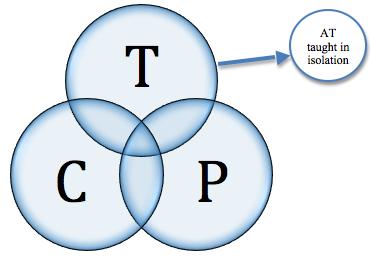 Figure 1. Assistive technology (AT) training in traditional educational environments.
In our model, the technology core (T) is parsed to represent the importance and overlapping constructs inherent in both assistive technology (AT) and instructional technology (IT). Consider that word prediction software is routinely considered as assistive technology for students with disabilities who struggle with writing. This technology is now widely available through Internet browsers, cell phones with text messaging features, and other handheld devices. Boone and Higgins (2007) pointed out that the benefits of this technology extend beyond students with disabilities to encompass a wide range of students. Therefore, AT and IT should be taught as a symbiotic construct throughout the teacher education process, so that teachers can explicitly identify the beneficial features of the technology interface in a manner that informs their active participation in the assistive technology consideration process. A visual representation of our enhanced TPACK model with the inclusion of assistive technology is represented in Figure 2.
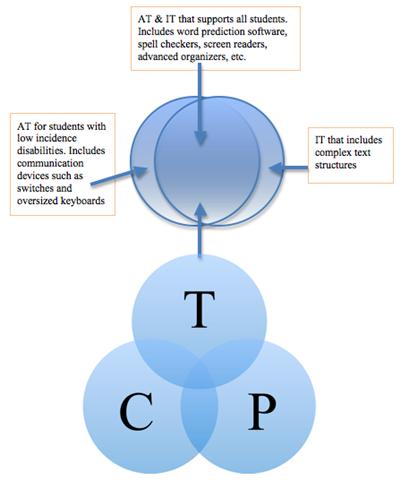 Figure 2. Enhanced TPACK model with T expanded to include AT and IT.
Of critical note in Figure 2 is the notion that assistive technology does not fully eclipse technology in the model. Our contention is that adding assistive knowledge to technology knowledge will allow preservice teachers to view technology through an enhanced lens, which extends their understanding of the ways technology can be used to improve student learning. We exclude from technology knowledge a knowledge of assistive technology used by students with extremely low incidence disabilities, because it is not crucial for all general education preservice teachers.
During preservice teacher training, initial emphasis should be placed on identifying the distinct purposes of AT and IT. Assistive technology is purposefully selected for students formally identified with disabilities in order to improve functional performance in a specific context. Instructional technology is taught as a means to enhance the learning environment for all students. This distinction will provide preservice teachers with the requisite skills to participate in IEP meetings. This initial distinction should be followed with experiences that allow the preservice teachers to experiment with AT and IT in ways that lead to the eventual merger of the technology knowledge construct, so that preservice teachers in the final year of their program can parse AT and IT but also describe how the two overlap and compliment each other as one construct.
Ways Assistive Technology Inclusion Changes Interactions in the TPACK Model
Effective instructional practices in education technology courses are key to ensuring that this approach combining assistive technology with technology knowledge leads to successful learning outcomes for preservice teachers. Otero et al. (2005), in a discussion of the educational technology resource (ETR) model for implementing technology into instructional practice, found that unidirectional or didactic methods of technology instruction were ineffective. They stipulated that technology instruction should empower learners (preservice teachers for our purposes) to develop the skills, language, and critical dispositions toward technology that enable users to develop and implement technology-based learning experiences effectively in authentic contexts.
Therefore, we propose our enhanced TPACK model as a series of semester-long cycles that provide preservice teachers with multiple opportunities to experience the content, pedagogy, and technology core tenets of the TPACK model. For example, beginning in the first semester of the teacher preparation program, preservice teachers in a technology course are taught to identify and use effective technologies that may be considered as assistive technology for students with disabilities and instructional technology for other students. In other courses, they use this information to enhance their content delivery with effective pedagogical practices. Technology enhanced lessons should be modeled in each content area so that preservice teachers have practical examples and experiences to build on. This integrated approach continues each semester as students refine their skills through the assimilation and accommodation of new information acquired during their continued coursework and field experiences.
Consider how this model might be applied with a preservice secondary science teacher who plans to teach in an inclusive general education classroom. The teacher must understand the underlying pedagogical assumptions of teaching at the secondary level (e.g., students in the class will be able to read at grade level) and how those assumptions impact students with learning disabilities. Beginning in fourth grade, teachers’ instructional practices shift from teaching students to read to teaching students to utilize diverse reading strategies during the learning process. This transition offers distinct challenges for students with learning disabilities because of the complex literacy strategies necessary to learn from both electronic and paper-based expository text sources (Edyburn, 2007).
These challenges are compounded when students participate in inquiry-based learning activities, such as secondary science labs. Therefore, the preservice teacher in this example must be taught (a) to identify individual students’ learning styles, (b) content specific pedagogical practices that account for student differences, and (c) ways to use technology to scaffold and facilitate student learning. These experiences should begin early in the teacher preparation process. This preservice teacher may benefit from a case study approach, in which multiple assistive technologies are evaluated for a student with a learning disability who is struggling in the class.
In this example, an understanding of assistive technology will provide the preservice teacher with an alternate lens through which technology can be viewed as a means to enhance student learning. If the development of this new lens is fostered throughout the preservice training process, preservice teachers will construct lesson and unit plans that take assistive technology considerations into account at the outset of the design process, thus, moving toward the principles of UDL. This technology integration offers the potential to improve access to the learning environment for a wide array of learners while reducing the need for assistive technology. An integrated and cyclic approach that includes assistive technology in technology knowledge eliminates many of the barriers associated with assistive technology adoption, selection, implementation, and assessment.
Now consider an example of a preservice teacher in her final semester of study who has worked with assistive technology as part of the TPACK model. Say she is a preservice middle school history teacher who plans to use open-ended learning environments (OLEs) to teach students to critically analyze multiple perspectives of historical events. The preservice teacher’s pedagogical training has taught her that OLEs have gained increased popularity as a means to teach students using context-specific authentic problems because of the advantages this approach offers over classrooms that emphasize rote memorization of preexisting expertly conceived concepts (Edelson et al., 1999).
She utilizes OLEs because they encourage students to construct their own mental frameworks as they use learning scaffolds to interpret and synthesize information (Hannafin & Land, 2000). This strategy promotes a canonical learning cycle where students use the scientific method continually to refine their mental models through the development of procedural knowledge, declarative knowledge, and assumptions about the focus concept (Oliver & Hannafin, 2001). Her training has also taught her that this type of environment is complex, multifaceted, and extremely difficult for novice learners, such as students with learning disabilities (Jonassen & Hernandez-Serrana, 2002).
The preservice teacher in this example is able to use an assistive technology enhanced lens as she conceptualizes instructional plans that embrace diversity within the classroom using Parallaxic Praxis (Sameshima & Vandermause, 2008; Sameshima & Sinner, 2009). Issues of representation, expression, and engagement are deeply rooted in Parallaxic Praxis (see Figure 3), a teaching and learning design model, which is grounded in holistic arts-integrated inquiry. Parallaxic Praxis supports personal meaning making as knowledge production.
Students in this teacher’s class work with content through various mediums, such as video production, technology-based graphic organizers, and other artful endeavors. They receive explicit instruction to utilize technology-based tools in order to create artistic renderings of their understanding of the historical events. The technology then becomes a medium to share, engage, and provoke further learning among the class. In this example, the preservice teacher can incorporate into her instructional practice many technologies that could be considered assistive technology and taught in isolation. In addition, she has created a meaningful learning environment that includes the principles of UDL and provides artifacts that document students’ performance toward their learning goals.
The Parallaxic Praxis method of meaning-generation produces an artifact, which can then spur further learning in others. A well-known process of parallaxic praxis is to take statistical data and create a graph. The graph is the outcome of content filtered through a technology-based tool. Once rendered, learners can better analyze the data. Evidence suggests that the benefits of using technology-based tools (AT for some and IT for others) extend beyond students with learning disabilities to encompass all learners who participate in OLE investigations (Marino, in press). Figure 3 illustrates the sequential progression of content filtered through technological tools to facilitate UDL by encouraging multiple means of representation, expression, and engagement.
 Figure 3. Parallaxic Praxis model for assistive technology integration.
Ways Technology Supports Inclusive Education
The role of technology cannot be understated in modern society. Christensen, Overall, and Knezek (2006) pointed out that the use of computers has evolved over the past half century from a single mainframe to individual computers to ubiquitous computing where individuals fluidly use technology throughout their daily lives. Peterson-Karlan and Parette (2005) noted that technology provides a much-needed medium to develop socialization and communication skills often lacking in millennial students (i.e., those who entered school after 2000) with disabilities.
One of the primary characteristics of students in the millennial culture is their comfort with and consistent use of technology on a daily basis (Parette, Huer, & Scherer, 2004; U.S. Department of Education, 2004). Evidence suggests that millennial students with disabilities often rely more on technology than their peers without disabilities (Lenhart et al., 2003). Today’s students have such comfort with keypads and LCDs that they often wear their technology (Dwyer, 2002). This widespread adoption of technology has transferred to a preference for using technology when learning (Peterson-Karlan & Parette, 2005).
A dynamic interplay exists among students, teachers, curriculum, classroom context, and technology (Quintana et al., 2004). Effective technology-based tool utilization is not an add-on to existing curriculum. Instead, we advocate for an integrated approach (an enhanced TPACK model) that focuses on promoting the longitudinal viability of technology as a means to enhance lifelong learning. This integrated approach allows preservice teachers to develop a rich understanding of how knowledge of technology, pedagogy, and content can be used to create flexible learning environments that benefit a wide range of learners. Including assistive technology in technology knowledge enhances the model by allowing preservice teachers to gain enhanced understandings of the benefits of including technology in content specific instructional design.
Technology provides enhanced opportunities for individuals to learn actively in self-directed ways, either through independent study or collaborative learning experiences (Kirschner & Erkens, 2006). Jonassen (2000) describes technology as a functioning intellectual partner that can act as a mindtool, which facilitates critical thinking and learning. Others such as Lajoie (1993) have defined the scaffolds inherent in technology as cognitive tools with specific roles for the user. These tools (a) support cognitive and metacognitive processes, (b) share cognitive load by providing information as needed, thus allowing the user to concentrate on higher order thinking processes, (c) allow users to conduct activities that would not be possible in traditional classroom environments, and (d) allow users to solve problems by generating hypotheses, collecting data, and interpreting results in a simulated environment. Preservice teachers must have the knowledge and skills to incorporate these tools in their instructional planning so that the unique needs of individuals with disabilities can be met.
Christensen et al. (2006) identified two types of tools used in educational contexts: (a) Type I tools, which allow individuals to complete every-day tasks more efficiently, and (b) Type II tools, which allow users to synthesize and communicate information in new ways. Scaffolding within these tools provides structures and frameworks that augment the learners’ performance beyond what would be traditionally possible. These supports act as bridges between learning experiences and real world situations (Chen & Hung, 2004). Preservice teachers who experience assistive technology within their technology training are able to utilize both sets of tools fluidly and identify the contexts in which each might be considered assistive technology for some students and instructional technology for others.
Pedagogical Considerations in the Enhanced TPACK Model
Oliver and Hannafin (2001) noted that teachers must be able to provide appropriate instruction and prompting so that students are able to utilize the technology-based tools and scaffolds in a manner that promotes meaningful learning outcomes. They suggest that teachers employ “guided discovery” over “free discovery.” In other words, teachers must provide a framework so that students with learning disabilities have procedural guidelines that scaffold the learning process. This framework might include an electronic checklist that students with learning disabilities can follow during complex OLE learning activities. Other prompts could ask the student to generate alternate hypotheses when evidence that contradicts their preconceived notions is located.
Teachers should also employ daily modeling of inductive and deductive reasoning strategies when students with learning disabilities participate in OLEs. Oliver and Hannafin (2001) found that evidence collection in an electronic environment often did not lead to the appropriate application of the evidence toward the problem solution. Here, a technology-based organizer could help students with learning disabilities understand the relationships between the evidence and the problem through the use of side-by-side comparisons where students compare evidence to their hypotheses and then report whether or not the evidence supports their conclusions.
Pedersen and Liu (2003) noted the importance of a central question that acts to guide the inquiry process. They pointed out that students should have the opportunity to assist in framing the question so that it is relevant to their lives. Teachers should use “orienting strategies” at the outset of inquiry-based activities to anchor investigations. These might include background scenarios or advanced organizers that identify the prior knowledge of the class as a whole (Hannafin & Land, 2000). Brown, Collins, and Duguid (1989), in their discussion of situated cognition, advocated for the use of cognitive apprenticeship, in which teachers model problem solving strategies, coach students to develop their own understandings of the material, and gradually decrease their level of support as student thinking develops.
Figure 4 is a Force Field Analysis Diagram depicting a framework for preservice teachers to examine how technology integration factors (forces) can potentially address learning barriers for students with learning disabilities. The Force Field Analysis Diagram is commonly used in business administration, science group dynamics, and leadership to display visually driving and restraining forces in an implementation strategy (see Lewin, 2008)
 Figure 4. Force field analysis diagram of driving and restraining forces enabling assistive technology integration (Brown, Collins, & Duguid, 1989; Hannafin & Land, 2000; Oliver & Hannafin, 2001; Pedersen & Liu, 2003; Quintina, Zhang, & Krajcik, 2005).
Implementing the Enhanced TPACK Model in Teacher Education Programs
Failure to prepare preservice teachers properly creates a cycle in which students, teachers, parents, and administrators become increasingly frustrated with assistive technology (Maushak et al., 2001). Mindful consideration for preparing preservice teachers to select, adopt, implement, and assess technology effectively is critical to promoting the educational opportunities of students with learning disabilities in inclusive classrooms. Developing an integrated community of practice within teacher education programs is one way to facilitate this process.
Collaboration among general education and special education teachers promotes academic and social success for their students (McLaren et al., 2007; Thousand & Villa, 2000). Michaels and McDermott (2003) pointed out that teacher education programs must provide preservice teachers with an opportunity to observe classroom teachers and other school personnel who model appropriate assistive technology use in inclusive classroom settings. Preservice teachers should participate in a community that brings general education teachers, special education teachers, and other technology professionals together with students and families to explore relevant and meaningful assistive technology options (Pope, Hare, & Howard; 2002; Wasburn-Moses, 2005).
School-university partnerships can facilitate this process by enhancing the development of technology skills across teacher preparation programs (Wepner et al., 2007). Zorfass and Rivero (2005) found that as teachers expanded their knowledge of effective technologies, they were able to transfer the knowledge and provide additional learning supports to a broad range of students with diverse abilities. In addition, preservice teachers should have the opportunity to apply new technologies immediately to their current teaching placements (Schrum, Skeele, & Grant, 2003).
Conclusion
An enhanced TPACK model that includes assistive technology with technology instruction early in the teacher preparation process addresses a need to further preservice teachers’ understandings of the benefits and barriers to appropriate assistive technology selection, adoption, implementation, and assessment. We view assistive technology and instructional technology as overlapping supports for students with learning disabilities and other students who are educated in inclusive general education classrooms. Our approach calls for the development of preservice teachers’ knowledge, skills, and dispositions through a series of semester-long cyclical interactions with the enhanced TPACK model, which is supported by integrating course work, field experiences, and a broader community of practice.
Fostering effective assistive technology selection, adoption, implementation, and assessment at the preservice level is not an easy task. Student’s assistive technology success is directly correlated to the knowledge, skills, and dispositions of the teacher (Edyburn & Gardner, 1999). Teachers must be able to make meaningful contributions to IEP teams during the assistive technology consideration process that take into account the students’ needs, classroom context, and cultural concerns relating to family values (Parette & McMahan, 2002). Adopting technology into classroom practice is dependent not only on the amount of training a teacher receives, but also the teacher’s philosophy and beliefs about the benefits of technology (Balajthy, 2000; Vannatta & Fordham, 2004). Therefore, teacher education programs must embed these constructs throughout their programs.
Future research should further examine the nexus points among the enhanced TPACK model and identify specific knowledge and skills associated with each stage of the cyclic implementation system in a preservice teacher preparation program.
References
An Act to Restore the Intent and Protections of the Americans with Disabilities Act of 1990, Pub. L. No. 110-325, 122 Stat. 3553 (2008). Retrieved from http://frwebgate.access.gpo.gov/cgi-bin/getdoc.cgi?dbname=110_cong_bills&docid=f:s3406enr.txt.pdf
Alobiedat, A. (2005). Comparing preservice technology standards with technology skills of special educators in southwestern Michigan. International Journal of Instructional Media, 32(4), 385-395.
Alper, S. & Raharinirina, S. (2006). Assistive technology for individuals with disabilities: A review and synthesis of the literature. Journal of Special Education Technology, 21(2),47-64.
Anderson, C. L., & Petch-Hogan, B. (2001). The impact of technology use in special education field experience on preservice teachers’ perceived technology expertise. Journal of Special Education Technology, 16(3), 27-44.
Balajthy, E. (2000). The effects of teacher purpose on achievement gains. Reading and Writing Quarterly, 16, 289-294.
Bausch, M. E., & Hasselbring T. S. (2004). Assistive technology: Are the necessary skills and knowledge being developed at the preservice and inservice levels? Teacher Education and Special Education, 27(2), 97-104.
Bishop, M. J., & Santoro, L. E. (2006). Evaluating beginning reading software for at-risk learners. Psychology in the Schools, 43(1), 57-70.
Bond, R., & Castagnera, E. (2006). Peer supports and inclusive education: An underutilized resource. Theory into Practice, 45(3), 224-229.
Boone, R., & Higgins, K. (2007). The role of instructional design in assistive technology research and development. Reading Research Quarterly, 42(1), 135-139.
Brown, M. R. (2000). Access, instruction, and barriers: Technology issues facing students at risk. Remedial and Special Education, 21(3), 182-192.
Brown, J. S., Collins, A., & Duguid, P. (1989). Situated cognition and the culture of learning. Educational Researcher, 18(1), 32-42.
Center for Applied Special Technology. (2008). Universal design for learning (UDL) guidelines – Version 1.0. Retrieved from http://www.cast.org/publications/UDLguidelines/version1.html
Council for Exceptional Children. (2001). Knowledge and skill base for all beginning special education technology specialists. Retrieved from http://www.cec.sped.org/AM/Template.cfm?Section=Professional_Standards1&Template=/CM/ContentDisplay.cfm&ContentID=2195
Chen, D. V., & Hung, D. (2004). Augmentation in learning: Supports which do not fade away. Educational Technology, 44(4), 60-62.
Christensen, R., Overall, T., & Knezek, G. (2006). Personal education tools (PETs) for type II learning. Computers in the Schools, 23(1), 173-189.
Coiro, J., Klein, R.A., & Walpole, S. (2006). Critically evaluating educational technologies for literacy learning: Current trends and new paradigms. In M. C. McKenna, L. D. Labbo, R. D. Kieffer, & D. Reinking (Eds.), International handbook of literacy and technology: Vol II (pp. 145-161). London: Taylor & Francis Group.
De La Paz, S., & MacArthur, C. (2003). Knowing the how and why of history: Expectations for students with and without learning disabilities. Learning Disability Quarterly, 26, 142-154.
Dewey, J. (1938). Experience and education. New York: Collier Books.
Dwyer, D. (2002). Since computers came to school. Educational Technology, 42(4), 17-18.
Edelson, D. C., Gordin, D. N., & Pea, R. C. (1999). Addressing the challenges of inquiry-based learning through technology and curriculum design. The Journal of the Learning Sciences, 8(3&4), 391-450.
Edyburn, D. L. (2004). Rethinking assistive technology. Special Education Technology Practice, 5(4), 16-23.
Edyburn, D. L. (2007). Technology-enhanced reading performance: Defining a research agenda. Reading Research Quarterly, 42(1), 146-152.
Edyburn, D. L., & Gardner, J. E. (1999). Integrating technology into special education teacher preparation programs: Creating shared visions. Journal of Special Education Technology, 14(2), 3-20.
Englert, C.S., Wu, X., & Zhao, Y. (2005). Cognitive tools for writing: Scaffolding the performance of students through technology. Learning Disabilities: Research and Practice, 20(3), 184-198.
Gersten, R., Fuchs, L. S., Williams, J. P., & Baker, S. (2001). Teaching reading comprehension strategies to students with learning disabilities: A review of research. Review of Educational Research, 71, 279-320.
Glaser, C. W., Rieth, H. J., Kinzer, C. K., Colburn, L. K., & Peter, J. (1999). A description of the impact of multimedia anchored instruction on classroom interactions. Journal of Special Education Technology, 14(2), 27-43.
Glover, T. A., & DiPerna, J. C. (2007). Service delivery for response to intervention: Core components and directions for future research. School Psychology Review, 36(4), 526-540.
Hannafin, M. J., & Land, S. M. (2000). Technology and student-centered learning in higher education: Issues and practices. Journal of Computing in Higher Education, 12(1), 3-30.
Hooper, S., & Rieber, L. P. (1995). Teaching with technology. In A. C. Ornstein (Ed.), Teaching: Theory into practice (pp. 154-170). Needham Heights, MA: Allyn & Bacon.
Individuals with Disabilities Education Act Reauthorization, Public Law 108-446. (2004). Retrieved from http://frwebgate.access.gpo.gov/cgi-bin/getdoc.cgi?dbname=108_cong_public_laws&docid=f:publ446.108
International Society for Technology in Education. (2008). National education technology standards for teachers. Retrieved from http://www.iste.org/Content/NavigationMenu/NETS/ForTeachers/2008Standards/NETS_T_Standards_Final.pdf
Jackson, V. L. (2003). Technology and special education: Bridging the most recent digital divide. (ERIC Document Reproduction Service No. ED479685)
Jackson, V. L., Ryndak, D. L., & Billingsley, F. (2000). Useful practices in inclusive education: A preliminary view of what experts in moderate and severe disabilities are saying. Journal of the Association for Persons with Severe Handicaps, 25(3), 129-141
Jonassen, D. H. (2000). Computers as mindtools for schools: Engaging critical thinking (2nd ed.)Upper Saddle River, NJ: Prentice Hall.
Jonassen, D. H., & Hernandez-Serrano, J. (2002). Case-based reasoning and instructional design: Using stories to support problem solving. Educational Technology Research and Development, 50(2), 65-77.
Kirschner, P. A., & ErKens, G. (2006). Cognitive tools and mindtools for collaborative learning. Journal of Educational Computing Research, 35(2), 199-209.
Lahm. E. (2005). Improving practice using assistive technology knowledge and skills. In D. L. Edyburn, K. Higgins, & R. Boone, (Eds.), Handbook of special education technology research and practice (pp. 481-489). Whitefish Bay, WI: Knowledge by Design, Inc.
Lajoie, S. P. (1993). Computer environments as cognitive tools for enhancing learning. In S. P. Lajoie & S. J. Derry (Eds.), Computers as cognitive tools (pp. 261-288). Hillsdale, NJ: Erlbaum.
Lancaster, P. E., Lancaster, S. J. C., Schumaker, J. B., & Deshler, D. D. (2006). The efficacy of an interactive hypermedia program for teaching a test-taking strategy to students with high incidence disabilities. Journal of Special Education Technology, 21(2), 17-29.
Lancaster, P. E., Schumaker, J. B., & Deshler, D. D. (2002). The development and validation of an interactive hypermedia program for teaching a self-advocacy strategy to students with disabilities. Learning Disability Quarterly, 25, 277-302.
Lange, A. A., McPhillips, M., Mulhern, G., & Wylie, J. (2006). Assistive technology tools for secondary-level students with literacy difficulties. Journal of Special Education Technology, 21(3), 13-22.
Lenhart, A., Horrigan, J., Rainie, L., Allen, K., Boyce, A., & Madden, M. (2003). The ever-shifting Internet population: A new look at Internet access and the digital divide. Retrieved from the Pew Internet and American Life Project Web site: http://www.pewinternet.org/pdfs/PIP_Shifting_Net_Pop_Report.pdf
Lewin, K. (2008). Force field analysis. Retrieved from the Value Based Management.net Web site: http://www.valuebasedmanagement.net/methods_lewin_force_field_analysis.html.
Liu, M., & Bera, S. (2005). An analysis of cognitive tool use patterns in a hypermedia learning environment. Educational Technology Research and Development, 53, 5-21.
Marino, M. T. (in press). Understanding how adolescents with reading difficulties utilize technology-base tools. Exceptionality.
Marino, M. T., & Beecher, C. C. (2008). Assistive technology policy: Promoting inclusive education for students with reading disabilities. Northwest Passage, 6(1),14-22.
Marino, M. T., Marino E. C., & Shaw, S. (2006). Making informed assistive technology decisions for students with high incidence disabilities. Teaching Exceptional Children, 38(6), 18-25.
Mastropieri, M. A., Scruggs, T. E., & Graetz, J. E. (2003). Reading comprehension instruction for secondary students: Challenges for struggling students and teachers. Learning Disability Quarterly, 26, 103-116.
Maushak, N. J., Kelley, P., & Blodgett, T. (2001). Preparing teachers for the inclusive classroom: A preliminary study of attitudes and knowledge of assistive technology. Journal of Technology and Teacher Education, 9(3), 419-431.
McLaren, E. M., Bausch, M. E., & Jones Ault, M. (2007). Collaboration strategies reported by teachers providing assistive technology services. Journal of Special Education Technology, 22(4), 16-29.
McNamara, D. S., & Shapiro, A. M. (2005). Multimedia and hypermedia solutions for promoting metacognitive engagement, coherence, and learning. Journal of Educational Computing Research, 33(1), 1-29.
Meyen, E. L., Aust, R., Gauch, J. M., Hinton, H. S., Isaacson, R. E., Smith, S. J., et al. (2002). E-learning: A programmatic research construct for the future. Journal of Special Education Technology, 17(3), 37-46.
Meyer, A., & Rose, D. (2005). The future is in the margins: The role of technology and disability in educational reform. In D. E. Rose, A. Meyer, & C. Hitchcock (Eds.), The universally designed classroom: Accessible curriculum and digital technologies. Cambridge, MA: Harvard Education Press.
Michaels, C. A., & McDermott, J. (2003). Assistive technology integration in special education teacher preparation: Program coordinators’ perceptions of current attainment and importance. Journal of Special Education Technology, 18(3), 29-41.
Michaels, C. A., Prezant, F. P., Morabito, S. P., & Jackson, K. (2002). Assistive and instructional technology for students with disabilities: A national snapshot of postsecondary service providers. Journal of Special Education Technology, 17(1), 5-14.
Mishra, P., & Koehler, M. J. (2006). Technological pedagogical content knowledge: A framework for teacher knowledge. Teachers College Record, 108(6), 1017-1054.
National Council for the Accreditation of Teacher Education. (2007). Professional standards for the accreditation of teacher preparation institutions. Retrieved from http://www.ncate.org/documents/standards/NCATE%20Standards%202008.pdf
Nelson, B. (2006). On your mark, get set, wait! Are your teacher candidates prepared to embed assistive technology in teaching and learning? College Student Journal, 40(3), 485-494.
No Child Left Behind Act. (2001). Elementary and secondary education. Retrieved from http://www.ed.gov/policy/elsec/leg/esea02/index.html
Okolo, C. M. (2005). Interactive technologies and social studies instruction for students with mild disabilities. In D. L. Edyburn, K. Higgins, & R. Boone, (Eds.), Handbook of special education technology research and practice (pp. 623-641). Whitefish Bay, WI: Knowledge by Design, Inc.
Okolo, C. M., & Bouck, E. C. (2007). Research about assistive technology: 2000-2006. What have we learned? Journal of Special Education Technology, 22(3),19-34.
Oliver, K., & Hannafin, M. (2001). Developing and refining mental models in open-ended learning environments: A case study. Educational Technology Research and Development, 49(4), 5-32.
Otero, V., Peressini, D., Meymaris, K. A., Ford, P., Garvin, T., Harlow, D., et al. (2005). Integrating technology into teacher education: A critical framework for implementing reform. Journal of Teacher Education, 56(1), 8-23.
Parette, H. P., Huer, M. B., & Scherer, M. (2004). Effects of acculturation on assistive technology service delivery. Journal of Special Education Technology, 19(2), 31-41.
Parette, H. P., & McMahan, G. A. (2002). What should we expect from assistive technology? Being sensitive to family goals. Exceptional Children, 35(1), 56-61.
Pedersen, S., & Liu, M. (2003). Teachers’ beliefs about issues in the implementation of a student centered learning environment. Educational Technology Research and Development, 51(2), 57-76.
Peterson-Karlan, G. R., & Parette, P. (2005). Millennial students with mild disabilities and emerging assistive technology trends. Journal of Special Education Technology, 20(4), 27-38.
Pope, M. Hare, D., & Howard, E. (2002). Technology integration: Closing the gap between what preservice teachers are taught to do and what they can do. Journal of Technology in Teacher Education, 10(2), 191-203.
Puckett, K. S. (2004). Project access: Field testing an assistive technology toolkit for students with mild disabilities. Journal of Special Education Technology, 19(2), 5-17.
Quintana, C., Reiser, B. J., Davis, E. A., Krajic, J., Fretz, E., Duncan, G. D., et al. (2004). A scaffolding design framework for software to support science inquiry. The Journal of the Learning Sciences, 13, 337-386.
Raskind, M. H., & Bryant, B. R. (2002). Functional evaluation for assistive technology. Austin, TX: Psycho-Educational Services.
Rose, D. H., Hasselbring, T. S., Stahl, S., & Zabala, J. (2005). Assistive technology and universal design for learning: Two sides of the same coin. In D. L. Edyburn, K. Higgins, & R. Boone, (Eds.), Handbook of special education technology research and practice (pp. 507-518). Whitefish Bay, WI: Knowledge by Design, Inc.
Rose, D. E., Meyer, A., & Hitchcock, C. (2005) The universally designed classroom: Accessible curriculum and digital technologies. Cambridge, MA: Harvard Education Press.
Sameshima P., & Sinner, A. (2009). Awakening to soma heliakon: Encountering teacher-researcher-learning in the 21st century. Canadian Journal of Education, 32(2), 271-284.
Sameshima, P., & Vandermause, R. (2008). Parallaxic praxis: An artful interdisciplinary collaborative research methodology. In B. Kožuh, R. Kahn, & A. Kozlowska (Eds.), The practical science of society (pp. 219-228). Retrieved from http://www2.arnes.si/~ljzpds1/conf/PRISPEVKI%20PDF/SOCIAL%20SCIENCES.pdf
Schaffer, D. W. (2004). Pedagogical praxis: The professions as models for postindustrial education. Teachers College Record, 106(7), 1401-1421.
Schon, D. A. (1987). Educating the reflective practitioner: Toward a new design for teaching and learning in the professions. San Francisco: Jossey-Bass.
Schrum, L., Skeele, R., & Grant, M. (2003). One college of education’s effort to infuse technology: A systematic approach to revisioning technology and learning. Journal of Research on Technology in Education, 36(3),253-272.
Silver-Pacuilla, H. (2006). Moving toward solutions: Assistive and learning technology for all students. Retrieved from the National Center for Technology Innovation Web site: http://www.nationaltechcenter.org/index.php/2007/03/04/moving-toward-solutions-assistive-and-learning-technology-for-all-students/
Thousand, J. S., & Villa, R. A. (2000). Collaborative teaming: A powerful tool in school restructuring. In R. A. Villa & J. S. Thousand (Eds.), Restructuring for caring and effective education (2nd ed., pp. 254-291). Baltimore, MD: Paul H. Brookes.
Twyman, T., & Tindal, G. (2006). Using a computer-adapted, conceptually based history text to increase comprehension and problem-solving skills in students with disabilities. Journal of Special Education Technology, 21(2), 5-16.
U. S. Department of Education. (2004). Toward a new Golden Age in American education: How the Internet, the law, and today’s students are revolutionizing expectations: National education technology plan 2004. Retrieved from www.ed.gov/about/offices/list/os/technology/plan/2004/index.html
U. S. Department of Education. (2005). [Table showing the number and percentage of children served under the Individuals with Disabilities Education Act, Part B, by age group and state or jurisdiction]. Digest of Education Statistics. Retrieved from http://nces.ed.gov/programs/digest/d05/tables/dt05_052.asp
Vannatta, R. A., & Fordham, N. (2004). Teacher dispositions as predictors of classroom technology use. Journal of Research in Technology in Education, 36(3), 253-271.
Wagner, M., Newman, L., Cameto, R., & Levine, P. (2006). The academic achievement and functional performance of youth with disabilities. A report from the National Longitudinal Transition Study-2 (NLTS2) (NCSER 2006-3000). Menlo Park, CA: SRI International.
Wasburn-Moses, L. (2005). Roles and responsibilities of secondary special education teachers in an age of reform. Remedial and Special Education, 26, 151-158.
Wepner, S. B., Bowes, K. A., & Serotkin, R. S. (2007). Technology in teacher education: Creating a climate of change and collaboration. Action in Teacher Education, 29(1), 81-93.
West, E., & Jones, P. (2007). A framework for planning technology used in teacher education programs that serve rural communities. Rural Special Education Quarterly, 26(4), 3-15.
Zorfass, J., & Rivero H. K. (2005). Collaboration is key: How a community of practice promotes technology integration. Journal of Special Education Technology, 20(3), 51-67.
Author Note:
Matthew T. Marino
Washington State University
[email protected]
Pauline Sameshima
Washington State University
[email protected]
Constance C. Beecher
Washington State University
[email protected]
