The International Society for Technology in Education (ISTE, 2007) and the National Council of the Accreditation of Teacher Education (NCATE, 2002) advocate the use of technology in education and suggest students should be provided opportunities to engage in technology-supported activities that enhance their learning experiences. Other organizations have also encouraged the use of technology for every aspect of teaching and learning mathematics and, in some cases, all grade levels beginning in kindergarten (Conference Board of Mathematical Sciences, 2001; Mathematics Association of America, 1991; Mathematics Sciences Education Board, 1991; National Council of Teachers of Mathematics, 2000).
The research literature, in concert with these national recommendations, provides supporting evidence that technology can enhance students’ understanding of mathematics concepts (Adams, 1997; Clements & Battista, 1994; Graham & Thomas, 2000; Hollar & Norwood, 1999; Merriweather & Tharp, 1999; Schwartz & Hershkowitz, 1999) and improve their achievement (Heller, Curtis, Jaffer, & Verboncoeur, 2005; Hembree & Dessart, 1992; Kaput, 1992; Quesada & Maxwell, 1994; U.S. Department of Education, 2001; Wenglinsky, 1998). Furthermore, technology use has been found to improve classroom experiences for students (Doerr & Zangor, 2000; Farrell, 1996; Guerrero, Walker, & Dugdale, 2004; Roberts & Stephens, 1999; Rochowicz, 1996; Simonson & Dick, 1997; Slavit, 1996).
Specifically, the use of technology has enabled students to visualize mathematics, engage in active learning strategies, verify conjectures, have positive attitudes, and build confidence in their ability to do mathematics. Despite these findings, however, other studies suggest that technology is not widely used in K-12 mathematics classrooms (Huang & Waxman, 1996; Lawrenz, Gravely, & Ooms, 2006; Manoucheri, 1999; Milou, 1999; Norton, McRobbie, & Cooper, 2000). Clearly, a disconnect exists among national recommendations, research on the use of technology in mathematics education, and the reality of the use of technology in many mathematics classrooms. A closer observation of mathematics teachers’ practices suggests that many challenges must be overcome in order to promote the appropriate integration of technology in mathematics instruction.
Kersaint, Horton, Stohl, and Garafalo (2001) recommended that mathematics teacher educators should take a greater role in helping teachers of mathematics to incorporate technology as part of their mathematics instruction. The results from their study revealed that at the elementary and middle school levels, there is little indication that preservice teachers (PSTs) of mathematics are being taught how to incorporate technology in mathematics instruction. Although there is a tendency for greater attention to the integration of technology at the high school level, there is still room for improvement. Assignments given as part of university coursework can be a means to require PSTs to examine issues related to the use of technology and to consider methods for incorporating technology in the courses they will eventually teach. This article will share an assignment specifically developed to encourage PSTs to consider technology integration against a backdrop of national recommendations and research, with a goal of supporting increased use in the classroom. The course in which this assignment was given was designed to develop technological pedagogical content knowledge (TPCK) for PSTs.
TPCK is the basis of good teaching with technology and requires an understanding of the representation of concepts using technologies; pedagogical techniques that use technologies in constructive ways to teach content; knowledge of what makes concepts difficult or easy to learn and how technology can help redress some of the problems that students face; knowledge of students’ prior knowledge and theories of epistemology; and knowledge of how technology can be used to build on existing knowledge and to develop new epistemologies or strengthen old ones. (Mishra & Koehler, 2006, p. 1029)
Mishra and Koehler described TPCK as the interweaving of technology, pedagogy, and content. However, this conception of TPCK does not address an important aspect of mathematics education that must be considered—the curriculum. A teachers’ knowledge of the curriculum (i.e., what subject matter is to be taught and how it should be developed) influences student learning, as the decisions teachers make about the curriculum can either enhance or hinder access to important mathematical topics. Consequently, the notion of TPCK was extended in this course to include teachers’ knowledge of the curriculum, particularly as it relates to one of the courses taught at the secondary level.
Secondary mathematics education PSTs were required to integrate technology in a course taught at the secondary level (e.g., Algebra II) and to consider issues related to that integration. Specifically, PSTs were required to consider ways to incorporate a variety of technological tools (e.g., graphing calculators, electronic spreadsheets, and PowerPoint presentations) for teaching and learning; to develop lessons in which technology could be used to develop or enhance students’ conceptual knowledge; and to consider how available technological resources (e.g., Web-based mathematics applets or online tutorials) could be incorporated as part of their instructional practices.
To provide a context for this assignment a description of the courses in the secondary mathematics education program (with specifics about the technology course in which this assignment was given) is described in the following section. Specific details of the assignment, lessons learned after several years of implementation, PSTs’ reactions, and evidence of technology integration will also be provided.
Mathematics Education Program Description
Prior to admission to the College of Education, the majority of the PSTs take a state-mandated introduction to technology course that prepares them to use technology tools for teacher productivity (e.g., word processing, record keeping, Web page production, and presentations). As part of their initial certification degree program, mathematics education majors are required to take a sequence of mathematics education courses that are described in Table 1. Each course meets once a week for a 3-hour block of time. Historically, I have taught both the Teaching Mathematics in the Middle Grades and the Technology for Teaching Secondary School Mathematics 2 courses. Because the same group of students takes these courses in two sequential semesters, there is an opportunity to establish and extend behaviors and practices that will be useful for completing the technology integration course assignment.
In the middle school methods course, PSTs work collaboratively with different groups of their peers to complete assigned tasks throughout the semester. Learning communities are established by providing opportunities for PSTs to interact with a variety of their peers. On the first day of class, students learn that they are randomly assigned to work with a group of peers to complete course tasks. Assigning PSTs to groups on the first day of class limits discussions related to group assignments (e.g., Why was I placed in this group?) and results in greater acceptance of group assignments as a normative part of this course. This provides PSTs an opportunity to meet, interact with, and work with a different group of peers throughout the semester.
Table 1
Secondary Education Mathematics Education Courses
| Course | Description | When Taken |
| Teaching Mathematics in the Middle Grades | This course prepares PSTs to use a variety of instructional techniques and materials to teach middle grades mathematics. Required field based experience: 15 hours in a middle school | Fall |
| Technology for Teaching Secondary School Mathematics I (Tech 1) | This course prepares secondary mathematics education majors to write computer programs, and use various computer based application (e.g., Geometer’s Sketchpad) for teaching and learning mathematics. | Fall |
| Teaching Senior High School Mathematics | This course prepares students to use a variety of instructional techniques and materials to teach high school mathematics. Required field based experience: 20 hours in a high schools. | Spring |
| Technology for Teaching Secondary School Mathematics II (Tech 2) | This course provides mathematics education majors the opportunity to develop concepts, skills, and instructional procedures for effectively integrating a range of technology (graphing calculators, symbolic manipulators, calculator based laboratory systems, etc) in the mathematics curriculum. | Spring |
| Reading the Language of Mathematics | The course provide PSTs the opportunity to develop concepts, skills and instructional procedures for effectively integrating communication (reading, writing, listening, speaking) into the math curriculum. | Fall |
| Internship: Mathematics Education | One full semester of internship in a public or private school. | Spring |
For the high school mathematics methods course, taking the technology course concurrently provides PSTs with additional opportunities to address pedagogical issues as they grapple with what effectively integrating technology means. PSTs engage in two field experiences that expose them to current schooling environments and allow prolonged interaction with practicing teachers (15 hours at the middle school level and 20 hours at the high school level).
Technology for Teaching Secondary Mathematics 2: Course Description
Technology for Teaching Secondary Mathematics 2 provides secondary mathematics PSTs with opportunities to develop concepts, skills, and instructional procedures for effectively integrating technology into the secondary school mathematics curriculum, thereby building their TPCK. Technology in this course refers to a broad range of tools that can be used to facilitate students’ understanding of the subject matter. In addition, PSTs are given the opportunity to consider instructional implications related to technology use. Although the particular content/activities may change, each implementation of the course includes the following components.
Historical perspectives on mathematics technology. PSTs explore changes in technology for teaching mathematics. For example, they consider how the availability of various tools influenced the teaching and learning of mathematics over time. (See for example, “Slates: Teaching Math in America.”) (Editor’s note: URLs are provided in the Resources section at the end of this paper.) During class, we discuss initial reluctance to incorporate new tools in the classrooms. For example, to add humor and context for considering the need for change, I share quotes from the Key Curriculum Press Web site (http://www.keypress.com/x2816.xml) that illustrate perceived challenges with “technology” that are considered common today.
Students today can’t prepare bark to calculate their problems. They depend upon their slates, which are more expensive. What will they do when their slate is dropped and it breaks? They will be unable to write! (Teachers Conference, 1703)
Students today depend upon paper too much. They don’t know how to write on slate without getting chalk dust all over themselves. They can’t clean a slate properly. What will they do when they run out of paper? (Principal’s Association, 1815)
Students today depend too much upon ink. They don’t know how to use a pen knife to sharpen a pencil. Pen and ink will never replace the pencil. (National Association of Teachers, 1907)
The goal is to help PSTs reflect upon the historical contexts to better understand and recognize that technology will continue to be developed or enhanced and brought to the mathematics classroom. As a result, it is critical for them to develop facility and efficacy in learning how to use new instructional tools and apply them in ways to support student learning.
Standards Related to Technology Integration. The PSTs examine current expectations for teachers and students regarding the use of technology included in the National Educational Technology Standards for Students (ISTE, 2007) and the National Educational Technology Standards for Teachers (ISTE, 2002), the NCTM (2000) Technology Principle, and State documents that encourage technology integration. Because many PSTs have not experienced mathematics classrooms in which technology is used to facilitate student learning, it is important to help them create a vision for technology use in their mathematics classrooms that will support the goals of the educational community. Furthermore, although PSTs are engaged in field-based experiences, exposure to technology-rich classroom instruction may still be lacking. To address this gap in their experiences, PSTs are required to view, analyze, and comment on videos of mathematics instruction that incorporate the use of various technologies (e.g., graphing calcutor, spreadsheets, CBLs). Typically, the PSTs view classroom instruction via online videos available at PBS Teacher Source[1] (see Figure 1). (See Kellogg & Kersaint, 2004, for a discussion about using these videos as part of methods course instruction.)
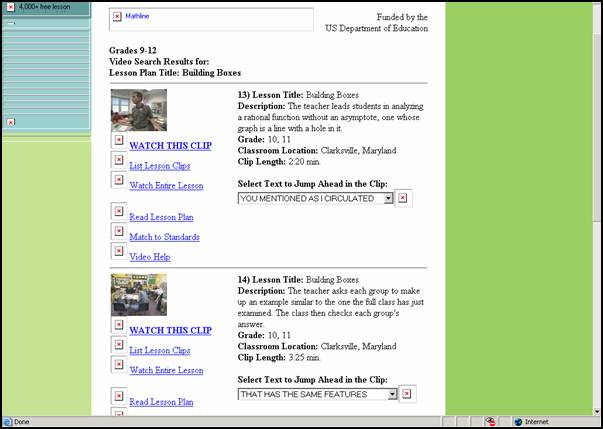
Figure 1. Screen shot of online videos that were available from PBS Teacher Source.
Research on technology use in education. Because many PSTs question the appropriateness of using technology, it is important to help them understand the broad range of research available about the use of technology in education. The PSTs read and examine research related to technology use in education, generally, and in mathematics education, specifically. For example, PSTs explore the Web site of the Center for Applied Research on Educational Technology (CARET) to gain access to research-based answers to critical questions related to educational technology, including student learning, curriculum and instruction, and assessment and evaluation. They are also asked to read and report on mathematics-specific technology research or practitioner articles that relate to particular mathematics topics they are investigating (e.g., functions). Examination of the research has been useful in helping the PSTs understand that evidence exists suggesting that technology use can enhance student learning, if used appropriately (see for example, Kwon, 2002; Harsk, Suhre, & Van Streun, 2000).
Technology to support mathematics instruction. PSTs are exposed to technology applications that may be used to present and represent the subject matter visually. For example, PSTs examine the (a) the animation feature of PowerPoint presentations to organize and structure various types of lessons (e.g., teacher-led vs. guided investigation), (b) Web-based mathematical applets or microworlds (e.g., National Library of Virtual Manipulatives or Manipula Math with Java ) to help students visualize mathematics concepts, and (c) readily available software features (e.g., equation editor, screen shots) to generate mathematically correct symbolism and visual images as part of the worksheets and presentations.
The focus is not on the incorporation of “bells and whistles,” but rather on the use of appropriate representations and images for teaching and learning mathematics. Figure 2 (see the accompanying PowerPoint file) illustrates how a PST in the course used balloon text boxes (characteristic of drawing menus in various electronic programs) to focus students’ attention on specific vocabulary that will be discussed. A balloon enters the screen to highlight the particular vocabulary word and then disappears to allow a focus on another term.
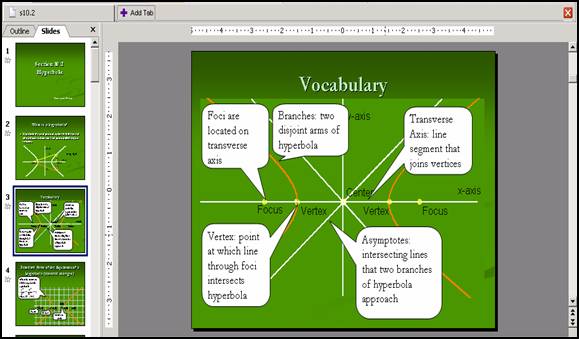
Figure 2. Use of animation feature of PowerPoint presentation to highlight mathematics vocabulary.
Learning and teaching with technology. PSTs learn to guide their students to use technologies such as spreadsheets, computer-based laboratories, mathematics applets/micro worlds, graphing calculators, and other handheld technologies to explore mathematics concepts and use mathematics to solve problems. The PSTs first engage in the activities as learners and then examine the activities for their pedagogical attributes. Activities used in this course come from a variety of sources, including the mathematics instructional modules developed by the Center for Technology and Teacher Education at the University of Virginia. In addition, PSTs utilize guidelines for technology-based activity development as described by Garafalo, Drier, Harper, and Timmerman (2000) to develop original technology-rich lessons. In several administrations of the course, the PSTs also participated in the Texas Instrument College Short Course Program as a course requirement.
Assessment issues related to technology use. The PSTs examine and consider assessment issues related to technology, such as the need to change assessment when technology is used as a regular part of classroom instruction. For example, the PSTs read and discuss an article (Meel, 1997) describing the use of technology-active, -neutral, – inactive, and -specific exam items as they consider various ways to assess students’ learning of mathematics when technology is used regularly.
The overall aim of the course goes beyond the mere exposure to the use of technology, as the PSTs are encouraged to consider their roles in realizing the current vision for technology use in school mathematics. This feature was particularly important in earlier implementations of the course when models did not exist for effective technology integration.
Technology Integrated Course Planning Assignment
The Technology Integrated Course Planning Assignment is a major course assignment representing a large portion of the PSTs’ course grade. The assignment was initially developed to address my dissatisfaction with student learning outcomes related to technology integration in prior course implementations. It was then redesigned based upon feedback from former PSTs who revealed that although they learned a lot about technology use as learners, they did not feel prepared to integrate technology as teachers. Consequently, the nature and intent of the course and its requirements were reexamined. In particular, there was a need to enhance the PSTs’ learning experiences in ways that would prepare them to incorporate technology once they became teachers. That is, the goal needed to move away from providing exposure to a variety of technologies to providing thorough examination and preparation for technology use to enhance mathematics learning and teaching. Specifically, the course was redesigned to
- Help PSTs focus on teaching mathematics (rather than the technology), while helping them see how technology can be used to enhance students’ experiences and understanding of mathematics concepts.
- Help PSTs consider how the curriculum, instruction, and assessment changes as a result of technology integration.
- Expose PSTs to the wealth of resources available for technology integration and provide them opportunities for determining how they might be used.
Finally, it was important for the PSTs to leave the course with technology tools they could immediately use to overcome any barriers to technology integration when they became practicing teachers. Collectively, these needs led to the development of the technology course planning assignment.
The assignment requires PSTs to integrate technology in a mathematics course taught at the secondary level (e.g., grades 6-12) for an entire school year. Working in collaborative teams of three or four, the PSTs make instructional decisions about the appropriate use of technology (e.g., when, where, and why) and address the influence of regular technology use on instruction, curriculum, and assessment. The PSTs are required to address the intended curriculum by examining the Standards (NCTM, 2000), curriculum guides provided by the state’s Department of Education and local school districts, textbooks (particularly those not designed for technology integration), and other available resources. In addition, PSTs are asked to investigate the availability of technology in the local school districts. Often surprised by the availability of technology or the encouragement provided for its use, the PSTs are also encouraged to talk to practicing mathematics teachers and district mathematics supervisors about the nature of this assignment and its appropriateness for classroom use. In addition to meeting the requirements of the course by completing the assignment, it is important to convince the PSTs that they are developing a resource they can actually use.
This assignment (see Appendix for assignment guidelines from course syllabus) is discussed on the first day of class. The PSTs identify their group members in the second class session. Initially, the PSTs express several concerns about the assignment, including lack of familiarity with particular technologies, concerns related to reliance on their peers for earning a major percentage of their course grade, and the requirement to consider technology integration during an entire school year. However, as the course progresses with technology integration throughout the semester, the PSTs begin to feel more comfortable as they receive opportunities to address the development of their assignment.
The assignment is submitted on a CD that includes a user-friendly navigation system, allowing a user to find and identify appropriate resources easily. A great deal of flexibility in the design of the navigation system is permitted. For example, figures 3-5 show screen shots from the CD submitted by an Algebra II group. When the CD is loaded, it opens to a title page that introduces the group members and the course and includes a hyperlink that reads, “Click here to enter.” This link leads to the course content page shown in Figure 3. The course content page contains hyperlinked text that navigates the user to other hyperlinked pages. Clicking the phrase, “Lesson Plans,” takes the user to the page shown in Figure 4. Among other things, that page identifies lessons that incorporate technology and the type of technology that is used. Clicking on a particular lesson produces a document that actually contains the lesson with all of its components. Figure 5 shows a list of calculator-active exams developed to support the regular use of technology in the designed course.
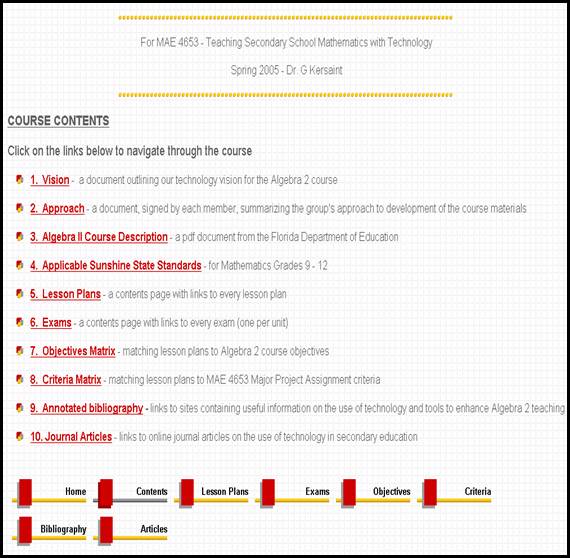
Figure 3. Organizational structure of the CD submitted by an Algebra 2 group.
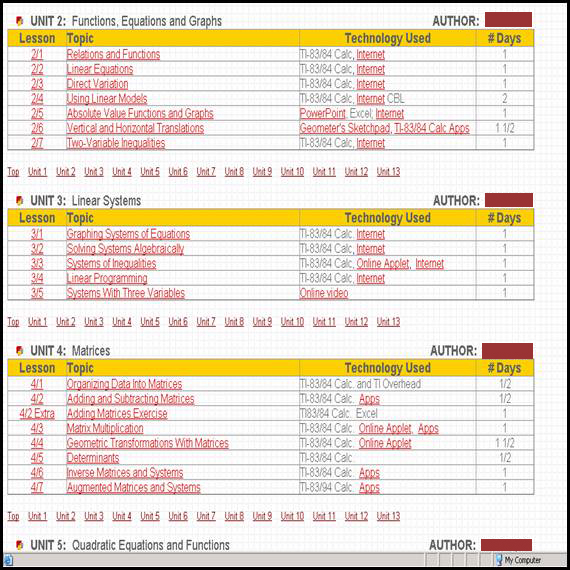
Figure 4. List of technology integrated lessons.
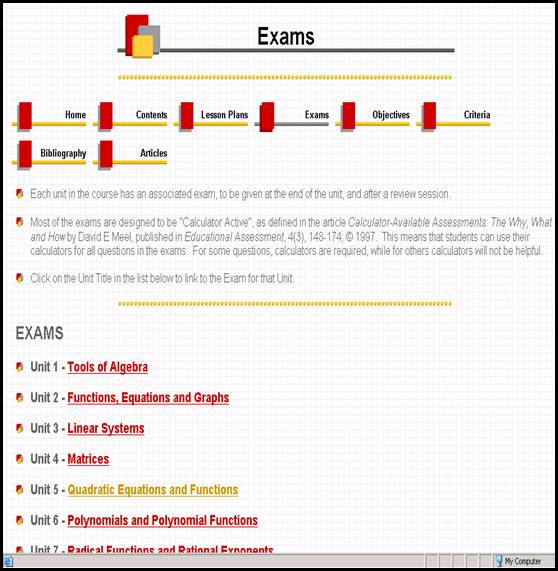
Figure 5. List of calculator active exams.
Figures 6 and 7 illustrate screen shots from the CD provided by a Calculus group. As can be seen, this group took a different approach to their organizational structure. Their introductory page includes a navigational system with hyperlinked figures on the left. Clicking “Applications of Derivatives” for example, takes the user to the page shown in Figure 7. This page begins with a discussion about the content and provides information about how the resources are intended to be used. A list of technology lessons is provided after the introductory text.
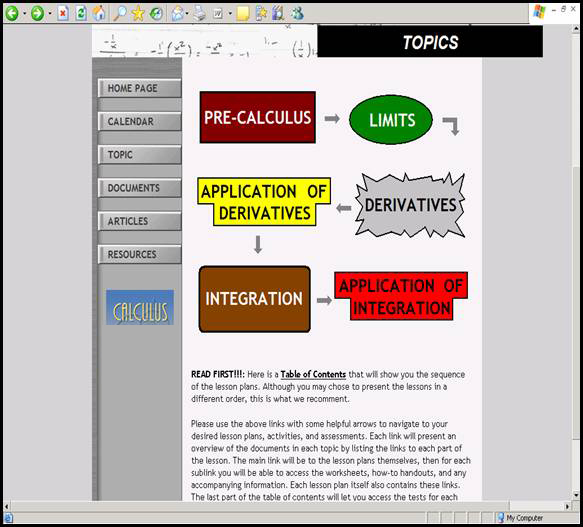
Figure 6. Organizational structure of content for the calculus group.
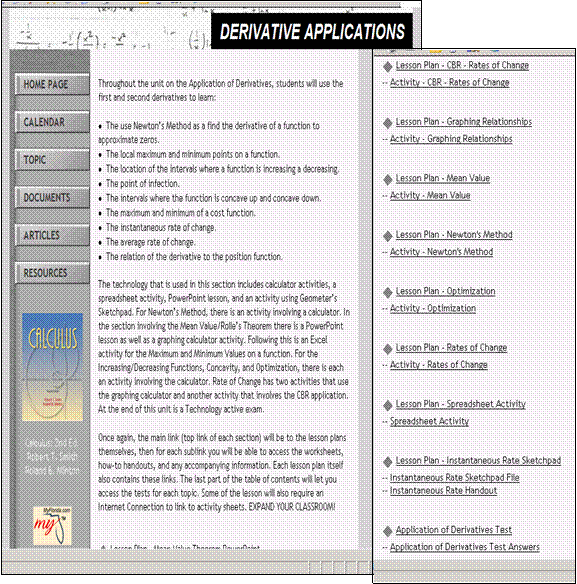
Figure 7. Description and list of lesson included in the derivative application section.
Lessons Learned
During the first implementation of the course, models were not available for such an assignment. Consequently, adjustments were made over the years of implementation to address problem areas such as flexibility, distinguishing between objectives for mathematics or technology, designing technology-rich lesson plans, removing nonproductive group members, and assessing the assignment.
Flexibility. It was important to allow PSTs to take ownership of their course development; therefore, PSTs needed flexibility with the assignment criteria to allow them to make judgments related to the course goals. At times the PSTs were able to provide an appropriate rationale for excluding a particular component as part of their course (e.g., “No CBLs are currently available at [the school district where they will likely be employed] so we would prefer to focus more on the technology they have”). However, they were not permitted to remove an assignment criterion simply because they opted not to approach the task with due diligence.
Mathematics objectives vs. technology objectives. The PSTs needed assistance in distinguishing mathematics objectives from technology objectives for a lesson. In early implementations of this assignment, the PSTs tended to focus on the technology (e.g., “Students will use the graphing calculator to…”) rather than focusing on the mathematics students were intended to learn. As a result, PSTs are now asked to identify mathematics and technology objective(s) for every lesson included in their course portfolio. The mathematics objectives describe the mathematics content to be learned, and the technology objectives describe how the technology will be used to enhance students’ understanding of that content. Furthermore, the distinction between the two was regularly reinforced during class when completing or examining activities or lessons. Through these discussions, PSTs recognized that their goal is to teach mathematics concepts first and that technology is merely a tool used to facilitate the acquisition of knowledge.
Technology lesson plans. At times, the PSTs had appropriate ideas for building students’ understanding with the aid of technology but failed to describe it fully in the lessons they developed. When asked, the PSTs could verbalize what they intended to do in detail; however, the descriptions were lacking in their written work. It was necessary to clarify the level of detail needed so that a third party could understand the nature and intent of the learning experience. To be useful, the information (i.e., the CD and materials provided within it) needed to stand on its own without the need to make inferences or consult the developer. Specifically, PSTs needed to focus on describing the pedagogical practices that they planned to use (e.g., small-group vs. whole-class, types of questions they would ask, etc.) during the lesson. It was insufficient to state simply that technology would be used. This requirement encouraged PSTs to move beyond simply identifying the possibility of using a technological tool to actually giving thought to how the identified technology could be used to facilitate learning.
Removing nonproductive group members. Due to the extensive nature of this assignment, it was necessary for PSTs to work as a collaborative team for the duration of the course. It became necessary to devise a plan for removal of nonproductive group members. The following statement was added to the course syllabus:
Once groups have been established, if a group member does not contribute substantially to the development of the course, it is the responsibility of the team to remove that individual from the group by consulting the instructor. Once removed from a group, the individual is responsible for meeting the minimal criteria established for a group of 4 and will not earn a grade higher than a C, if the criteria are adequately met. No additional time will be provided.
Providing this statement was an attempt to send a clear and unambiguous message that collaboration is important and required to complete the assignment successfully, and that there would be consequences for failure to participate productively. To date, there have been only two occasions when this option was used. In both cases, the PSTs were able to negotiate and develop a satisfactory plan. They were encouraged to identify specific tasks that the group member in question needed to address, state the level of quality required, and provide a deadline for accomplishing those tasks. Failing to meet this deadline would result in the official removal of the problematic group member from the group. In both cases, the individuals in question met their peers’ requirements and worked with them to complete the assignment successfully. This means has proven effective in holding PSTs accountable to their peers with little intervention on the part of the instructor.
Assessing the project. Evaluating this assignment is a complex and time-consuming task. Over the years, I have grappled with various ways to evaluate and assign a grade to this assignment. Rather than waiting until the final project is submitted, the PSTs must submit specific lessons (see items with asterisk on the assignment) as they are addressed in the class. This approach provides an opportunity for ongoing assessment of individual work and frequent feedback that can be used in the final course development.
Most recently, input from the PSTs has been incorporated as part of the evaluation process. Each group meets with the instructor during final exam week to discuss and review the technology-integrated course they developed. During this meeting, PSTs explain decisions made, illustrate and describe the intended use of technology, clarify interpretations of their work, and showcase the development of the course. These meetings have been insightful and provide additional information that might not have been clear if the assignment were reviewed without their input. These meetings also provide an additional opportunity to give feedback. One PST shared the following about the process, “I thought we would have to just defend our project, but we are still learning.” At the end of the meeting, PSTs are each asked to provide a self-assessment describing how they contributed to the assignment and what they learned by completing this assignment. They are also asked to provide a group assessment describing how well the group functioned. Overall, the PSTs have provided insightful and critical comments that not only assist the instructor in the evaluation of their project, but also assists in the assessment of the nature and quality of student learning experiences in the assignment.
Preservice Teachers’ Reactions
Although the PSTs initially balk at what appears to be overwhelming requirements, by the end of the semester they are proud of the knowledge they have gained and the work they have produced. During the final week(s) of the course, the PSTs are given an opportunity to present and showcase their project to their peers by illustrating the navigations system they have developed, organization of the materials, and selected lessons. During these presentations the PSTs reveal how much they learned about technology integration. They spontaneously share their initial reactions and the growth they have experienced while working on this assignment (e.g., “I didn’t even know how to develop a “How To” before this course but now I see how I could it use it to help students learn to use particular technology features”).
Each year several PSTs also share comments from practicing teachers who have requested copies of their projects or have invited them to help with technology integration in the classrooms (e.g., “The teachers at [name] school want a copy of our project,” “[Teachers] are always asking me about what I found,” “I taught a teacher how to use the Smart Board”). Others share that teachers have allowed them to implement their technology-integrated lessons with students. As they finalize the project, the PSTs recognize and acknowledge that they have developed a package that can “really” be used in the mathematics classroom. The following comments are representative PST comments during the spring 2006 semester. (All names are pseudonymous presentations.)
| Jaime: | Considering the use of technology across the whole year helped me to see how better to balance the curriculum. When considering all the material to be taught I could decide which topics were better suited for technology and which would be better taught through some other means …. |
| Tina: | I am confident that I can not only “do” the technology but I can also “teach” it to others. Again, I believe this is because we had to actually produce the curriculum as we did. By actually taking the time to complete the types of technology activities instead of just reading about them enabled me to really understand why the technology is important and how to integrate it into my teaching. |
Although not mandated, the PSTs are encouraged to share copies of their course assignment with peers. Without fail, they are excited to do so and often share additional information and enhancements not required as a part of the assignment (e.g., “I added a section of other materials that may be helpful to have, such as different graph papers.”). As a result, each PST leaves the course with a CD packed with technology-integrated lessons for most topics taught in secondary mathematics.
Evidence of Technology Integration
Research reports continue to reveal that instructional technology is not reaching its potential in classrooms. Teachers are reluctant to use technology for a variety of reasons. Some do not believe it is useful for teaching and learning mathematics (Hazzan, 2000), some lack familiarity with the technological tools (Manoucheri, 1999), some lack knowledge related to the use of technology as part of classroom instruction (National Center for Education Statistics, 2000), and others may not be aware of the vast amount of resources available to assist them in this effort. Therefore, it is important for teacher educators to consider means for helping PSTs learn to more fully incorporate technology as a regular part of their planning and classroom instruction. The assignment described in this article is an effort to increase the likelihood that PSTs will use technology when they teach. Although conclusive claims cannot be made regarding the actual use of technology by all PSTs who have completed this assignment, anecdotal evidence exists from reports provided during their internship experiences and from personal communication with recent graduates. Some representative comments follow: (“DB” refers to comments shared as part of discussion board conversations.)
At first I thought that there would be no way of doing this, b/c at most, 50% of students had graphing calculators. But then after further thought, I paired them up, 1 calc for 2 people, and went on with a Technology Integrated Lesson, And you would not believe how many students went out and purchased a TI-83 after that!!! (Robin, intern, DB 2-6-03)
When I asked about technology at the school, during my internship, they told me that the school had the TI Navigator, but that no one knew how to use. I told them that I was familiar with it and they gave it to me. Literally, it was mine to use in my classes. I think they hired me because I knew how to use the technology. (Ronald, a first year teacher, personal communication, fall 2005)
My co-teacher is going to teach me more about the clickers and TI navigator. It’s really nice that all the technology is available to me and that my co-teacher knows how to use it! This encourages me to use it! I am going to try to mix up all the tech. techniques I know so I can make learning fun and make this a great experience. (Samantha, intern, DB 2-7-06)
Honestly, when I took the tech classes I learned some but I didn’t think I was ever going to use it! I thought that it was too complicated and it wouldn’t really help the students learn. However, when I started teaching I started to enjoy using the technology a lot! I think that the technology makes learning better and fun. (Samantha, first year teacher, Personal communication, 12-23-06)
My school just got a smartboard. I told them that I had taken a technology course, so they placed it my room so that I can use it. Apparently none of the other mathematics teachers knew how to use it. Teachers come to my class to see what I am doing. It’s a bit frightening – I am the new teacher. (Joan, first year teacher, personal communication 1-12-07)
When I started interning I expressed that I had technology courses and I was then asked about the smartboard. I told them that I would love to use it. Well, finally yesterday I was able to get the program installed on the laptop that I am using. … Some of the teachers found out that I was going to use it and then all came into my room to see it. It was a great feeling that I was able to show the other teachers something. (Amy, intern, DB 3-2-07)
I was able to incorporate technology into my internship everyday. I used a power point and a graphing calculator attached to a TV screen for almost every lesson. I also got the chance to use a SMARTBOARD a few times. If I needed something all I had to do was ask and if they could get it for me they would. (Amy, Intern, DB 4-15-07)
I love teaching with the Active Board! I really hope that I get hired at a school that already has them. I think that it is also helpful for the students. The day that there was [sic] problems with the Active Board I had started teaching the lesson on the overhead and I was very surprised by the reactions of the students. They said that they hated the overhead and loved the lessons on the Active Board. I really had thought that it did not matter to them! I guess I was very wrong. The students have also asked me if [the teacher] is going to teach like me when I leave (referring to using the Active Board). (Helen, intern, DB 4-25-07)
At this time is difficult to determine the full impact of this assignment on the PSTs’ actual use of technology or the quality of the learning experiences they provide. Although they take the technology course as a large group (between 20-30 students), they do not take the internship course during the same semester. Enrollment in seminar is dependent upon completion of all university course requirements. However, PST self-reports as part of discussion board interactions have been insightful. Many of the comments were generated as part of reflections about technology use during the internship experiences. Discussion board interactions facilitated the PSTs’ reflection about technology concerns and issues related to technology use. These interactions also provided encouragement and support to PSTs who initially might have been reluctant to use technology, yet eventually proclaim that the technology integrated course materials that they developed were quite useful (“I’m actually using the stuff we made. I just adjusted it a bit, but I was able to use it.”).
Conversations with mathematics supervisors in local school districts indicate that former PSTs are integrating technology as part of their instruction once they become interns or new teachers in the districts. For example, because the high school mathematics supervisor is familiar with the PSTs’ experiences in this program and with the technology assignment, he visits our interns and graduates to make them aware of technology available in their schools. In addition, he has offered to make other technology available, if desired (e.g., Smartboard).
The feedback received from the PSTs, graduates, teachers, and school district mathematics supervisors has encouraged me to continue to require this assignment and enhance the PSTs’ learning experiences with technology. They leave the technology course having addressed curricular, instructional, and assessment issues related to technology use; having examined research related to technology use; and having developed lessons that integrate technology. Collectively, these experiences provide the means to support and encourage technology integration during the teacher preparation years, while supporting expectations for promising practice with technology integration in the future.
Note:
[1] Mathline videos had been readily available online without cost in the past; however, at the time of writing this manuscript, the PBS organization has changed its Web site and the searchable video content link is no longer available, but can be found by using a saved URL (http://www.pbs.org/teachersource/mathline/lessonplans/search_6-8.shtm). Mathline (http://idahoptv.org/learn/mathline/mathline.html) is a “series of video lessons which allow teachers to make virtual field trips to classrooms where teachers and students are engaged in standards-based instruction, provides lesson guides along with suggested ideas for online discussions and provides Internet-based learning communities facilitated by experienced classroom teachers.”
References
Adams, T. L. (1997). Addressing students’ difficulties with the concept of function; Applying graphing calculators and a models of conceptual change. Focus on the Learning Problems in Mathematics, 19, 43-57.
Clements, D., & Battista, M. (1994). Computer environments for learning geometry. Journal of Educational Computing Research, 10(2), 173-197.
Conference Board of Mathematical Sciences. (2001). The mathematics education of teachers. Washington, DC: American Mathematical Society & Mathematics Association of America .
Doerr, H. M., & Zangor, R. (2000). Creating meaning for and with the graphing calculator. Educational Studies in Mathematics, 41, 143-163.
Farrell, A. M. (1996). Roles and behaviors in technology integrated pre-calculus classrooms. Journal of Mathematics Behavior, 15, 35-53.
Garafalo, J., Drier, H. S., Harper, S., & Timmerman, M. A. (2000). Promoting appropriate uses of technology in mathematics teacher preparation. Contemporary Issues in Technology and Teacher Education, 1(1). Retrieved from https://citejournal.org/vol1/iss1/currentissues/mathematics/article1.htm
Graham, A. T., & Thomas, M. O. (2000). Building a versatile understanding of algebraic variables with a graphic calculator. Educational Studies in Mathematics, 41(3), 265-282.
Guerrero, S., Walker, N., & Dugdale, S. (2004). Technology in support of middle grades mathematics: What have we learned? Journal of Computers in Mathematics and Science Teaching, 23(1), 5-20.
Hazzan, O. (2000). Attitudes of prospective high school mathematics teachers toward technology integrating information technologies into their future teaching. (ERIC Document Reproduction Services No. ED444539.)
Heller, J. I., Curtis, D. A., Jaffe, R., & Verboncoeur, C. J. (2005). The impact of handheld graphing calculator use on student achievement in Algebra 1. (ERIC Document Reproduction Services No. ED493688.)
Hembree, R., & Dessart, D. (1992). Research on calculator in mathematics education. In J. T. Fey & C. R. Hirsch (Eds.), Calculators in mathematics education: 1992 yearbook (pp. 23-32). Reston, VA: National Council of Teachers of Mathematics.
Hollar, J.C., & Norwood, K. (1999). The effects of a graphing-approach intermediate algebra curriculum on students’ understanding of function. Journal of Research in Mathematics Education, 30(2), 220-226.
Huang, S.Y., & Waxman, H.C. (1996). Classroom observations of middle school students’ technology use in mathematics. School Science and Mathematics, 96(10), 28-34
International Society for Technology in Education. (2007). National educational technology standards for student (2nd ed.) . Eugene, OR: Author.
International Society for Technology in Education. (2002). National educational technology standards for teachers. Eugene, OR: Author.
Kaput, J. (1992). Technology and mathematics education. In D. Grouws (Ed.), Handbook of research in mathematics teaching and learning (pp. 525-556). New York: MacMillan.
Kellogg, M., & Kersaint, G. (2004). Creating a vision for the Standards using online videos in an elementary mathematics methods course. Contemporary Issues in Technology and Teacher, Education, 4(1). Retrieved October 14, 2007, from https://citejournal.org/vol4/iss1/mathematics/article1.cfm
Kersaint, G., Horton, B., Stohl, H., & Garofalo, J. (2003). Technology beliefs and practices of mathematics education faculty. Journal of Technology and Teacher Education, 11(4), 567-595.
Kwon, O. N. (2002). The effect of calculator-based ranger activities on students’ graphing ability. School Science and Mathematics, 102(2), 57-67.
Lawrenz, F., Gravelu, A., & Ooms, A. (2006). Perceived helpfulness and the amount of technology in science and mathematics classes at different grade levels. School Science and Mathematics, 106, 133-139.
Manoucherhri, A. (1999). Computers and school mathematics reform: Implications for mathematics teacher education. Journal of Computers in Mathematics and Science Teaching, 18(1), 31-48.
Mathematics Association of America . (1991). A call for change: Recommendations for the preparation of teachers of mathematics. Washington, DC: Author.
Mathematics Sciences Education Board. (1991). Counting on you: Actions supporting mathematics teaching standards. Washington, DC: Author.
Meel, D. E. (1997). Calculator-available assessments: The why, what and how. Educational Assessments, 4(3), 149-174.
Merriweather, M., & Tharp, M. L. (1999). The effects of instruction with graphing calculators on how general mathematics students naturalistically solve algebraic problems. Journal of Computers in Mathematics and Science Teaching, 18(1), 7-22.
Milou, E. (1999). The graphing calculator: A survey of classroom usage. School Science and Mathematics, 99, 133-140.
Mishra, P., & Koehler, M. J. (2006). Technological pedagogical content knowledge: A framework for teacher knowledge. Teachers College Press, 108, 1017-1054.
National Center for Education Statistics. (2000). Teachers’ tools for the 21st century: A report of teachers’ use of technology. Retrieved on May 1, 2006, from http://nces.ed.gov/pubsearch/pubsinfo.asp?pubid=2000102
National Council for the Accreditation of Teacher Education. (2002). Professional standards for the accreditation of schools, colleges, and department of education. Retrieved March, 19, 2006 from http://www.ncate.org/public/programStandards.asp?ch=4
National Council of Teachers of Mathematics. (2000). Principles and standards for school mathematics. Reston, VA: Author.
Norton, S., McRobbie, C. J., & Cooper, T. J. (2000). Exploring secondary mathematics teachers’ reasons for not using computer in their teaching: Five case studies. Journal of research on Computing in Education, 33(1), 87-109.
Quesada, A. R., & Maxwell, M. E. (1994). The effects of using graphing calculators to enhance college students’ performance in precalculus. Educational Studies in Mathematics, 27(2), 205-215.
Roberts, D. L., & Stephens, L. J. (1999). The effects of the frequency of usage of computer software in high school geometry. Journal of Computer in Mathematics and Science Teaching, 18(1), 23-80.
Rochowicz, J.A., Jr. (1996). The impact of using computers and calculators on calculus instruction. Journal of Computers in Mathematics and Science Teaching, 15, 423-435.
Schwarz, B.B., & Hershkowitz, R. (1999). Prototypes: Brakes or levers in learning the function concepts? The role of computer tools. Journal for Research in Mathematics Education, 30(4), 362-389.
Simonson, L. M., & Dick, T. P. (1997). Teachers’ perceptions of the impact of graphing calculators in the mathematics classroom. Journal of Computers in Mathematics and Science Teaching, 16(2), 239-268.
Slavit, J. (1996). Graphing calculators in a “hybrid” algebra II classroom. For the Learning of Mathematics, 15(1), 9-14.
U.S. Department of Education (2001). The Nation’s Report Card: Mathematics 2000. Education Statistics Quarterly, 3(3). Retrieved October 17, 2007, from the National Center for Education Statistics Web site: http://nces.ed.gov/programs/quarterly/vol_3/3_3/q2-1.asp
Wenglinsky, H. (1998). Does it compute? The relationship between educational technology and student achievement in mathematics. Princeton, NJ: Educational Testing Service
Author Note:
Gladis Kersaint
University of South Florida
[email protected]
Center for Applied Research on Educational Technology – http://caret.iste.org/index.cfm?fuseaction=topics
Center for Technology and Teacher Education – http://www.teacherlink.org/content/math/activities/home.html
College Short Course Program – http://education.ti.com/educationportal/sites/US/nonProductMulti/pd_college.html
NCTM Technology Principle – http://standards.nctm.org/document/chapter2/techn.htm
National Library of Virtual Manipulatives – http://nlvm.usu.edu/en/nav/vlibrary.html
Manipula Math with Java – http://www.ies.co.jp/math/java/
PBS Teacher Source – http://www.pbs.org/teachers/math/
Slates: Teaching Math in America – http://americanhistory.si.edu/teachingmath
Technology Integrated Course Planning Assignment
In groups of 3 or 4, your task will be to integrate technology in a particular mathematics course taught at the secondary level (e.g. middle school mathematics [includes all five strands], algebra, pre-calculus, calculus). To the extent possible, each group will be responsible for a different course. You will work as a collaborative group of teachers whose goal is to fully integrate technology into this course. You are to find, modify, and create technology-integrated lessons that can be used to replace units in a traditional textbook (one that is not specifically designed for technology use). The intent of this project is for you to be fully prepared to integrate technology in at least one course when you leave this program.
Materials: NCTM Standards, State Standards, State Course Description, Textbooks (several), Internet Resources (e.g., web-based applets, online lessons), journal articles
Assignment Guidelines: Your goal is to appropriately integrate technology in this course, while covering the entire course content. The technology should be used to INTRODUCE/DEVELOP or ENHANCE the teaching and learning of the intended topic. It should NOT be used to reinforce an idea that has already been taught. The goal is to develop students’ conceptual understanding of the subject matter.
Each technology-integrated lesson in the course you develop must include objectives (mathematics & technology), an outline of the lesson (procedures – what should occur, particularly as it related to the use of technology), the list of needed materials, developed worksheets or lab sheets, and an appropriate practice assignment (when appropriate) and assessments. The group members should agree on a lesson plan format that will be used for the project. Each lesson should include a mathematics and a technology objective.
Mathematics Objective: What mathematics do you want students to learn and understand?
Technology Objective: How will the technology be used to enhance students’ understanding of that particular mathematics concept?
It should also have sufficient details so that a substitute knowledgeable in mathematics would understand how you intended them to use the technology as part of instruction. This requirement is necessary even when lessons are taken from other sources. If the information above is not already included, it should be added. Produced lab sheets should be in a format that is ready to be used by students. When appropriate, the lessons should include directions for using specific functions of the technology needed to accomplish the tasks. Additionally, it may be helpful to write notes to go along particular lessons.
This should represent well-thought out course and not simply a collection of activities.
The SCOPE and SEQUENCE for the course should be appropriate given the nature of the course and the technology that is available. In addition to including materials that have been already developed, the following minimal criteria must be met. Each group member is personally responsible for CREATING at least ONE original lesson for the items with an asterisk (*). Some lessons may address multiple topics.
- *Mathematics Lessons that uses PowerPoint Presentation, and web-based applet in its delivery
- *Lessons that include a section that addressed “How To” use a particular function of the technology. This section should include directions, with screen shots to acquaint student with the use of the particular function (e.g. drawing a figure on the graphing calculator). You may not use a feature that is addressed in class. The goal is for you to explore other features.
- *Lessons that require the use of spreadsheet (e.g. excel) with “real” data. Real data in this context refers to data that is available about a current event (e.g. amount of oranges grown in Florida). It does not refer to data that is collected as part of a class project. The goal here is to link mathematics to events in the world.
- *Lessons that involve the use of the graphing calculator that is appropriate to the selected course
- *At least 4 lessons must use graphing calculator APPS
- Lessons that involve the use of CBL/CBR, as appropriate
- Lessons that require the use of dynamic geometry software, as appropriate
- *Technology Active Exams. Developed exams must be aligned with the ideas discussed by Meel (1997). The answer key must identify the type of item (e.g., calculator-neutral). Include a brief description of what it is you wish to learn about students’ understanding and how you have ensured that it meets the criteria for the indicated type.
- An annotated bibliography of resources (e.g., web-based). This annotated bibliography should include web-based resources that can be used to enhance the learning and teaching of topics covered in this course. The following should be included: a title, web address (URL), a brief description of the site and its usefulness for teaching and/or learning mathematics (Is it teacher or student oriented? How it might be used?). The bibliography should be organized in a manner that will make it fairly easy to access information appropriate to a given topic addressed in the course.
- Journal articles that describe the use of technology in teaching and learning mathematics that is appropriate for your course, technology tips that are appropriate for the technology used in your course, or research related to technology use that is appropriate for your course. Be sure to identify why this article is helpful in the development of your course or your understanding about technology integration in mathematics.
Because you are working as a collaborative group, you will be collectively responsible for the quality of any materials that are produced. That is, the group is responsible for ensuring that any materials submitted as part of the course are appropriate for the intended course and are of high-quality.
Be sure to provide a citation to document any resources used as you develop or modify lessons. In fact, each lesson should include information about its author and/or its source, even the ones you develop. This will help you locate the original source in the future. This integrated technology will be submitted as a portfolio on a CD. That is, you will be required to burn a CD with all the information and include a user-friendly navigation system. Keeping the lesson information on disc will ensure that each of the group members have access to the course and will be helpful to you in the future if you need to make adjustments or adaptations. Remember, the criteria stated above are minimal. It is enough to ensure a grade of satisfactory. To earn a better grade, you must provide substantially more and defend that it meets the criteria of “Excellent” work. Class time will be allotted for the development of this technology-integrated course.
In addition, each group is required to include the following:
- A paper that describes the groups’ vision for technology use in this course. This paper should describe overarching instructional methods that are suggested for teaching the content (teachers’ role & students’ role), how technology is being used to enhance/extend the learning or teaching of the subject matter, how the use of technology will facilitate students’ learning, the approach used to determine when technology is or is not used (i.e., How did you go about determining which topics would be taught without the use of technology), assessment strategies, etc.
- A paper that describes the groups approach to completing the assignment. How did you plan, what decisions were made, the role of each group member in this project, etc. (This should be followed by the signatures of each group member to indicate agreement regarding this process and each group members contribution to the overall project.)
- Course Description and Related Standards
- A table/matrix or other format that clearly identifies the lessons used to meet or exceed the minimal criteria identified above. The goal here is for you to document what components have been addressed or explain why a decision was made not to address it.
- A table/matrix or other format that shows the relationship between each lesson and the course objective that each technology-based lesson addresses. (The intent is to avoid having lots of technology examples for a particular learning objective, although having several options may be helpful to you in the future.)
- A table of content of the lessons/activities followed by the lessons/activities. Although this assignment will satisfy a course requirement, the goal is for you to leave with materials you can actually use when you teach. Remember, its usefulness is directly linked to the ease of use. Develop this course in a way that is useful to you.
