Anyone who can access the Internet can be part of the knowledge-access, knowledge-building, information-exchanging culture, regardless of location. Time magazine’s latest “Person of the Year” is “You”(Grossman, 2006). In a startling acknowledgement that “community and collaboration on a scale never seen before” has trumped any famous individual, the editorial board elected to pay tribute to the power of the World Wide Web—and some of its most famous creations such as Wikipedia, YouTube, MySpace, and Web logs or blogs. This research is about blogs and their use in a new teacher professional development project.
Weblogs were first named and described in 1997 by Jorn Barger (Blood, 2000) and then shortened to blogs by Peter Merholz in1999. According to well-known New York Times journalist Tom Friedman (2005), blogs and “wikis” or Wikipedia (from the Hawaiian word for “quick”), the online encyclopedias created by intellectual commons collaboration, are two examples of how computer technology is contributing to the “flattening” of the world. Compared to other online discussion tools, blogs are easy to use and involve little cost. This research describes how blogging was used to help launch a science and mathematics teacher professional development project quickly, while more sophisticated but time-consuming portals were being considered.
Context of Study
The Professional Learning Community Model for Alternative Pathways in Teaching Science and Mathematics (PLC-MAP) is a partnership of North Harris Montgomery Community College, Texas A&M University, and 11 urban, suburban, and rural school districts in the Greater Houston area. The goal of the 5-year project is to develop a Professional Learning Community (PLC) model for engaging science and university education researchers and community colleges science and mathematics faculty in increasing the retention and quality of middle and high school mathematics and science teachers being certified through the NHMCCD Alternative Certification Program (ACP). Improved quality in teaching refers to increased use of effective inquiry teaching strategies (including Instructional Technology use where appropriate), which engage students in asking relevant scientific questions and reasoning , judging, explaining, defending, arguing, reflecting, revising, and disseminating findings. An education community model such as PLC-MAP can provide support for high quality science and mathematics content integrated with sound pedagogy and learning theory, simply from the vast amount of distributed expertise that is available from mentor teachers, intern teachers, community college professors, education researchers, and scientists.
The intervention includes six seminars each semester featuring scientists and science educators and their graduate students from Texas A&M University, community college science and mathematics professors, mentor teachers, along with ACP intern and induction year teachers. The goal is to provide participants with firsthand inquiry experiences using large-scale datasets, modeling, or visualization. Providing model inquiry lessons that can mentor interns and induction year teachers is the primary challenge of this professional learning community. Naturally, the ultimate goal is to help them translate these ways of learning back to their grades 6-12 classrooms. During the first semester of the project blogs were used as an online reflective forum with hopes for constructive and social learning potential in between the seminars (Hernandez-Ramos Pedro, 2004).
Objectives of Study
The objectives of this study were to determine:
- To what extent did participants find blogging helpful in making connections during PLC-MAP?
- How did participants’ confidence in using technology change during the PLC-MAP semester?
- What were the major themes of the blogs by TAMU faculty, community college faculty, mentor teachers, and intern teachers respectively?
- What was the rate of participation in blogging by TAMU faculty, community college faculty, mentor teachers, and intern teachers respectively?
- How was the quality of the blogs?
Literature Review
Building Learning Community
A learning community is a group of autonomous, independent individuals who are drawn together by shared values, goals, and interests and committed to knowledge construction through intensive dialogues, interaction, and collaboration (Harmon & Jones, 2001; Kowch & Schwier, 1997; Rovai, 2000). The concept of community of learners originated from a democratic, student-centered, inquiry-based philosophical perspective grounded in the works of Dewey, Vygotsky, and Bruner (Mintrop, 2001). Vygotsky’s work on knowledge construction through social interactions in situated and meaningful sociocultural contexts is especially relevant to building learning communities in which learners engage in critical thinking under the scaffolding provided through peer interactions and from the instructor (Bonk, Malikowski, Angeli, & East, 1998; Dykes & Schwier, 2003; Vygotsky, 1978).
Learning communities do not have to be built through face-to-face interactions. They can be realized using nontraditional electronic communication. These virtual learning communities can be built in two forms, synchronous and asynchronous. Synchronous communication technology allows live, real-time interactions between the instructors and learners and among the learners themselves. Asynchronous communication technology supports nonreal-time interactions between instructors and learners and among learners themselves. Compared to synchronous communication, asynchronous communities allow learners more time to engage in higher order, in-depth knowledge building and to organize and compose their written responses (Huang, 2000; Moller, 1998; Schwier & Balbar, 2002). In addition, asynchronous communication allows participants to communicate at different times and places and is more flexible to use than synchronous communication. Moller (1998) stated that asynchronous learning communities are especially relevant to training environments since adult trainees are often located in different places yet sometimes demand instant and constant help from their trainers. Blogging is a type of asynchronous communication and, therefore, considered more appropriate for this project.
Asynchronous learning has been widely used in preservice and in-service training programs (Bonk et al., 1998; Cavanaugh, 2003; Eick & Dias, 2005; Fey & Sisson, 1996; Khine, Yeap, & Lok, 2003; Li, 2003; Maor, 2003; Prestera & Moller, 2001). For example, Eick and Dias (2005) used asynchronous learning in a preservice science teacher training program aimed at promoting inquiry-based instruction in real-life classrooms. They found that this approach serves as an effective medium to foster teachers’ reflections on issues of concern related to constructivist pedagogy. Eick and Dias found that technology brought novice teachers, their mentors, and course instructors closer. They found a shift of teachers’ attitudes toward reform-based teaching methods toward the end of their program.
Li (2003), a professor in mathematics education, found that teachers talked more frankly about sensitive issues with which they may not feel comfortable in face-to-face situations. In this case, online asynchronous communication enhanced critical thinking skills and produced more diverse viewpoints.
Contrary to the findings of the previous studies, Khine at al. (2003) and Kreijns, Kirschner, and Jochems (2002) found low participation rate, low degree of collaboration and low learner satisfaction concerning online asynchronous communication. Several reasons may contribute to the disappointing results: lack of sociocultural cues in online environments (Dietz-Uhler & Bishop-Clark, 2001; Vonderwell, 2002), time-consuming, extra work (Belcher, 1999; Vonderwell, 2002), and technological difficulties such as slow downloading time, lack of storage of information, and no access to computers (Harmon & Jones, 2001; Maor, 2003). The mixed results generated from previous studies point to the need for further investigations of the effects of asynchronous learning on teacher training programs and for insights about the approaches having the potential to maximize the learning outcomes of teacher trainees.
Research suggests that in order for busy teachers to use an asynchronous learning environment they must feel part of a shared vision, have a sense of ownership of some part of the site, and benefit from the shared perspectives of others (Robertson, 2007). Providing the kind of scaffolding that has these features is challenging. Teachers are not typically given the time or the venue to share, discuss, or see examples of pedagogical alternatives for their classroom on any kind of regular basis (Darling-Hammond, 1997). One attempt at providing unique scaffolds for such online support comes from the sociotechnical community created by Barab, MaKinster, Moore, Cunningham, and the ILF Team (2001). Their framework has three features: “visiting the classroom, ” knowledge networking, and community building.
The centerpiece of the online project for preservice mathematics and science teachers is a set of videotapes of teaching by participants, who have agreed to be evaluated using a rubric developed and used by a panel of university and school faculty members. Videotaped teachers not only share their classrooms with viewers, but provide artifacts, plans, and commentary before and after the lesson. A discussion board allows any who view the tape to comment or ask questions. The authors are realistic about success so far, noting that while the use of videos allows teachers to “transcend the systemic constraints that make it difficult to visit other classrooms,” they are sometimes challenged to appreciate the particular context of what they are viewing.
Previous research also suggests that face-to-face and online learning can complement each other. For example, Li (2003) argued that face-to-face settings are more suitable for demonstrating hands-on activities and are, therefore, an indispensable component of teacher training using computer-mediated instruction. Dietz-Uhler and Bishop-Clark (2001) and Rovail (2001) both found that teacher-training programs with mixed face-to-face sessions and asynchronous online discussions generated better results than those with face-to-face sessions alone. This mixed format produced more enjoyable and fruitful face-to-face discussions after online conversations and developed a stronger sense of community. These studies guided the design of our own project.
Blogging’s Role in Building Online Learning Community
The idea of building online community through blogging is based on the constructivist theory of learning, which emphasizes a social or situated process of learning and personal construction of knowledge, including “modeling, coaching, scaffolding, articulation, reflection, and exploration” (Collins et al., 1989, p. 476 as cited in Kunz, Dewstow, & Moodie, 2003). Blogging can be used to build a “community diary” around a large project in which a group of learners can establish and maintain thoughts and share their insights (Oravec, 2003).
Bonnstetter (1998) described three phases of teacher involvement in education reform: (a) the effort phase, (b) attempt to use a teaching strategy that was learned in a half- to whole-day professional development workshop, and (c) the reflective phase for what is working and how to integrate new ideas into their established teaching tools. Unfortunately, teachers who attempt Phase II without success and therefore do not progress to Phase III may become frustrated and see innovation as simply “another short term educational trend” (Bonnstetter, 1998, p. 1). Using blogs is one way to encourage teachers to reflect with others about what is working and why.
Participants in PLC-MAP were provided access to a blogging site specifically for them to post asynchronous reflections and interactions with other participants (http://plcmap.blogspot.com), allowing the potential for peer support, as well as for the researchers and other administrators to interact with participants. In sum, blogs serve as a means for educators to share ideas and air frustrations (Toner, 2004), a tool for combining socially situated learning among teachers and students with content, in the production of subject-matter experts (Ferdig & Trammel, 2004), and as powerful tools that promote knowledge-building through reflective journal entry evaluation (Lankshear & Knobel, 2003).
Method
Participants
The participants of this study include 15 alternative certification interns and induction year teachers, 11 mentor teachers, and 9 community college faculty members. Three TAMU science and science education faculty members and one graduate student moderated the blogging conversations during the semester. Their blogging transcripts were also included in the analysis. The instructions to participants, once given the essentials of entering the blog, were simply to converse about themselves, their work, their concerns and how the project could help them be better teachers. They were encouraged to ask questions and to respond to each other’s blogs.
Data Sources
Three types of data were analyzed in this study. The first data source was the end-of-first-session survey question concerning the value of blogging. Participants’ responses were categorized, and sample responses were analyzed. The second source of data is a pre- and posttest technology survey that includes five questions regarding technology use in classrooms. A longer version of this survey was used over a 5-year period with over 150 veteran teachers in a sponsored project, Information Technology in Science (http://www.its.tamu.edu).
Nonparametric statistics, Wilcoxon Signed Rank Test, was applied because of the small sample size employed in this study and the highly skewed distribution of the data. The third data sources were the blogging transcripts. Two researchers coded them using O’Neill’s (2001) model of “dialogue moves” (p. 241) and Khineet al.’s (2003) Framework of Evaluating the Quality of Thinking and Information Processing (p. 121). The interrater reliabilities for coding the transcripts using these two frameworks were 0.90 and 0.80, respectively.
Conceptual Frameworks
O’ Neill’s model was mainly used to examine the content of the participants’ blogging. In other words, what topics or subjects caught most of the participants’ attention? Before examining the quality of the students’ postings, O’Neill classified them into three broad categories: conceptual, procedural/advice, and relationship and more subcategories in order to achieve a comprehensive picture of the diversity of content involved in the discussions. O’Neill applied these categories to both the students and their mentors but separately in order to gain insights into what he called the “dialogue moves” between students and mentors.
In this study, we adopted the three broad categories provided by O’Neill and developed our own subcategories that fit the contexts of this study. We analyzed the transcripts of the two university faculty members and the graduate student separately from those of the three other groups of participants (community college faculty, mentors, and interns/induction year teacher). We also followed Hernandez-Ramos Pedro (2004), employing word counts as an additional measure of willingness to articulate in some detail.
Khine et al.’s (2003) framework was used to investigate the quality of participants’ blogging. According to this framework, quality of thinking is demonstrated through three major cognitive processes: (a) clarification and understanding: using collected information to verify, explain, and elaborate and gain insight into problems; (b) creative thinking: generating new ideas or problem solutions; (c) critical thinking: determining the feasibility and validity of alternative solutions using collected evidence and making decisions on accepting or rejecting the solutions. In addition, the framework states that information processing can be realized at both surface and deep levels. Surface level of information processing involves little evidence, elaboration, or justification. In-depth level of information processing requires a critical evaluation of choices.
Findings
End-of-First-Session Survey: To What Extent Did You Find Blogging Helpful?
Eight community college faculty members, 8 mentor teachers, and 10 intern teachers filled out this survey, which contains eight questions. The responses to the question (Q6) regarding the helpfulness of blogging are discussed here.
The eight community college faculty members expressed divided opinions about blogging. In particular, four of them had positive opinions; three of them had negative opinions; and one person made a comment unrelated to blogging. The responses of the mentor and intern teachers shared similar patterns. The majority of them expressed somewhat mixed feelings about blogging. Table 1 displays a summary of these findings.
Table 1
Summary of the Results of the End-of-First-Session Survey
Participants | Positive | Negative | Mixed | Other |
| Community Faculty (n = 8) | 4 | 3 | 0 | 1 |
| Mentor Teachers (n = 8) | 1 | 1 | 6 | 0 |
| Intern Teachers (n = 10) | 2 | 3 | 4 | 1 |
| Total (n = 26) | 7 | 7 | 10 | 2 |
The positive comments made by the community college faculty members included
- Blogging is very helpful in sharing ideas.
- Allows them the access to other people’s ideas.
- Keeps a good record of their own experiences.
- Iis a new concept that is good to know.
The typical negative comments made by the community college faculty include
- They have no time for blogging.
- Blogging is not their preferred form of communication.
The typical mixed attitudes expressed by mentor and intern teachers include (a) “It is good to see what other people are doing, but I continued to have difficulty with mine,” (b) “I thought it was good but I didn’t understand how to use it,” and (c) “I understand the potential of blogging, but I have not tried it.” One mentor teacher stated that she did not find blogging very helpful in this training session but would like to use it during the summer when she started her school year planning. One intern teacher expressed similar ideas that, although she did not have a chance to use blogging this time, she planned to use it with her future students. One mentor teacher thought blogging very helpful but cited “lack of Internet space” as a reason for not using it. Another mentor teacher liked the concept of blogging but found it frustrating to use. Several other mentor and intern teachers shared the frustration of this teacher.
Mentor and intern teachers’ positive comments on blogging are often related to the fact that blogging is a “good networking tool” that allows them to know what other people are doing or share their own personal experiences. The negative attitudes toward blogging often arose from one of the following reasons:
- “I have no time for blogging.”
- “I need basic instructions on blogging” or “I don’t know how to use it.”
- “I am a bad blogger” or “I cannot make it a habit.”
In sum, the most frequently mentioned advantage of blogging is sharing ideas. The most frequently mentioned disadvantages of blogging are time-constraint and technological barriers related to computer availability and ease of accessing the PLC-MAP blog. The typical mixed expressions about blogging often started with a brief statement acknowledging blogging’s helpfulness, followed by a feeling of frustration on how to use it. Finally, two teachers expressed their willingness to use blogging in the future either in curriculum planning or with students in class.
Technology Survey: How Did Participants’ Confidence in Using Technology Change?
Another objective of this study is to see whether mentor and intern teachers’ confidence in using technology is indirectly influenced by communicating with each other using blogs. Specifically, five aspects of technology use might be influenced by using blogging:
- Search the Internet for information.
- Develop instructional units requiring students to use the Internet.
- Evaluate and select lesson plans published on the Web.
- Use e-mail, discussion lists or chat rooms to improve understanding of technology and teaching.
- Use technology (e.g., blogs, electronic journals) to reflect on teaching practices. Eight mentor and 10 intern teachers completed the technology survey. The score reliability on these five questions based on the sample employed in this study is 0.78 for the pretest and 0.83 for the posttest.
Most of the mentor and intern teachers did not change their level of confidence in searching the Internet for information, mainly because their pretest scores for this item were already high. Nearly half of them did not change their level of confidence in evaluating and selecting Web-based lesson plans, except for seven whose confidence increased and for another three whose confidence decreased. About half of the teachers increased their confidence in developing instructional units requiring students to use the Internet and in using e-mail, discussion lists, or chat rooms to improve understanding of technology and teaching. The pre- and posttest differences of these two items reached statistical significance. Most of the teachers also increased their confidence in using technology to reflect on teaching practices, except for four whose ratings on the posttest were lower than those on the pretest. The difference between the pre- and posttest ratings for this last item also attained statistical significance.
Table 2 summarizes the results for the technology survey. Participating in PLC-MAP seminars and blogging appeared to benefit the majority of mentor and intern teachers in terms of incorporating three aspects of technology into instructional practices. The areas with statistically significant improvements included developing instructional units requiring students to use the Internet, using e-email, discussion lists, or chat rooms to improve understanding of technology and teaching, and using technology to reflect on teaching practices.
Table 2
Summary of Results of the Wilcoxon Signed-Rank Test on Mentor and Intern Teachers’ Confidence in Using Technology (N = 18)
Technology | Positive Rank | Negative Rank | Same | z | p |
| Search Internet | 4 | 1 | 13 | 1.342 | NS |
| Develop Units | 9 | 0 | 9 | 2.739 | 0.006 |
| Evaluate Lessons | 7 | 3 | 8 | 1.512 | NS |
| Use e-mail and etc. | 10 | 0 | 8 | 2.970 | 0.003 |
| Reflection Blogs/Journals | 11 | 4 | 3 | 1.968 | 0.049 |
| NS = nonsignificant | |||||
Blogging Transcripts: Participation, Content, and Quality
Participation rates. The participation in blogging during the time of this study was completely voluntary. The quality of teachers’ posted messages was not part of the evaluation of training performance, nor were the teachers awarded any extra credit. As mentioned earlier, the blogging assignments were open ended; all could blog freely about themselves, their concerns, questions, successes, failures, and needs. Teachers were also encouraged to respond to or comment on each others’ blogs. Table 3 reports the participation rates of blogging by TAMU faculty and staff, community college faculty, mentor teachers, and intern/induction-year teachers.
The results indicate that although the participation rates for each category of participants are high considering that blogging was only a voluntary activity during the project, fewer participants commented on the blogs posted by others. In other words, although blogging enables a person to publish online journals as well as work in teams interactively, the second feature of blogging was not as frequently used as the first one. Another concern raised by the results of the participation rates is that among all types of participants, alternative certification teachers’ participation rate was the lowest, and their participation was much less interactive than that of the other types of participants.
Table 3
Participation Rate of Blogging by Types of Participants
| Total Participants | Blogging (%) | Comments (%) |
| PLC-MAP Faculty/staff (n = 3) | 100 (n = 3) | 100 (n = 3) |
| Participants (n = 38) | 87 (n = 33) | 29 (n = 11) |
| Community College Faculty (n = 9) | 100 (n = 9) | 56 (n = 5) |
| Mentor Teachers (n = 11) | 82 (n = 9) | 36 (n = 4) |
| Alternative Certification Teachers (n = 15) | 80 (n = 12) | 13 (n = 2) |
Quantity of blogging. Similar to the results on the participation rates, alternative certification teachers and mentor teachers posted significantly fewer messages than their university and community college counterparts. However, the average lengths of posting for the intern and mentor teachers were as long as that for the community college faculty members. The average length of blogging by the TAMU faculty members and graduate student is the shortest among all types of bloggers. This most likely is due to these three people playing primarily a moderating role during blogging. Table 4 summarizes the total and average numbers of postings and total and average lengths of blogs by each type of participants.
Table 4
Quantities and Lengths of Blogs
(in Words)
(in Words)All Bloggers (n = 33) 156 4.7 21,454 137.5 PLC-MAP Faculty/staff (n = 3) 61 20..3 6,008 98.5 Community College Faculty (n = 9) 46 5.1 7,717 167.8 Mentor Teachers (n = 9) 19 2.1 3,014 158.6 Alternative Certification Teachers (n =12) 26 2.2 4,149 159.6 [a]Avg. number is calculated by dividing Total number of blogging by the number of bloggers in each category. Avg. length is calculated by dividing Total Length by Total number of blogging in each category.
Content of blogging. The analysis of the content of the blogs based on O’Neill’s (2001) model of dialogue moves shows that the majority of the participants’ blogs were related to (a) the Tusnami/Earthquake project (29.2%), a topic intensively presented during the seminars, (b) self-introduction (25.5%), (c), sharing lessons and resources (15.8%), and (d) reflecting on teaching practices (13.1%). On the other hand, the majority of the blogs produced by the TAMU faculty members and graduate student concerned (a) offering reflections (21.5%), (b) providing suggestions/advice (18.3%), (c) sharing lessons and resources (14.1%), and (d) giving compliments and encouragement (11.4%). For most of the categories, participants’ blogs were much longer than those of the moderators except for answering questions and for providing suggestions or advice and compliments, encouragement, and thanks. Thus, the TAMU moderators successfully performed a facilitating role and did not dominate or intrude the conversations.
Table 5 summarizes the results regarding the content or the focuses of the blogs. The appendix contains a list of Web resources for middle and high school science and mathematics teachers generated by the PLC-MAP project blogging transcripts.
Table 5
Percentage of Total Blog Text Occupied by Dialogue Moves (O’Neill, 2001)
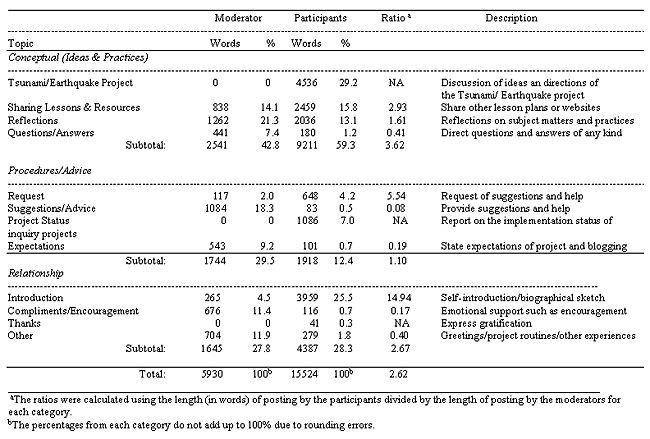
Among the three categories, both the participants and the moderators devoted the majority of the blogs to conceptual issues dealing with ideas and practices. The tsunami earthquake hit Southeast Asia in December 2004, just before the beginning of the seminar sessions for this project. Community college faculty members and mentor and intern teachers were asked to take this opportunity to utilize the vast number of resources available online to brainstorm for organizing inquiry activities in their classrooms. Teachers of different subjects used the blogging site as a platform to report and share their ideas. Following are four examples.
- A biology teacher outlined a lesson plan around the question “How did cetaceans react to the earthquake leading to the tsunami?” He brainstormed seven possible research topics for student including natural selection mechanism, physiology of cetacean haring, frequency of tsunamis in areas of frequency by cetaceans, and ratio analysis of cetacean death to other marine mammal deaths during tsunamis and other marine disasters.
- A physics teacher wrote, “It is very important to realize the role physics played in the tsunami tragedy that hit Indonesia in December of last year. In fact, it was mostly physics! The word Tsunami means harbor waves. The series of waves that thrashed the coast of Indonesia were in excess of 20m tall and reached speeds of 700 km/hr.” This teacher’s research questions were designed to show the relationship between the mechanism of a tsunami and various physical phenomena. For example, he asked his students the difference between regular waves and tsunami waves in deep water. He also posed questions about how the speed of a tsunami changes from oceanic to coastal region and how the tsunami’s energy flux changes while it approaches the coast.
- A mathematics teacher took the opportunity to integrate scientific inquiry with mathematical calculations. She posed the questions on how earthquake magnitude is measured and how to model a seismic wave with trigonometric functions. She then introduced her students to Web sites containing mathematical simulations about seismic waves.
- An earth science teacher used tsunamis to illustrate the interdependence and interactions occurring within an ecosystem. He required his students to use chemical concepts to analyze the flow of energy through various cycles, including carbon, oxygen, nitrogen, and water cycles.
In discussing the Tsunami project, university faculty members and staff played the role of facilitator. They often provided short encouraging comments or gave suggestions and advice to make the lesson plans more complete. For example, in response to a teacher’s lesson plan, a university faculty member wrote,
This really sounds like an interesting lesson—the students should really get involved. Perhaps a rubric would be appropriate for evaluation of the final product. You might also want to have students evaluate themselves and each other on their effort and participation, too. Ideally, they should know what they are going to be evaluated on at the beginning of the lesson—in other words, hand out the rubric at the beginning so there are no surprises. I’d be glad to email you a sample rubric if you’d like it.
On another occasion, a university faculty member suggested the work of Shelia Tobias (1990) to a mathamatics teacher and elaborated on her choice of a possible inquiry lesson:
Is it possible to accept more than one way to solve a problem, or is the act of deciding HOW best to solve as important as the final answer—allowing time for everyone to get to the point of understanding HOW and WHY we solve a certain way?
Both the participants and the moderators devoted a significant portion of the blogs to building relationships. Many of them made special efforts to introduce themselves in order to demonstrate their unique characteristics. Introduction is considered an important activity at the beginning of blogging since it helps build rapport among participants and motivates them to construct knowledge actively and engage in reflections in this professional learning community.
A science teacher described in detail her unusual experience in Thailand with her husband when the tsunami hit the hotel they lived in:
Every four or five months my husband and I meet in another country. We decided to go to Thailand for Christmas break. Our first stop in Thailand was Coral Island, which is an island off of Phuket. We spent six beautiful days in paradise. Then we went to Bang Toa, which is on the island of Phuket. This too was paradise and we were lying around the pool and beach for the first couple of days. We decided to do some tours of the island. Our first choice was the sea canoe but it was booked so we went elephant trekking and white-water rafting. Luckily for us, because an hour and half after we left the hotel the tsunami hit which destroyed our hotel. It was quite an adventure getting back to the hotel to retrieve our stuff, one of which was our passports. I will always treasure elephants because I feel they saved our life. Of course I did do a lesson on tsunamis as soon as I got back. It was a little weird because tsunamis was a vocabulary word that we learned before I left. I put the pictures on power point of before and after the tsunami so they all could see. I had the students write a one-page essay on any topic that I talked about with the pictures.
It appears that this teacher’s dramatic blog introduction brought different groups of participants closer, fostered interactions and discussions, and broadened participants’ views of how to capture a valuable teaching moment. The four cases just described provide some evidence of this heightened connection to the tsunami as a phenomenon worth investigating in class. Since the intern/induction year teacher participants were alternatively certified teachers, they brought with them valuable experiences they had in various other fields of work. For example, this intern teacher’s self-introduction reflects a great sense of commitment to teaching:
I’m finally teaching after spending my life doing several things that did not make me happy. In a way my life has come full circle. If your [sic] wondering what I mean by full circle and you care let me explain…. I grew up in Houston and attended school in the Aldine School District. Now after serving in the Navy, working for Walmart, being a security guard, graduating from the University of Houston Downtown, and working for Citigroup, I’m teaching in Aldine @ Shotwell Middle School in a classroom I used to sit in as a student. I did not take the traditional route to become a teacher instead I enrolled in the ACP Program @ CyFair College and jumped right into teaching. Remember how I said I was unhappy before well now it’s different. My job is not just a job, it’s a calling and I’m not just a teacher. Everyone calls me a teacher but really they should call me a policeman, mentor, social worker, judge, father, and then a teacher. Now when I leave work there is a purpose to that day and just maybe someone’s life was changed. If you still care and would like to know more about what’s happening with my students come back and I will share more.
Quality of the blogs. The analysis of the quality of the blogs, based on Khine et al.’s (2003) Framework of Evaluating the Quality of Thinking and Information Processing, indicates that the majority of the blogs (over 75%) posted by the participants demonstrated an in-depth level of information processing. These blogs provided evidence, elaborated, and justified; generated new ideas and solutions; or critically evaluated the solutions. Less than one fourth of the blogs reflected surface-level information processing—in other words, lack of elaboration, justification, or evidence. Table 6 reports the results of blog quality.
Table 6
The Quality of Blogs Based on the Framework of Evaluating the Quality of Thinking and Information Processing by Khine et al. (2003)
| Category | % of Blog Postings |
Clarification | |
| Verify, explain, and elaborate | 22.0% |
| Creative thinking Generate possible solutions | 26.3% |
| Critical thinking Evaluate solutions by providing evidence and arguments | 28.8% |
Information Processing | |
| Surface | 22.9% |
| Deep | 77.1% |
| Note: Total words entered this analysis are 11,752. Total number of blogging entered this analysis is 72. Only postings that were classified as “conceptual (ideas and practices)” were included in this analysis. | |
Most of the participants elaborated on their inquiry projects by providing evidence from reliable online sources that students could use during their investigations. For example, a chemistry teacher, in answering the question, “What was the impact on clean water supplies in areas hit by the tsunami?” cited the following source:
Animal health authorities have received reports from the east coast that close to a thousand animals have died recently after drinking water contaminated by tsunami tidal waves which hit the coast more than a month ago. Sources said that the areas which came under sea water in the east continue to have brackish water in puddles here and there deep inland, and animals such as cattle had died after drinking water from such water sources.The reports mainly came from Pottuvil, and close to a thousand animals had reportedly died up to yesterday. A team of veterinarians had already been dispatched to Pottuvil to verify the cause. Meanwhile, residents in Pottuvil are said to be in fear as the sea water off the Pottuvil coast had turned dark and blackish again, reminding them of the tsunami waves which were dark in colour. (http://web.mit.edu/newsoffice/2005/harvey.html)
Many of the blog messages also demonstrated participants’ creative thinking skills. For example, during the collaboration among middle and high school mathematics teachers and three community college math faculty members, they brainstormed as many as 20 mathematical concepts that can be taught or researched using tsunami phenomena as an example. Many participants also used blogging to reflect on their own teaching practices. An important component during the reflections is to build critical thinking skills. For example, a science teacher, after reading the book How People Learn, reflected,
I was visualizing how I might need to approach my inquiry activity. I realize that in this part of the world, students would have very little knowledge of tsunamis. It would be necessary then, to give extensive background on this natural event. Along with the necessary content information they would also need a bridge between the two (content and tsunami); a way to connect the current information and the natural event of the tsunami. One possible way to do this might be through a KWL opening activity. This would make me aware of the prior knowledge of my students; what they know about a given subject. This would in turn provide me with the insight to my students—prior knowledge and I would then be able to create a meaningful lesson. By beginning in a place where all of the children could grasp the concept and be able to place it in a meaningful place in their already jumbled mind, could only add to their learning experience and give them a sense of accomplishment.
Discussion
Although our sample size is rather small, the findings of this study suggest that most participants (community college faculty members, mentor, and intern teachers) recognized the value of blogging as a platform for sharing resources and ideas and reflecting on personal experiences. Several teachers were planning to use blogging with their own students.
Blogging seemed to at least indirectly benefit most PLC-MAP teachers in terms of integrating technology into their own teaching practices. For example, most teachers found themselves more capable of developing instructional units that require their students to use the Internet. They were also more willing to use various online discussion tools and reflect on teaching practices via blogs and electronic journals.
The major barriers preventing the use of blogging were time constraints and the technological barriers associated with computer or Internet availability and ease of blog access. A significant proportion of participants, especially the intern and mentor teachers, expressed some frustrations over blogs. Although they were willing to participate in blogging and acknowledged its advantages, they were reluctant to participate because of their novice status with this technology. While quite different from the complex online environment of Barab et al. (2001) described earlier, our attempts early in the project to set up a blog resulted in the same challenges to create ownership, shared vision, and purposeful communication seen as worthy of teachers’ time and efforts.
An analysis of the blogging transcripts showed that blogs served two purposes: conceptual and affective. Most participants used blogs to share resources and ideas concerning conceptual topics and to reflect on their teaching practices. Participants also devoted a significant proportion of the blogs to introduce themselves and to build rapport with each other. Each of these aspects appears to be indispensable in building an online professional learning community. In addition, about three fourths of the blogs demonstrated deep information processing, such as elaboration, justification, creative thinking, and critical thinking. However, intern/induction teachers did not participate as much as the other groups. Although most intern/induction teachers did participate in blogging, they rarely commented on their peer’s blogging even if they were encouraged to do so.
Implications
The findings of this study generated the following implications for building an effective online learning community using blogs or other asynchronous communication tools. First, in order to achieve high participation rates in online learning, technological barriers need to be removed or reduced. However, since blogs, along with other asynchronous discussion tools, have the reputation for their ease of use, some technological barriers can be interpreted as psychological barriers. The trainee teachers need to be introduced to blogs more formally and with more demonstrations. Much scaffolding is needed not only in designing and implementing inquiry activities, but it is also needed in mastering the technology or media through which more meaningful exchanges and discussions are achieved. Increased knowledge and skills in technology can also shorten the time for blogging, as time constraint is another often-cited barrier.
Second, in this study, the teacher trainees were given plenty of freedom and space to engage in collaborative knowledge building. Most of the messages were well elaborated, complete, and continuous, demonstrating in-depth information processing. The major role of the university faculty members and staff was to facilitate and scaffold the discussions. Mazzolini and Maddison (2002) noted that the instructor’s participation in online discussions can vary from dominating, to facilitating, to being absent. The constructivist learning model, as well as previous studies, suggest that online instructors should assume a more facilitating than domineering role (Bonk et al., 1998; Li, 2003; Mazzolini & Maddison, 2002; Tu & Corry, 2003).
Khine et al. (2003) and Schwier and Balbar (2002) both cautioned online instructors from overparticipating or intruding in students’ discussions and recommended that instructors maintain a flexible position, limiting their roles to initiating new topics, scaffolding, or redirecting discussions. The results of this study seem to confirm their position. Mintrop (2001) suggested that student teacher training programs embedded with voluntary online seminars are useful to meet the immediate needs of individual teachers and build a sense of belonging, but the demands and expectations for learning under these situations should also be somewhat downscaled. However, the results of this study showed that the quality of voluntary online discussions is not necessarily watered down as long as appropriate facilitation or scaffolding is provided.
Third, our results seem to agree with those of Li (2003), who found that face-to-face and online learning in a professional development program can complement each other. The face-to-face sessions provide topics and targets for the online discussions; online discussions, in turn, provide opportunities to digest and reflect on what is learned during the face-to-face sessions. Finally, it should be noted that the interactive function of blogs could be used less than its electronic journal function. The future researchers and trainers who use blogs in an adult training setting could emphasize the importance of commenting on each other’s blogs, for example, by showing the trainees some exemplary interactive blogs—because providing feedbacks to each other is an important component to building a learning community.
Blogs served PLC-MAP well during the project’s first semester, as we searched for immediate ways to connect our learning community, which was spread throughout a 100-mile area of southeast Texas. Most participants were ACP intern and induction year teachers, sometimes overwhelmed with the task of developing expertise. Although our six seminars a semester were special times to be together, the between-seminar conversations helped build professional relationships and provided information as needed. The project—with the advantage of some time and commitment of funding—has since developed an interactive portal system using Sharepoint. The portal system provides a more sophisticated network of important areas that provide linkages for participants.
As the project continues, we still struggle to make the online environment so useful that it becomes part of every PLC-MAP participant’s week. We contemplated making blogging or portal use mandatory, but the voluntary nature of our novice teacher professional development pool creates a situation where we are constantly trying to relieve stress, not increase it. We are improving our portal each semester, and both our research and that of others has provided evidence of what must be in place for the online and face-to-face worlds to truly complement each other.
References
Barab, S. A., MaKinster, J. G., Moore, J. A., Cunningham, D. J., & The ILF Team (2001) Designing and building an on-line community: The struggle to support sociability in the inquiry forum. Educational Technology Research and Development, 49(4), 1042-1629.
Belcher, D. D. (1999). Authentic interaction in a virtual classroom: Leveling the playing field in a graduate seminar. Computers and Composition, 16, 253-267.
Blood, R. (2000, September). Weblogs: A history and perspective. Retrieved July 15, 2007, from the Rebecca’s Pocket Web site: http://www.rebeccablood.net/essays/weblog_history.html
Bonk C. J., Malikowski, S., Angeli, C., & East, J. (1998). Web-based case conferencing for perspective teacher education: Electronic discourse from the field. The Journal of Educational Computing Research, 19(3), 269-306.
Bonnstetter, R. J. (1998). Inquiry: Learning from the past with an eye on the future. Electronic Journal of Science Education, 3(1), 130-136.
Cavanaugh, C. (2003). Information age teacher education: Educational collaboration to prepare teachers for today’s students. TechTrends, 47(2), 24-27.
Darling-Hammond, L. (1997). Quality teaching: The critical key to learning. Principal, 77(1), 5-11.
Dietz-Uhler, B., & Bishop-Clark, C. (2001). The use of computer-mediated communication to enhance subsequent face-to-face discussions. Computers in Human Behavior, 17, 269-283.
Dykes, M. E., & Schwier, R. A. (2003). Content and community redux: Instructor and student interpretations of online communication in a graduate seminar. Canadian Journal of Learning and Technology, 29(2), 79-99.
Eick, C., & Dias, M. (2005). Building the authority of experience: The development of preservice teachers’ practical knowledge through coteaching in inquiry classrooms. Science Teacher Education, 89(3) 470-491.
Ferdig, R. E., & Trammell, K. D. (2004). Content delivery in the “Blogsphere.” Technological Horizons in Education Journal, 20(2), 232-247.
Fey, M .H., & Sisson, M. J. (1996). Approaching the information superhighway: Internet collaboration among future writing teachers. Computers and Composition, 13, 37-47.
Friedman, T. L. (2005). The world is flat. New York: Farrar, Straus & Giroux.
Grossman, L. (2006December 16). Time’s person of the year: You. Time, 168(24).
Harmon, S. W., & Jones, M. G. (2001). An analysis of situated Web-based instruction. Educational Media International, 38(4), 271-280.
Hernandez-Ramos Pedro, P. (2004). Web logs and online discussion as tools to promote reflective practice. The Journal of Interactive Online Learning, 3(1), 1-16.
Huang, H. (2000). Instructional technologies facilitating online courses. Educational Technology, 40(4), 41-46.
Khine, M. S., Yeap, L. L., & Lok, A. T. C. (2003). The quality of message ideas, thinking and interaction in an asynchronous CMC environment. Education Media International, 40(1/2), 115-125.
Kowch, E., & Schwier, R. (1997). Considerations in the construction of technology-based virtual learning communities. Canadian Journal of Educational Communication, 26(1), 1-12.
Kreijns, K., Kirschner, P., & Jochems, W. (2002). The sociability of computer-supported collaborative learning environments. Educational Technology & Society, 5(1), 8-22.
Kunz, P., Dewstow, R., & Moodie, P. (2003, December). A generic tool to set up metacognitive journals and their serendipitous use. Interact, Integrate, Impact, proceedings of the 20th annual conference of the Australian Society for Computers in Learning in Tertiary Education, Adelaide, Australia.
Lankshear, C., & Knobel, M. (2003, April). Do it yourself broadcasting: Writing weblogs in a knowledge society. Paper presented at the annual meeting of the American Educational Research Association, Chicago, IL.
Li, Q. (2003). Would we teach without technology? A professor’s experience of teaching mathematics education incorporating the Internet. Educational Research, 45(1), 61-77.
Maor, D. (2003). The teachers’ role in developing interaction and reflection in an online learning community. Education Media International, 40(1/2), 127-137.
Mazzolini, M., & Maddison, S. (2002). Sage, guide or ghost? The effect of instructor intervention on student participation in online discussion forums. Computers and Education, 40, 237-253.
Mintrop, H. (2001). Educating students to teach in a constructivist way—Can it all be done? Teachers College Record, 103(2), 207-239.
Moller, L. (1998). Designing communities of learners for asynchronous distance education. Educational Technology Research and Development, 46(4), 115-122.
O’Neill, D. K., (2001). Knowing when you’ve brought them in: Scientific genre knowledge and community of practice. The Journal of the Learning Sciences, 10(3), 223-264.
Oravec, J. A. (2003). Weblogs as an emerging genre in higher education. Journal of Computing in Higher Education, 14(2), 21-44.
Prestera, G. E., & Moller, L .A. (2001). Exploiting opportunities for knowledge-building in asynchronous distance learning environments. The Quarterly Review of Distance Education, 2(2), 93-104.
Robertson, A. (2007) . Development of shared vision: Lessons from a science education community collaborative. Journal of Research in Science Teaching, 44(5), 681-705.
Rovai, A. P. (2000). Building and sustaining community in asynchronous learning networks. Internet and Higher Education, 3, 285-297.
Rovai, A. P. (2001). Classroom community at a distance: A comparative analysis of two ALN-based university programs. The Internet and Higher Education, 4, 105-118.
Schwier, R. A., & Balbar, S. (2002). The interplay of content and community in synchronous and asynchronous communication: Virtual communication in a graduate seminar. Canadian Journal of Learning and Technology, 28(2), 21-30.
Tobias, S. (1990). They’re not dumb, they’re different: Stalking the second tier, Tucson: Research Corporation.
Toner, M. (2004). ‘Blogs’ help educators share ideas, air frustrations. Education Week, 23(18), 8-10.
Tu, C., & Corry, M. (2003). Designing, management tactics, and strategies in asynchronous learning discussions. The Quarterly Review of Distance Education, 4(3), 303-315.
Vonderwell, S. (2002). A examination of asynchronous communication experiences and perspectives of students in an online course: A case study. The Internet and Higher Education, 6, 77-90.
Vygotsky, L. (1978). Mind in society: The development of higher psychological processes. Cambridge, MA: Harvard University Press.
Author’s Note:
NSF Contract grant number ESI-0353377
Cathleen C. Loving
Texas A&M University
[email protected]
Carolyn Schroeder
Texas A&M University
[email protected]
Rui Kang
Texas A&M University
[email protected]
Christine Shimek
Texas A&M University
[email protected]
Bruce Herbert
Texas A&M University
[email protected]
Web Resources Generated by PLC-MAP Project Participants for Middle and High School Science and Math Teachers.
| Math | |
| Ask-A-Scientist Archive-Mathematic Topics (November 1991-Current): | http://www.newton.dep.anl.gov/askasci/math98.htm |
| Encourage Mathematical Thinking: Discourse around a rich problem by the Math Forum’s Bridging Research and Practice Group: | http://mathforum.org/brap/wrap/ |
| Introducing Math Teachers to Inquiry: Framework & supporting materials to design professional development by Raffaella Borasi & Judith Fonzi: | http://www.rochester.edu/radiate/TC1.htm |
| Mathematics and Motivation: An Annotated Bibliography by Liza Ewen | http://mathforum.org/~sarah/Discussion.Sessions/biblio.motivation.html |
| Mathematics WWW Virtual Library: | http://www.math.fsu.edu/Virtual/index.php?f=21 |
| Motivational Strategies for Understanding Math Students by Anne McCall: | http://www.mste.uiuc.edu/mccall/summary.html |
| The Math Forum at Drexel University: | http://mathforum.org/ |
| The Washer Method for Solids of Revolution: | http://mathdemos.gcsu.edu/shellmethod/ |
| An Intel Product of An Online Tool for Mapping Cause and Effect Relationships: | http://www.intel.com/education/seeingreason/index.htm |
| Assessing Student Learning in Community Colleges: | http://online.bakersfieldcollege.edu/courseassessment/Section_5_ Course%20Assessment/Section5_6priorknowledge.htm |
| Designed Instruction: | http://www.designedinstruction.com/learningleads/misconceptions.html |
| Learn and Serve America: A Program of the Corporation for National and Community Service: | http://www.learnandserve.org/ |
| Mental Models Website: | http://www.tcd.ie/Psychology/Ruth_Byrne/mental_models/ |
| Strategy of Empowering Students: Classroom Activity that Engage the Mind: | http://www.urbanext.uiuc.edu/ce/strat130.html |
| General | |
| Teacher Resoures/Education: | http://www.learner.org/resources/series28.html |
| The Big Dummy’s Guide to Service-Learning: | http://www.fiu.edu/~time4chg/Library/bigdummy.html |
