“New teachers have two jobs—they have to teach and they have to learn to teach. No matter how good a preservice teacher program may be, there are some things that can only be learned on the job.” (Feiman-Nemser, 2001, p. 1026)
Beginning teachers, as Feiman-Nemser described in this quote, are in a constant state of experiencing and processing information about teaching during this critical stage in their development. Reflection on teaching is an inherent part of the process. Dewey (1933) defined reflective thought as the “active, persistent, and careful consideration of any belief or supposed form of knowledge in the light of the grounds that support it and the further conclusions to which it tends” (p. 9).
Effective teaching requires such reflection in practice, and teachers must demonstrate flexibility in making changes to their teaching (Athanases, 1993; Schon, 1991). Embedded in teachers’ reflections is practical knowledge acquired through the act of teaching (Cochran-Smith & Lytle, 1999). This teacher knowledge is dependent on the unique context of a particular classroom (Munby, Russell, & Martin, 2001), and thus, the way teachers acquire knowledge and the situation in which they learn become a fundamental part of the learning process (Putnam & Borko, 2000). It is, therefore, essential to unpack teacher reflection through tools that complement and in some ways are derived from the teaching practice. Electronic portfolio development, online discussions, and videotaping teaching are three technology tools that may encourage reflection on teaching as it naturally occurs in a beginning teacher’s practice.
Portfolios provide an opportunity for teacher reflection to clarify and refine ideas about teaching over time (Borko, Michalec, Timmons & Siddle, 1997; Lyons, 1998). Portfolio development has received some attention as a possible tool for beginning teacher reflection during their induction programs (Perez, Swain, & Hartsough, 1997) and has been mentioned as way to ensure competency in teaching (Reynolds, 1995). In recent years, the field of education has witnessed the evolution of portfolios from a traditional paper design to an electronic format. Electronic portfolios provide the same benefits as traditional portfolios, with the added dimension of ease with revision, navigational advantages, and improved sharing and communication skills (Canada, 2002). These electronic portfolios are a purposeful collection that exhibits the learner’s efforts, progress, and achievements (Lankes, 1998), and each stage in the portfolio creation process contributes to teachers’ professional development (Barrett, 2000).
Online learning has emerged as a field of practice largely due to technological developments allowing convenient asynchronous communication among learners (Harasim, 1991). Such computer-mediated communication offers a potential for reflective discourse (Hawkes & Rosmiszowki, 2001). Participants are not only provided with opportunities for individual reflection, but they also come to know in the context of a community (Harrison & Quinn-Leering, 1996).The opportunity to dialogue with colleagues or cohorts is an important aspect of teacher inquiry and reflective practice (Wilson & Berne, 1999). The potential for conversation and storytelling to sustain teacher learning (Rust, 1999) is rare during a teacher’s first year. Online discussions, however, provide a forum for individual teachers to share information and overcome obstacles such as distance and time.
Hawkes and Rosmiszowski (2001) discovered that computer-mediated discourse achieves a higher overall reflective level than do reflections generated by teachers in face-to-face interactions, recognizing the value of time independence for providing a greater chance to ask reflective questions. Similarly, Hobbs, Day, and Russo (2002) found that first-year special education teachers favored this collaborative process over face-to-face consultation.
Videotaping teaching episodes to encourage reflection is not a new practice in preservice teacher education (Lambdin, Duffy, & Moore, 1997; Wedman, Espinosa, & Laffey, 1999). In these cases, video has been utilized to enhance self-evaluation and serve as a springboard for discussions about teaching. Video reflection is also useful in obtaining data about teacher beliefs about teaching (Senger, 1998). Because an immediate response is not necessary when watching a tape of their teaching, videotapes afford teachers the luxury of being able to engage in reflection once a lesson has transpired (Sherin, 2000). This reflection allows teachers the opportunity to analyze the decision-making processes they employed during the act of teaching students in classrooms (Athanases, 1993; Langer & Colton, 1994).
In the following study, the preceding three technology tools were introduced to a group of 10 new teachers as a means of exploring their use for eliciting and encouraging reflection on their beginning teaching experiences. Our purposes were threefold:
- To give instruction and support on creation of an electronic portfolio to encourage the first-year teachers’ reflections on their experiences and knowledge.
- To introduce an online discussion for communication with other first-year teachers across the city and provide a forum for group reflection on the work of teaching.
- To digitally videotape first-year teachers so that they might be able to reflect individually and possibly use this technology as a reflective tool and integrate results into their electronic portfolio.
Data Sources and Methods of Data Analysis
This study was designed to explore technology as a tool for eliciting and encouraging beginning teacher reflection, in an attempt to address what technologies could be used and under what conditions they can be used effectively. The investigation was undertaken to assess goals set forth by the U.S. Department of Education Preparing Tomorrow’s Teachers to Use Technology (PT3) grant, one of which is to provide first-year teachers with sustained face-to-face and networked mentoring that results in continued technology integration.
Participation was elicited by sending an email to recent graduates of a teacher preparation program in the southwest United States. Participants were required to be employed by a school district within the city for their first year of teaching beginning in the fall of 2002. For this particular investigation, a range of teaching placements was sought to broadly explore the use of the technology tools rather than focus on a particular grade level or content area. The resulting pool of participants yielded 10 teachers, representing four school districts. Table 1 details the first-year teachers’ ages, teaching placement, district (denoted by an A, B, C, or D), and teacher certification degree program. The first-year teachers ranged from age 22 to 49 at the beginning of the study, comprising an even amount of traditional and nontraditional aged students. Participants had teaching positions in elementary, middle, and high school, with a range of grades taught from prekindergarten to 12th grade. One of the participants taught fourth grade for the first semester and then was moved to first grade in January.
Table 1
First-Year Teacher Participants
| Teacher | Age | Teaching Placement | District | Degree Program |
| Betty | 35 | High School Science (9-12) | A | Post-bac/Secondary |
| Dell | 49 | Elementary- Grade 3 | B | Elementary Education |
| Jenny | 22 | Elementary- Grade 5 | B | Elementary Education |
| Juliet | 24 | High School English (11) | C | Secondary Education |
| Karen | 44 | Pre K-5 Music | B | Post-bac/Elementary |
| Mary | 22 | Elementary- Grade 3 | B | Elementary Education |
| Melinda | 30 | High School Math (9, 11) | A | Post-bac/Secondary |
| Melissa | 23 | Middle- Social Studies (7, 8) | C | Elementary Education |
| Rhonda | 47 | Elementary- Grades 4 and 1 | D | Elementary Education |
| Shelmon | 24 | High School- English (9) | C | Post-bac/Secondary |
The 10 beginning teacher participants met with the research team eight times during the 2002-2003 academic year. The meetings were scheduled every fourth week of the school year, beginning August 27. No meetings were scheduled in December and May to avoid what was perceived as a busy time in the life of a teacher. These meetings served as instructional time for portfolio development and as a common time to discuss the project, in general, and touch base on other aspects of the technology experiences. Instruction was given on how to create an electronic portfolio, including possible tools and organizational structures that might be employed. The beginning teachers were given specific instruction on how to use three Web design programs (Dreamweaver, Front Page, and Navigator) and were given the choice of which of the three they might use in their portfolio development. Because this investigation was exploratory in nature, limited guidelines were given regarding what must be included in the portfolio itself. Rather, the beginning teachers were given the freedom to create the portfolio according to their personal and professional needs. During each session, time was given for the beginning teachers to work individually on their portfolios, and assistance was provided as needed.
The first-year teachers were also individually videotaped in their classroom three times during the year, in September, December, and April. At the beginning of the study, examples were given regarding how those videotapes might be incorporated into the beginning teachers’ portfolio. However, consistent with the exploratory nature of this work, the beginning teachers were given the choice of whether and how they might include their own videotapes in the portfolio. Additional assistance was available throughout the year to any beginning teacher who wished to learn more about how to include videos in their portfolio.
In the month following each videotaping, individual open-ended interviews (as described by Seidman, 1991) were conducted to assess which technologies were beneficial to the beginning teacher and how the technologies might be improved for better use. These open-ended interviews, which took approximately 15-20 minutes to complete at the individual teacher’s school site, were audiotaped and transcribed for later review (as in Bogdan & Biklen, 1992). Questions were asked to provide information about the beginning teacher’s perception of each technology tool. The first question was a card sorting exercise in which the beginning teacher was given three cards with each of the following: (a) videotaping teaching, (b) online discussions, and (c) portfolio development. The beginning teacher was asked to put the technology cards in order from the most to least effective at encouraging meaningful reflection on teaching. Upon completion, each participant was asked to describe the three technologies in order and tell how or why it encourages or fails to encourage meaningful reflection.
Additional interview questions addressed which of the three tools they were likely to use in the future for reflective purposes, how they might adapt any of the technologies to better meet their needs, and which technologies encouraged them to engage in reflection to improve their teaching practices (see Appendix A). A Likert-scale survey was created by the PT3 evaluation team and administered to the first-year teachers at the initial meeting in August and final meeting in April. Three of these questions were used to support the specific research questions in this study (see Appendix B) and will be addressed separately in the results section.
The beginning teachers were required to participate in an online discussion board created for the cadre a minimum of three times during the school year. The discussion board was not introduced until the October in-service meeting and suggested participation months were November, February, and May. During this exploratory study, the online discussion was left open for the beginning teachers to introduce their own topics and communicate with each other in any manner they chose. Topics were not suggested, nor did the researchers serve as moderators or participants in the discussion. The range of resulting topics and content of the discussion is outside of the scope of this paper (see Romano, 2005), and rather, the focus is placed on understanding if the beginning teachers valued such an activity for reflective purposes.
Requirements for the first-year teacher participation in this study were staggered so as to not overwhelm them at any particular point in the school year. Table 2 synthesizes each of the study requirements and the months in which participants were asked to perform these tasks throughout the investigation.
Table 2
Participation Requirements for First-Year Teachers
| Aug | Sept | Oct | Nov | Dec | Jan | Feb | Mar | Apr | May | |
| Meeting | X | X | X | X | X | X | X | X | ||
| Videotape | X | X | X | |||||||
| Interview | X | X | X | |||||||
| Discussion | —- | —- | X | X | X | |||||
| —-denotes months in which this tool had not been introduced | ||||||||||
The following research questions were addressed in this investigation:
- Which of the three technologies (videotaping teaching, online discussions, and portfolio development) is most effective for eliciting and encouraging meaningful reflection among the beginning teachers?
- Which of the three technologies, if any, do the beginning teachers plan to use for reflective purposes in the future?
- How would the beginning teachers adapt any of these technologies to better meet their needs?
- Which of the technologies, if any, encourage the beginning teachers to engage in reflection to improve their teaching practices?
Data collected from the interviews, surveys, videotapes, and online transcripts were analyzed to explore the effectiveness of the three technology tools for eliciting and encouraging beginning teacher reflection leading to improvement of teaching practice. To address the first research question regarding which of the technologies is the most effective for eliciting and encouraging reflection, an analysis of the card sorting exercise was conducted. First, the technology tools were assigned a ranking from 1-3, with 1 being the highest, indicating the order in which each beginning teacher placed the three cards as effective for encouraging reflective practice. This allowed for an examination of each beginning teacher and how their rankings changed over time, if applicable. Mean scores were then calculated to determine how the group of beginning teachers as a whole ranked the three technology tools. Once the group averages were revealed, the videotapes and online discussion transcripts were reviewed to discover if (a) the videotapes of teaching practice were incorporated into the portfolios and (b) the beginning teachers participated often and equally in the online discussion. No further analysis was conducted on these two data sets for this particular investigation.
To determine which of the three technology tools the beginning teachers planned to use for reflective purposes in the future, the interview data were analyzed through modified analytic induction (defined by Bogdan & Biklen, 1992). Regularities and patterns were coded as themes emerged from the interview responses regarding potential use in the future. Responses to the two survey items, “Using computer technologies in my work is essential to my professional development as a teacher,” and “Using computer technologies in my work helps me gain more self-awareness as a professional educator,” were also analyzed to address this research question. The beginning teachers entered a response from 1-5, with 5 indicating the strongest agreement to each statement. The mean responses were calculated by teacher and then as a group for both the initial and ending surveys. The statistical results were incorporated with the interview results to determine if these particular beginning teachers were likely to use any of the technology tools in the future.
The third and fourth research questions were analyzed using the same data analysis methods just described. To determine how the beginning teachers might adapt the technology tools to better meet their needs, interview responses to that question were synthesized through modified analytic induction. An identical analysis was applied to ascertain which technology tools encouraged the beginning teachers to engage in reflection for improvement of their teaching practice. Mean scores for the survey item, “Using computer technologies as a tool to reflect upon my teaching practices is a powerful way to improve them,” were also incorporated into the analysis for the fourth research question. The results are now presented in the following section according to each separate research question.
Results
Eliciting and Encouraging Meaningful Reflection
When asked individually to indicate which of the three technology tools was the most effective for eliciting and encouraging their reflective teaching practice, the beginning teachers in this study tended to vary their responses across the interview dates. Only one teacher ranked the tools in the same order during all three interviews. These individual card sorting responses can be found in Table 3.
Table 3
Responses to the Card Sorting Activity
| Videotaping | Online | Portfolio | |||||||
| Oct | Jan | May | Oct | Jan | May | Oct | Jan | May | |
| Betty | 1 | 3 | 1 | 3 | 1 | 3 | 2 | 2 | 2 |
| Dell | 2 | 2 | 3 | 1 | 1 | 1 | 3 | 3 | 2 |
| Jenny | 1 | 1 | 1 | 3 | 3 | 3 | 2 | 2 | 2 |
| Juliet | 1 | 2 | 2 | 3 | 3 | 1 | 2 | 1 | 3 |
| Karen | 1 | 2 | 1 | 2 | 3 | 2 | 3 | 1 | 3 |
| Mary | 1 | 1 | 1 | 2 | 3 | 3 | 3 | 2 | 2 |
| Melinda | 1 | 1 | 1 | 2 | 2 | 3 | 3 | 3 | 2 |
| Melissa | 3 | 1 | 2 | 2 | 3 | 3 | 1 | 2 | 1 |
| Rhonda | 2 | 1 | 2 | 3 | 3 | 3 | 1 | 2 | 1 |
| Shelmon | 1 | 1 | 2 | 3 | 2 | 3 | 2 | 3 | 1 |
| 1= encourages most meaningful reflection 3= encourages least meaningful reflection | |||||||||
Despite individual variation, the group averages remained constant throughout the study. As a group, the first-year teachers in this study reported the three technology tools as most effective for encouraging meaningful reflection on their teaching in the following order:
- Videotaping teaching.
- Portfolio development.
- Online discussion.
Videotaping teaching began the study with a mean of 1.4, the highest ranking given to any tool throughout the school year. This average dropped slightly to 1.5 midstudy, and ended at 1.6. Portfolio development began the study ranked significantly lower than videotaping teaching, with a mean of 2.2. However, in contrast to videotaping, these numbers increased in value over time. The average rose to 2.1 in January and ended at 1.9, only .3 points lower than videotaping.
Online discussions began with a lower mean score than the other two technology tools and continued to be the considered least effective at encouraging reflection throughout the study. The average in October was 2.4, with the identical ranking in January. In May, online discussions dropped slightly to 2.5, the single lowest mean score for the entire study. Figure 1 graphically presents the group means for encouraging reflection, and a summary for the entire group of participants is then presented according to the three technology tools.
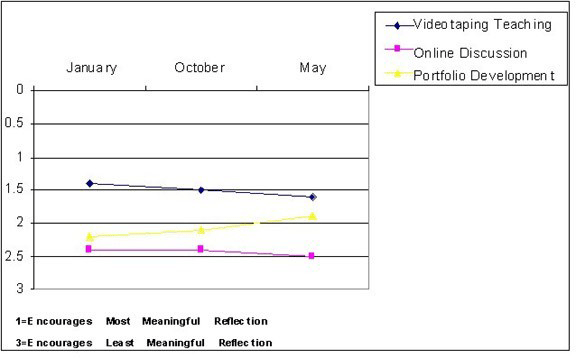 Figure 1. Group means for encouraging reflection.
Videotaping teaching. Throughout the entire investigation, videotaping teaching was consistently considered to be the most effective of the three tools at encouraging reflection. The beginning teachers, in general, expressed that videotaping their teaching helped them to see mannerisms and unintentional tendencies that they normally would not be aware of, such as repeatedly using certain expressions and favoring students on one side of the room. This provided an opportunity for instant reflection on their teaching practice. Melinda described how the videotaping exercise, “forces you to take a look at yourself and what you are doing” (Interview, October 17). Thus the videotaping tool was particularly effective for those who described themselves as visual learners.
Many of the first-year teachers expressed a desire to videotape their teaching over time to track their development with increased experience. One of the beginning teachers, Mary, was encouraged to see a noticeable difference in her teaching capabilities from the first videotaping to the second. Others recognized this tool as a highly objective view of their teaching practice. This might lead them to make changes, as Rhonda stated, “You can go back and view it, review it, reflect on things, why you did things you did, is there a better way to do it?” (Interview, January 16). Shelmon discussed how she could see what was happening in the classroom, which allowed her to see the actual events as opposed to what she thought might have happened.
Despite the consistent interest in videotaping, not one of the beginning teachers included the videos in their final portfolio products. This omission may be due, in part, to the fact that integrating the videotapes was not a mandatory requirement in the study, but is fairly surprising considering that they were all shown an example portfolio at the onset of the study that included videotaped portions. Further, participants received training on how to operate a VHS camera and digitize footage using a Sony Digital Video Media Converter. Editing was presented using Adobe Premier 6.0 on a PC and iMovie on a Macintosh G4 desktop computer. Roxio software was used to burn captured and edited footage to compact disc. An additional challenge in the process is the need for confidentiality in their reflections (as in Barrett, 2000), especially when students in the classroom naturally appeared in the videotapes. Further investigation is needed to determine if a lack of emphasis prevented this task, or if the beginning teachers just decided to keep these videotapes for their private viewing and reflection.
Portfolio development. Portfolio development gained popularity during the study as teachers began to realize how it might encourage reflection over time. Examination of the first-year teachers’ portfolios yielded several demonstrations of their individual teaching knowledge and professional development. The beginning teachers reported that developing a portfolio helped them to organize their teaching materials and fill in gaps if they found something to be missing. Jenny and Rhonda both described this tool as a way to gather concrete examples of things they had done while teaching. Karen expressed the benefit of creating a portfolio by saying, “You reflect, you reflect, you reflect…you think of what you do, why you do it…even if you never do anything with the portfolio, it is a good exercise” (Interview, January 16).
Some of the participants used the portfolio to present the best of their teaching practices. At the end of the study, Mary was preparing to send the completed electronic portfolio to prospective employers for the following school year. Consistent with earlier findings from Wright & Stallworth (2002), several of the beginning teachers recognized value in this tool relative to their marketability as future teachers. Melissa was also extremely interested in this tool as a way to show others (particularly parents of her students) that she was qualified to teach. She described how the portfolio helped legitimize her knowledge and gave her self-confidence as well. The participants’ final portfolios included a variety of entries, including professional goals, expectations for students, and philosophies of teaching.
Online discussions. Despite consistently lower rankings when asked if online discussions encouraged reflective practice, the beginning teachers expressed many benefits associated with the online discussions. Betty explained, “I like being able to discuss with people that are in the same circumstances and in the same spot that I am. I actually get advice and suggestions, and some of those suggestions are very helpful” (Interview, January 23). However, inconsistent participation from the beginning teacher participants plagued the study and may be a reason for the lowest ranking. Betty was the strongest participant in the online discussions with 18 entries, almost doubling the amount of entries by the second highest participant who had 10. Not surprisingly, Betty became disappointed in the lack of participation from her fellow first-year teachers and eventually ranked the tool least likely to encourage meaningful reflection on her teaching. Even Dell, who consistently ranked online discussions as the most effective for reflection, participated infrequently, making a total of six entries while logged in only three times. Although all but one beginning teacher made the required number of entries, participation was sporadic, and at times there were too few communications to sustain a meaningful discussion.
Some of the beginning teachers also felt that the online discussions tended to be more of a session in which they vented their frustrations to each other. Although at times it was refreshing to see that other people were experiencing the same difficulties, they were frustrated by their collective lack of expertise. Karen proposed, “We are all in the same position, like what do we know? We all don’t know squat, so what can we tell each other?” (Interview, January 16). Two other beginning teachers, Juliet and Melissa, described how it was easier to get feedback from the teachers at their own school.
Finally, access problems also prevented some from participating more fully in this aspect of the project. As Strudler, McKinney, and Jones (1999) found, obtaining adequate access to computer resources remains a problem encountered by many beginning teachers. Fortunately, the meetings held with the entire group provided an opportunity for these teachers to gain access to the discussion board, and many utilized this opportunity.
Beginning Teacher Use of Technology Tools for Reflection in the Future
Table 4 charts which technology tools the first-year teachers reported they would use in the future when asked during their individual interviews. As shown in Table 4, seven out of 10 beginning teachers reported that they would use the videotaping tool in the future. This number increased by one during the October interview. However, by the end of the study, only six beginning teachers indicated they would videotape their teaching in the future. Thus, this tool seemed to lose popularity for reflective purposes at the year’s end, yet it remained the highest ranked tool as compared to the other two tools at any time in the study.
Table 4
Reported Future Use of Technology Tools
| Videotaping | Online | Portfolio | |||||||
| Oct | Jan | May | Oct | Jan | May | Oct | Jan | May | |
| Betty | X | X | X | X | X | X | |||
| Dell | X | X | X | X | X | X | |||
| Jenny | X | X | X | ||||||
| Juliet | X | X | X | X | X | X | X | ||
| Karen | X | X | X | X | X | X | X | ||
| Mary | X | X | X | X | X | X | |||
| Melinda | X | X | X | X | X | X | |||
| Melissa | X | X | X | X | X | ||||
| Rhonda | X | X | X | X | X | X | |||
| Shelmon | X | X | X | X | X | X | X | X | |
Seven of the 10 beginning teachers reported that they were likely to use portfolio development in the future for reflective purposes. This number increased to nine teachers reporting they would use this portfolio tool in both January and May. On the other hand, only three beginning teachers thought that they would use online discussions in the future, as indicated in the initial interview. This number increased to seven in January, and was again down to four in May. The peak midstudy is consistent with the online participation patterns and average rankings as evidenced in the previous research question. Thus it appears that, overall, online discussions were the least likely tool for beginning teachers to use for reflective purposes when given the opportunity to do so in the future. These results are consistent with those of Harrington and Hathaway (1994), suggesting that not all participants recognize the value of the conferencing activities. They found that even when other participants called attention to matters of critical reflection, others often failed to respond.
On the survey given at the start and end of the school year, the first-year teachers were asked to indicate their agreement to two statements regarding the possible use of these technology tools in the future. Answers to the first question, “Using computer technologies in my work is essential to my professional development as a teacher,” can be found in Figure 2.
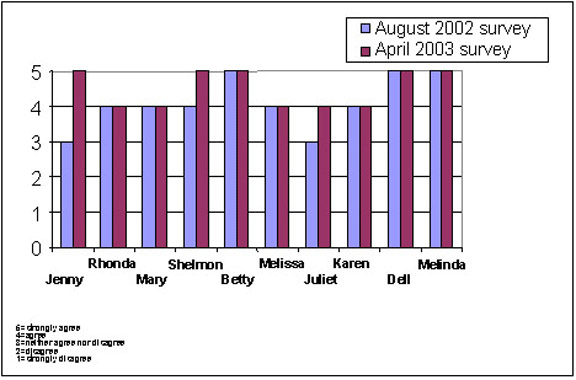 Figure 2. Responses to Survey Item 1: Technologies essential to professional development.
At the beginning of the study, eight participants agreed or strongly agreed that technologies were essential. The initial mean score for the entire group was 4.1 on a 5-point scale. On the postsurvey in April, each of the 10 participants indicated agreement with the statement, raising the mean to 4.5. Every participant in this study either chose the same ranking on this question from the beginning to the end of the study, or increased in their agreement. Thus, it can be concluded that by the end of the project, all the beginning teachers recognized the importance of computer technologies for professional development purposes.
Results of the second survey item, “Using computer technologies in my work helps me gain more self-awareness as a professional educator,” are illustrated in Figure 3. As shown in Figure 3, the mean scores for this survey question increased from 3.9 to 4.2 on the 5-point scale from the beginning to the end of the study.
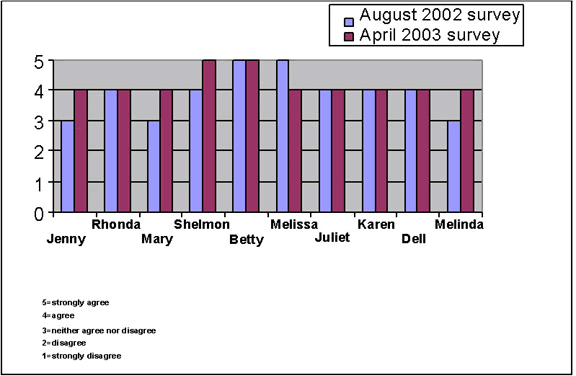 Figure 3. Responses to Survey Item 2: Technologies to gain self-awareness as educator.
Initially, three beginning teachers were unsure if computer technologies helped them gain more self-awareness as an educator while all other teachers indicated that they agreed or strongly agreed. By the end of the study, eight teachers reported agreement and two teachers strongly agreed when asked this question. In the end, only one teacher chose to mark this item lower on the beginning than on the ending survey, moving from strong agreement to agreement. These results provide supporting evidence that the beginning teachers in this study valued the computer technologies for gaining self-awareness and professional development and, therefore, might be inclined to use these tools in the future. Thus, it is assumed that exposure to the possibilities of these technologies contributed to their positive attitudes about the experience.
Suggested Adaptations for Technology Tools
As a way of determining how the technology tools might be improved for use with beginning teachers, in general, the participants in this study were asked to make suggestions for adapting the technologies to better meet their needs. The beginning teachers came up with several suggestions for improving each of the three technology tools. In October half of the participants offered suggestions for improving one or more of the tools, while the other five thought they were adequate as they were presented. In the January and May interviews, eight of the teachers made a suggestion or two, with every teacher making at least one suggestion by the end of the study. These suggestions will now be presented as applicable to each of the technology tools. Although some of the suggestions were considered to be viable solutions for improvement, the use of those tools was never modified to protect the integrity of this exploratory study. However, some of the suggested adaptations will be considered for future work with first-year teachers using technology tools. Regardless of whether they seemed to be worthy options or simply a single teacher’s desire, all suggestions are now reported.
Suggestions for improving videotaping teaching across the three interviews and all 10 teachers consisted of the following:
- Having more occasions to videotape.
- Having someone to watch and analyze the videotape with.
- Having a more panoramic view of the classroom including students.
- Having a specific focus for each viewing.
- Including students in the process.
The suggestion to have more occasions to videotape was suggested by one to four teachers at each interview time. The second suggestion, having someone to watch and analyze the videotape with, was an adaptation that two teachers wished to make. Those suggestions seem to be interesting and viable options when using these technologies with first-year teachers. One could see how beginning teachers might benefit from an increased number of opportunities to watch themselves teach and also by having a mentor or expert teacher help them to process what they were seeing. Thomson and Hawk (1996) found this type of mentoring to be beneficial to beginning teachers, as it provided them with an additional source of information to provoke reflective teaching. The final three suggestions were made by three individual teachers in the study and seemed to be fairly specific to their personal needs. Thus, those adaptations may be considered when working on an individual basis with a beginning teacher, but most likely not needed by the entire group of first-year teachers.
It was proposed that online discussions be adapted in following four ways:
- Require participation more often.
- Include mentor teacher collaboration.
- Have more categories for discussion.
- Include communication with teachers out of state.
The suggestion to require more participation came from 3 of the 10 teachers in the study. Although the minimum requirements to participate on the discussion board were created so as to not overwhelm the first-year teachers, interest in the board may have increased if they were asked to participate more regularly. Aune (2002) concurred that requiring greater participation and structured activities results in rich discussions. This requirement is being considered in a further investigation.
Another viable and interesting adaptation was for mentor teacher collaboration in the online discussion. Although only two participants mentioned this idea, several other beginning teachers alluded to the fact that they felt they were talking only to others in the same situation who could not help them with their problems. Thus, having mentor teachers to consult with might be a beneficial addition to this technology tool. The suggestion to add more categories or topics for discussion, made by only one teacher, would have been a possible adaptation, but the conversation was purposefully left open to see what the beginning teachers might want to discuss. Further, some groups have had productive discourse without moderation or proposed topics (e.g., Nicholson & Bond, 2003). Finally, including other teachers out of state might be viable if working with beginning teachers who are not in the same geographic region.
Portfolio development suggestions for improvement included the following:
- Having more structure or guidelines.
- Giving more direct instruction in developing portfolios.
- Making a website for a particular audience.
- Making the portfolio in line with district requirements.
- Making the portfolio a school/content area requirement.
The suggestion to have more structure or guidelines was made in October and May by four different teachers. Although the structure was purposefully left open for this exploration, it seems reasonable that creating more specific guidelines might indeed be helpful for first-year teachers who are beginning to create an electronic portfolio, consistent with findings from Wade and Yarbrough (1996). Along those same lines, three participants suggested that they be given more direct instruction in developing their portfolio.
Making a Web site, rather than a portfolio on a CD-ROM, was already an option in this study. When the suggestion was made by two beginning teachers in October and January it was explained that they could do so, and both completed a Web site for their final project. The final two suggestions, to make the portfolio in line with district requirements and make the portfolio a school or content area requirement, were beyond the scope of this particular exploration. Because this study was conducted with beginning teachers across districts and had no jurisdiction over requirements for other teachers in the schools, those two adaptations did not seem to be viable options.
Improvement of Teaching Practice
The final research question asked which of the technologies, if any, encourage beginning teachers to improve their teaching practices. Table 5 illustrates responses to that specific interview question.
Table 5
Reported Technology Tools That Improve Practice
| Videotaping | Online | Portfolio | |||||||
| Oct | Jan | May | Oct | Jan | May | Oct | Jan | May | |
| Betty | X | X | X | X | X | ||||
| Dell | X | ||||||||
| Jenny | X | X | X | X | |||||
| Juliet | X | X | X | X | |||||
| Karen | X | X | X | X | |||||
| Mary | X | X | X | X | X | ||||
| Melinda | X | X | X | X | X | X | X | ||
| Melissa | X | X | X | X | |||||
| Rhonda | X | X | X | X | X | X | |||
| Shelmon | X | X | X | X | X | ||||
As shown in Table 5, the first-year teachers as a group felt that videotaping teaching helped them to improve their teaching practice. Eight or nine of the beginning teachers reported the benefit of videotaping to improve their teaching across all separate interview dates. The final beginning teacher failed to report that videotaping helped her to improve her practice, but it should be noted that this particular teacher did not think any of the tools helped her improve her practice. This individual teacher was not necessarily unhappy with the technology tools but rather felt that it was difficult to isolate their impact on her teaching. Thus, it can be reasoned that for every beginning teacher in this study that felt any tools improved practice, videotaping teaching was the strong favorite.
At one time or another during the investigation, seven beginning teachers described portfolio development as a tool for improving their practice. One of these teachers reported portfolios as improving her teaching every time she was interviewed, while two other teachers mentioned it in two of their three interviews. Six of the beginning teachers in the study reported that online discussions at one time or another helped them to improve their teaching practice. It is important to note, however, that four of those teachers only mentioned it during one individual interview. The other two teachers mentioned it twice, and thus, online discussions were not consistently seen as a tool for improvement of practice.
Results of the survey item, “Using computer technologies as a tool to reflect upon my teaching practices is a powerful way to improve them,” can be found in Figure 4.
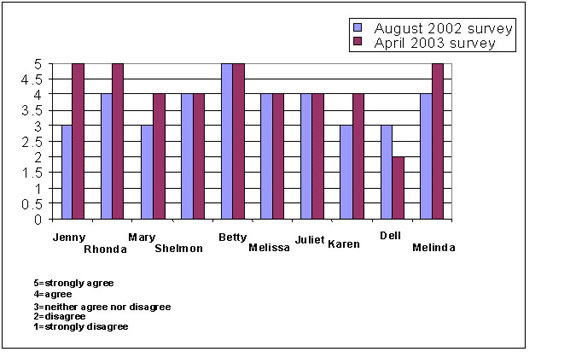 Figure 4. Responses to Survey Item 3: Technologies as reflective tool to improve teaching.
Responses were fairly consistent with the interview results. On the initial survey, four beginning teachers were unsure if using the technology tools would help them improve their practice, while the six others indicated agreement or strong agreement. One beginning teacher, Dell, was undecided on the first survey and was the only participant to indicate disagreement in April. As evidenced in her earlier comments during the interviews, Dell found it difficult to isolate the effect of the technology tools on improving her practice. Rather, she felt that she was constantly improving her practice as a first-year teacher, and the tools in this study were part of the entire process. Besides that one decrease on the survey, all other beginning teachers either gave the same positive response or increased in their opinion that the technology tools helped them to improve their practice. The group mean score rose from 3.7 to 4.2 on the 5-point scale from the initial to the ending survey.
Discussion and Implications
Results of this exploratory study have implications for those working with teachers during their first year of practice. The three technologies (videotaping teaching, online discussions, and electronic portfolio development) hold promise for eliciting and encouraging beginning teachers’ reflective practice. Through these technology tools, beginning teachers can engage in reflection on their teaching practices and use these reflections to improve their teaching skills and knowledge. Each of the tools was recognized by the beginning teachers in this study for professional development purposes and, as such, might be introduced into teacher induction practices and continuing professional development programs.
Videotaping teaching was considered to be the most valuable reflective tool according to the beginning teachers in this investigation. Although group averages declined slightly, videotaping teaching was considered to be the most effective tool for encouraging reflection throughout the study. In fact, the decline is most reasonably attributed to the increased interest in the other two tools rather than disenchantment with the videotaping itself. The beginning teachers appreciated the opportunity for instant reflection on their teaching practice combined with the ability to see their teaching through the eyes of students in the classroom. Further, this technology tool allowed for an objective view of teaching in which their development could be documented over time. Suggested adaptations of having the videotape exercise more often and having a person watch to give feedback might also be incorporated into professional development programs. Although schools and districts with large numbers of new teachers might find it logistically difficult to systematically videotape each novice teacher, individual beginning teachers might be encouraged to record themselves for assessment of their own practice. Additionally, mentors of beginning teachers might be able to provide this service as a component of their ongoing communication with the beginning teacher about effective teaching practices.
Interest in portfolio development as a reflective tool increased as the study continued, supporting the notion of using a portfolio as a means of documenting teaching experiences over time. The beginning teachers expressed an interest in creating a concrete display of their work that helped them legitimize their teaching knowledge. Considerations for introducing this technology tool into induction and professional development programs were also identified by the participants. In general, the beginning teachers wished for more specific guidelines regarding what the portfolio might contain and wished to gear this product toward a particular audience. These enhancements might lead to more effective reflection if teacher educators can systematically introduce specific reflective aspects into the portfolio development process.
The beginning teachers described how both the videotaping and portfolio development tools were effective tools for professional development and increasing their self-awareness as educators. If given the opportunity, this particular group of teachers would use videotaping teaching and portfolio development in the future for reflective purposes and improvement of their teaching practice. This was an interesting finding, as both of these technology tools are concrete displays of their teaching practice and provided an opportunity for personal reflection. Thus, the tools provided for an introspective examination of their teaching practice that was perhaps more appropriately kept private. Further, the beginning teachers also referred to both videotaping and portfolio development as tools for immediate reflection that might lead to changes in practice. However, it is difficult to discern if the beginning teachers opted to exclude these videotapes from their portfolio for personal reasons, or if other factors such as time and a lack of emphasis prevented them from utilizing this technology.
Online discussions, on the other hand, were considered to be more of a group reflective tool. The public expression of reflective thought might not have been as appealing to the beginning teachers in this study. However, increasing expectations for participation to create a sustainable discussion might also make this tool more meaningful for beginning teachers. The value of providing emotional support that is nonevaluative and nonthreatening (see Chubbuck, Clift, Allard, & Quinlan, 2001; Edens, 2000), as described by the teachers in this study, may be enhanced by adding an expert or mentor teacher component. Having other teachers to work with beginning teachers as they reflect on their practice might enhance this reflective exercise. Further studies are needed to determine if this phenomenon holds true for other beginning teachers who are engaged in reflective thought about their practice.
Conclusion
As reported in this study, beginning teachers were encouraged to engage in reflection through the use of these technology tools, often leading to improvements in their teaching practice. Thus, the technology tools provided an avenue for reflection on teaching and a structure for thinking and talking about their work as teachers. In this manner, the technology tools provide a framework for reflection that might be introduced so that teachers can benefit from the opportunity to engage in reflection using these stimuli. Once reflection has been elicited, the practitioner will continue to benefit from these practices that encourage continual improvement of teaching practice. Additional investigations are necessary to explore these and other technology avenues that encourage reflection and pave the way for sustained reflection on the practice of teaching.
References
Athanases, S.Z. (1993). Adapting and tailoring lessons: Fostering teacher reflection to meet varied student needs. Teacher Education Quarterly, 20(1), 71-81.
Aune, B. (2002). Teaching action research via distance. Journal of Technology and Teacher Education, 10(4), 461-479.
Barrett, H. (2000). Electronic teaching portfolios: Multimedia skills + portfolio development = powerful professional development. In Proceedings of the Society for Information Technology and Teacher Education International Conference, 2000(1-3), 1111-1116. (ERIC Document Reproduction Service No. ED 444 514)
Bogdan, R.C., & Biklen, S.K. (1992). Qualitative research for education: An introduction to theory and methods (2nd ed.). Boston: Allyn and Bacon.
Borko, H., Michalec, P., Timmons, M., & Siddle (1997). Student teaching portfolios: A tool for promoting reflective practice. Journal of Teacher Education, 48(5), 345-357.
Canada, M. (2002). Assessing e-folios in the on-line class. New Directions for Teaching and Learning, 91, 69-75.
Chubbuck, S.M., Clift, R.T., Allard, J., & Quinlan, J. (2001). Playing it safe as novice teacher: Implications for programs for new teachers. Journal of Teacher Education, 52(5), 365-376.
Cochran-Smith, M., & Lytle, S. L. (1999). Relationship of knowledge and practice: Teacher learning in communities. Review of Research in Education, 24, 249-305.
Dewey, J. (1933). How we think. Chicago: Henry Regency.
Edens, K. (2000). Promoting communication, inquiry and reflection in an early practicum experience via an on-line discussion group. Action in Teacher Education, 22(2A), 14-23.
Feiman-Nemser, S. (2001). From preparation to practice: Designing a continuum to strengthen and sustain teaching. Teacher’s College Record, 103(6), 1013-1055.
Harasim, L. (1991). Teaching by computer conferencing. In A. Miller (Ed.), Applications of computer conferencing to teacher education and human resource development. Proceedings from an International Symposium on Computer Conferencing, Columbus, OH, 25-33. (ERIC Document Reproduction Service No. ED 337 705)
Harrington, H.L., & Hathaway, R.S. (1994). Computer conferencing, critical reflection, and teacher development. Teaching and Teacher Education, 10(5), 543-554.
Harrington, H.L., & Quinn-Leering, K. (1996). Computer conferencing and moral discourse. Journal of Technology and Teacher Education, 4(1), 49-68.
Hawkes, M., & Rosmiszowski, A. (2001). Examining the reflective outcomes of asynchronous computer-mediated communication on inservice teacher development. Journal of Technology and Teacher Education, 9(2), 285-308.
Hobbs, T., Day, S.L., & Russo, A. (2002). The virtual conference room: Online problem solving for first-year special educators. Teacher Education and Special Education, 25(4), 352-361.
Lambdin, D.V., Duffy, T.M., & Moore, J.A. (1997). Using an interactive information system to expand preservice teachers’ visions of effective mathematics teaching. Journal of Technology and Teacher Education, 5(2-3), 171-202.
Langer, G.M., & Colton, A.B. (1994). Reflective decision making: The cornerstone of school reform. Journal of Staff Development, 15(1), 2-7.
Lankes, A.M.D. (1998). Portfolios: A new wave in assessment. T.H.E. Journal, 25, 18.
Lyons, N. (1998). Reflection in teaching: Can it be developmental? A portfolio perspective. Teacher Education Quarterly, 25(1), 115-127.
Munby, H., Russell, T., & Martin, A.K. (2001). Teachers’ knowledge and how it develops. In V. Richardson (Ed.), Handbook of research on teaching (4th ed., pp. 877-904). Washington, DC: American Educational Research Association.
Nicholson, S.A., & Bond, N. (2003). Collaborative reflection and professional community building: An analysis of preservice teachers’ use of an electronic discussion board. Journal of Technology and Teacher Education, 11(2), 259-279.
Perez, K., Swain, C., & Hartsough, C.S. (1997). An analysis of practices used to support new teachers. Teacher Education Quarterly, 24(2), 41-52.
Putnam, R. T., & Borko, H. (2000). What do new views of knowledge and thinking have to say about research on teacher learning? Educational Researcher, 29(1), 4-15.
Reynolds, A. (1995). The knowledge base for beginning teachers: Education professionals’ expectations versus research findings on learning to teach. Elementary School Journal, 95(3), 199-221.
Romano, M.E. (2005). Online discussion as a potential professional development tool for first year teachers. Manuscript submitted for publication.
Rust, F. (1999). Professional conversations: New teachers explore teaching through conversation, story, and narrative. Teaching and Teacher Education, 15(4), 367-380.
Schon, D.A. (1991). The reflective turn: Case studies in and on educational practice. New York: Teacher’s College Press.
Seidman, I.E. (1991). Interviewing as qualitative research: A guide for researchers in education and the social sciences. New York: Teacher’s College Press.
Senger, E.S. (1998). Beyond classroom description: Methods of understanding reflection and beliefs in mathematics teaching. Educational Research Quarterly, 21(3), 21-39.
Sherin, M.G. (2000). Viewing teaching on videotape. Educational Leadership, 57(8), 36-38.
Strudler, N.B., McKinney, M.O., & Jones, W.P. (1999). First-year teachers’ use of technology: preparation, expectations and realities. Journal of Technology and Teacher Education, 7(2), 115-129.
Thomson, W.S., & Hawk, P.P. (1996). Project Dist-Ed: Teleconferencing as a means of supporting and assisting beginning teachers. Action in Teacher Education, 17, 9-17.
Wade, R.C., & Yarbrough, D.B. (1996). Portfolios: A tool for reflective thinking in teacher education. Teaching and Teacher Education, 12(1), 63-79.
Wedman, J.M., Espinosa, L.M., & Laffey, J. (1999). A process for understanding how a field-based course influences teachers’ beliefs and practices. Teacher Educator, 34(3), 189-214.
Wilson, S.M., & Berne, J. (1999). Teacher learning and the acquisition of professional knowledge: An examination of research on contemporary professional development. Review of Research in Education, 24, 173-209.
Wright, V.H., & Stallworth, B.J. (2002). Challenges of electronic portfolios: Student perceptions and experiences. Journal of Technology and Teacher Education, 10(2), 49-61.
Author Note:
Molly Romano
University of Arizona
Email: [email protected]
Jonathan Schwartz
University of Arizona
Email: [email protected]
This project was funded by a grant awarded through the United States Department of Education Preparing Tomorrow’s Teachers to Use Technology (PT3) program.
