Collecting and reflecting on seminal pieces of literature activities provide the opportunity to proverbially “stand on the shoulders of giants” with a route to broaden and deepen a field or knowledge base. However, selecting a seminal piece for a special issue of Contemporary Issues in Technology and Teacher Education on multicultural education was a difficult endeavor. One challenge was the broad interdisciplinary interest in intercultural issues. Schramm (1982) first described the history of the field of communication with an oasis metaphor; Hammer (1989) followed later using the same metaphor to describe the history of intercultural communication. The idea behind the metaphor is that it highlights the origins of multiple participants, who come together from various disciplines and fields to study these new ideas and, in doing so, provide a fertile context for the process.
Those interested in intercultural issues come from numerous fields of study, including anthropology, psychology, sociology, economics, business, international relations, communication, and—of course—education. All come to the oasis to partake in the discussion, but most return to their home fields; each has a suggestion about what is seminal in building the core of knowledge in the area. Some would suggest reading Edward Hall, others Margaret Mead; still others would argue for Geert Hofstede or Fons Trompenaars.
The search becomes more complex when discussing the roles of technology and teacher education in intercultural education. Does such an interest imply a further understanding of one topic across multiple contexts or multiple issues across various contexts? Can we understand, empathize, and respect others by trying to understand how other cultures view our area of interest, or do we respect them more by simply examining their practical implementations and research efforts? Does a seminal piece in technology and intercultural teacher education consist of one topic examined by multiple cultures, or is it a sampling of various activities, research interests, and practical implementations from multiple groups?
The aim was to select a seminal work that scaffolds and supports the knowledge base of our field of information technology and teacher education by challenging our current work and to provide insights into practical implementations and theoretical developments. We have selected two essays from the seminal work of Clifford Geertz (1973a, b). We present here commentary on some important points from Geertz and the potential impact of his work on the use of technology to promote intercultural teacher education. Two examples are then presented of using technology to promote intercultural education.
The purpose of this paper is not to provide a literature review of all the work that has been done in intercultural education and technology and teacher education. Nor is the purpose to summarize theories of intercultural education. Both these areas have a corpus of published work. For example, Merryfield (2003) in this CITE journal provides a concise view of her application of global, multicultural, and intercultural theories in her current practice in multicultural and global teacher education courses, and the editorial of this special issue includes a summary of theoretical perspectives in this special issue. Rather, the goal is to present seminal work and discuss how that work impacts our views on technology and teacher education and to provide intercultural perspectives on both topics.
The Seminal Reading: Geertz (1973)
Clifford Geertz, now professor emeritus at the Institute for Advanced Study in Princeton, New Jersey, is described as follows:
Clifford Geertz has conducted extensive ethnographical research in Southeast Asia and North Africa. He has also contributed to social and cultural theory and been influential in turning anthropology toward a concern with the frames of meaning within which various peoples live out their lives. He has worked on religion, most particularly Islam, on bazaar trade, on economic development, on traditional political structures, and on village and family life. He is at present working on the general question of ethnic diversity and its implications in the modern world. (Clifford Geertz, n.d.)
His numerous essays have been produced and reproduced throughout the world. They are commonly found in anthropology, sociology, and qualitative methodology classrooms internationally. We have selected two of his chapters as seminal pieces for our students in multiple classes because of the way in which his writing promotes a respect for diversity and multicultural appreciation.
Geertz (1973b) and Deep Play
The first of his essays discussed here is entitled, “Deep Play: Notes on the Balinese cockfight.” In “Deep Play,” Geertz (1973b) described the cultural experience of cockfighting that he and his wife observed as anthropologists in Bali in 1958. Cockfighting, with the exception of a few events, was illegal in Bali at the time. His first observation of the cultural event was disrupted by the police. Instead of staying and telling the authorities who they were, he and his wife ran away with the locals; in doing so, they became enculturated into the community. “It led to a sudden and unusually complete acceptance into a society extremely difficult for outsiders to penetrate” (p. 416).
With this newfound acceptance into society, Geertz began an exploration of the cockfights in detail. In doing so, he discovered that cockfighting was such an intense portrait of Bali life that Balinese compared heaven to the mood of a man whose cock has just won and hell as the metaphysical and social suicide of the loser (p. 421). Not all cockfighting was considered this important, however. Rather, Geertz suggested that there were times—what he called “deep play”—when both parties in the cockfight entered a relationship likely to bring net pain (p. 433). Geertz found it interesting that, although some might argue this deep play is unethical, Bali men passionately and repeatedly partook in these activities. As such, cockfighting—and the bettors who participated—formed a “socio-moral hierarchy” (p. 435).
What sets the cockfight apart from the ordinary course of life, lifts it from the realm of everyday practical affairs, and surrounds it with an aura of enlarged importance is not, as functionalist sociology would have it, that it reinforces status discriminations (such reinforcement is hardly necessary in a society where every act proclaims them), but that it provides a metasocial commentary upon the whole matter of assorting human beings into fixed hierarchical ranks and then organizing the major part of collective existence around that assortment. Its function, if you want to call it that, is interpretive: it is a Balinese reading of Balinese experience; a story they tell themselves about themselves. (p. 448)
Geertz described the Balinese and their cockfights, in part, to ask the question, “What does one learn…from examining culture as an assemblage of texts?” (p. 448). What happens when these cultural forms can be treated as imaginary works built out of social materials (p. 449)?
In the case at hand, to treat the cockfight as a text is to bring out a feature of it (in my opinion, the central feature of it) that treating it as a rite or pastime, the two most obvious alternatives, would tend to obscure: its use of emotions for cognitive ends. What the cockfight says it says in a vocabulary of sentiment—the thrill of risk, the despair of loss, the pleasure of triumph. Yet what it says is not merely that risk is exciting, loss depressing, or triumph gratifying, banal tautologies of affect, but that it is of these emotions, thus exampled, that society is built and individuals put together. Attending cockfights and participating in them is, for the Balinese, a kind of sentimental education. What he learns there is what his culture’s ethos and his private sensibility (or, anyway, certain aspects of them) look like when spelled out externally in a collective text; that the two are near enough alike to be articulated in the symbolics of a single such text; and—the disquieting part—that the text in which this revelation is accomplished consists of a chicken hacking another mindlessly to bits (p. 449).
Geertz ended his essay by suggesting that the culture of people is really an ensemble of texts, texts which are themselves ensembles (p. 452). He suggested that on whatever level we decide to read these texts, societies and lives contain interpretations that one has to learn how to get access to.
An immediate response to a read of Geertz is that teacher education is an assemblage of texts. As such, these cultural forms, built out of social materials, must be presented in such a way as to be read by future teachers. Unfortunately, that reading may not get at the depth of what Geertz’ writing has to offer.
We have previously argued that teaching and, thus, learning how to teach is a complex domain (Ferdig, Roehler, & Pearson, 2002). Technology has been cited as a potential tool in reducing this complexity (Ferdig & Roehler, 2003; Spiro, Coulson, Feltovich, & Anderson, 1988; Spiro, Feltovich, Jacobson, & Coulson, 1992). However, one begins to see the recursive complexity in preservice teachers’ learning to teach with technology while being appreciative and respectful of intercultural perspectives. In other words, there are texts within the culture of becoming a teacher, texts that must be legitimately and actively read and acted upon during enculturation into the community of practice (Lave & Wenger, 1991). There are also texts that involve teaching with technology, using technology to learn about teaching and learning, and surrounding all of these, multiple-culture interpretations on these texts.
Therefore, acknowledging the importance of these multiple texts in such an ill-structured domain, we leave this first piece with two important sets of questions:
- How can we build technologies that work within education to help teacher educators present the complexity of the culture that exists? How can we provide windows into various communities of experience so that our future teachers can learn the stories of their and other cultures? How do we provide access to these stories and the multiple interpretations that follow?
- The first question presumes that cultures already exist, and they do. These texts and interpretations exist, and we must find ways to provide future teachers access to them. However, cultures and subcultures are also continually being created, particularly because of the opportunities that technology presents (i.e., online communities of learning that bridge multiple cultures). How do we find ways to understand and appreciate intercultural issues when new cultures are being created by the work we are doing inside of technology and teacher education?
Geertz and Thick Description
Many readers are also familiar with another essay by Geertz (1973a) entitled, “Thick Description: Toward an Interpretive Theory of Culture.” In the essay, Geertz argued that, although there are various definitions to the word culture, he believes in a concept of culture that is semiotic.
Believing with Max Weber, that man is an animal suspended in webs of significance he himself has spun, I take culture to be those webs, and the analysis of it to be therefore not an experimental science in search of law but an interpretive one in search of meaning. It is explication I am after, construing social expressions on their surface enigmatical. (p. 5).
His essay is about ethnography—the thing that social anthropologists do. Ethnography, he argued, is interpretive. It is interpretive of the flow of social discourse and tries to take that discourse and set it in perusable terms (p. 20). To do good ethnography, he argued for the importance of “thick description” (p.6).
What the ethnographer is in fact faced with—except when (as, of course, he must do) he is pursuing the more automatized routines of data collection—is a multiplicity of complex conceptual structures, many of them superimposed upon or knotted into one another, which are once strange, irregular, and inexplicit, and which he must contrive somehow first to grasp and then to render. And this is true at the most down-to-earth, jungle field work levels of his activity; interviewing informants, observing rituals, eliciting kin terms, tracing property lines, taking a census of households…writing his journal. Doing ethnography is like trying to read (in the sense of “construct a reading of”) a manuscript—foreign, faded, full of ellipses, incoherent, suspicious emendations, and tendentious commentaries, but written not in conventionalized graphs of sound but in transient examples of shaped behavior. (p. 10)
This essay, and Geertz’ arguments in it, refer us back to the first essay. If cultures consist of multiple texts, then to find a way to read these texts (or to construct a reading of them) is the only way to gain access to that culture or those webs of significance. This context (p. 14) is what Geertz argued must be thickly described in order to be read.
The importance of this essay—and thick description—is that it provides a way for us to expose a culture’s normalcy without reducing its particularity (p. 14). More importantly, it supports the notion that the goal of intercultural education need not be answering the deepest and most philosophical of questions. Rather, it is to “make available to us answers that others…have given, and thus to include them in the consultable record of what [people have] said” (p. 30).
Methodology instructors have cited this essay as an important backbone in the why of qualitative research and also the how (thick description). We, too, have used this writing to talk about technology and teacher education (Ferdig & Weiland, 2002). We have argued that thick description is a timely metaphor for our relatively young field. Although we agree with the call for more systematic and ambitious studies of the effects of technology innovations in the classroom, we worry about the major trend within our field to focus solely on the cognitive domain of the relationship between technology and pedagogy. “Research is missing that reflects other domains of inquiry, and thus, needed accounts of the emotional and social development of students new to educational technology are not available” (Ferdig & Weiland, 2002, p. 428). That is not to suggest that cognitive studies are fruitless; it is merely a trend with inevitable boundaries and limits. We are also not suggesting that attempting to understand technology and teacher education through affective, social, and emotional studies is an unique perspective—simply a rare one (Jones & Paolucci, 1998).
Geertz’ notion of thick description provides an important and timely reminder of the importance of a multimethodological approach to explore, appreciate, and tell the stories and texts of multiple cultures working inside of technology and teacher education. However, the essay also leads to two important questions:
- What are the ways in which we can use technology to present a thick description of various webs of significance within teacher education?
- How do we provide opportunities for our students to present their interpretations of both their own cultures and other cultures they encounter as they begin to explore these webs?
Examples from Teacher Education
The importance of Geertz is the fact that his seminal writing still challenges us with important questions about what appreciating intercultural education really means. He also provides important and timely questions for those researching technology and teacher education. In the next part of the paper are provided two examples—the Reading Classroom Explorer and Professional Development Communities—showing how technology can be used in teacher education to address these important issues. Following that is a discussion about culture, teacher education, and educational technology.
Reading Classroom Explorer Tool
It is difficult to ensure that teacher candidates will be placed in a classroom during their practicum or internship where their mentor teacher will demonstrate exemplary literacy instruction. Even if their lead teacher demonstrates strategies reflecting the reform-oriented practice the teacher candidates learn about in their studies, there is no guarantee that the classroom will represent the diversity that students will undoubtedly face in their teaching position (Ferdig & Roehler, 2003). The Reading Classroom Explorer or RCE, available online at http://www.eliteracy.org/rce, is a hypermedia environment that was created to address these issues (see Figure 1).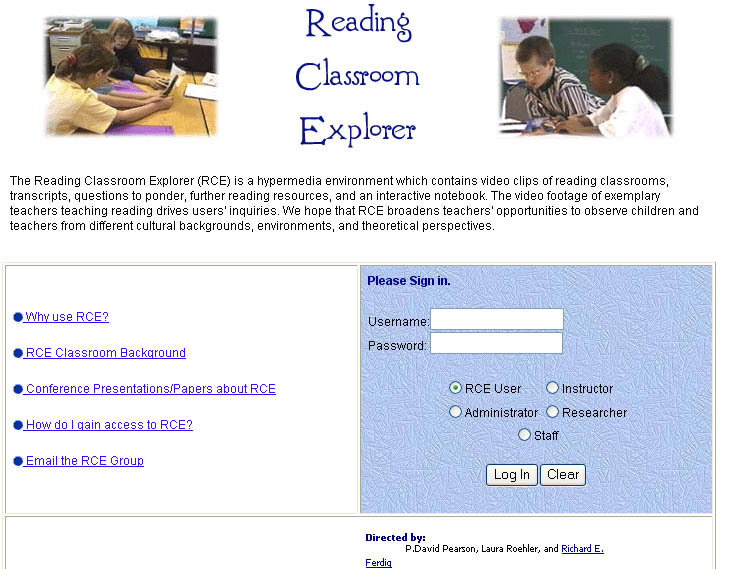
Figure 1. Screen capture from the home page of Reading Classroom Explorer.
RCE contains over 200 video clip excerpts from both the Center for the Study of Reading “Teaching Reading: Strategies from Successful Classrooms” series of videotapes and three newly developed video clips cases expanding on the series. After logging into RCE, users have the opportunity to select movie clips using one of four methods (see Figure 2). First, they can select clips using the school the clip was taken from. Therefore, a teacher candidate can follow multiple instructional practices of a teacher in Harlem or a teacher in Hawaii. Second, a user could select a movie by a theme, which is a broad overarching categorization of clips—something similar to a table of contents at the beginning of a book. Users might select “classroom management” or “assessment.” A third option is to select videos using the index, or keyword, system. The site has over 200 keywords, such as “small group reading” or “word wall.” A final approach is to search the transcripts of the movies for certain text.
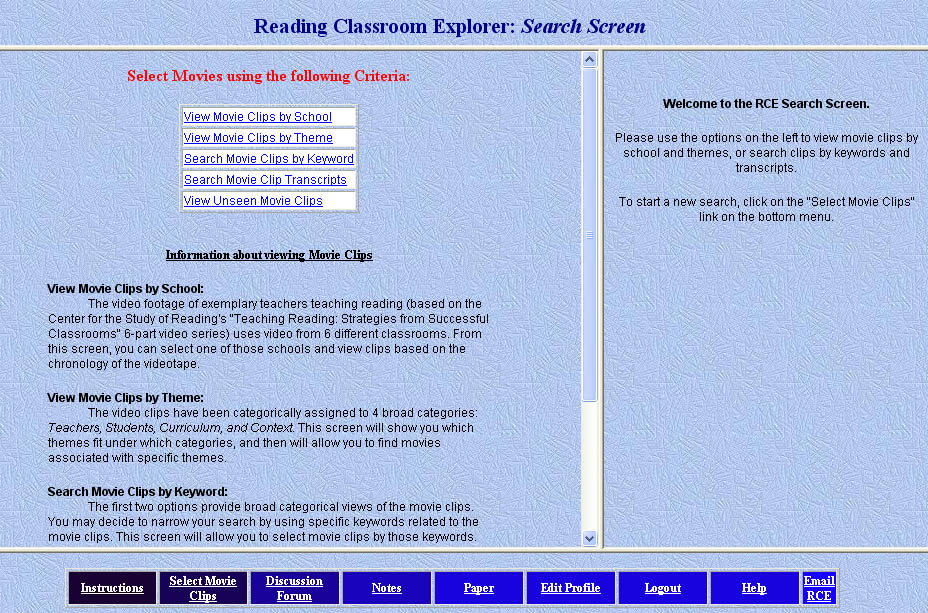
Figure 2. Screen capture of RCE search screen (http://www.eliteracy.org/rce).
Once users select a movie clip, they are brought to a page where the clip begins streaming (the movie begins playing a few seconds into downloading and then continues to download in the background; see Figure 3). The movie is also accompanied by a number of other features. First, because it is often difficult to hear students in classroom settings, a transcript of the movie is provided. The students also can take notes of the movie in their notebook, either free writing or capturing text from the transcript. If they are unsure of what to think about the movie, guiding questions are provided to focus their viewing. If they are still unsure what to think, clicking a simple search button will return the notes from other users who have watched that clip and agreed to share their thoughts and opinions. If they still are unsure of how to assess the clip, a list of articles is provided (some linked directly) for them to read about the topic presented in the video.
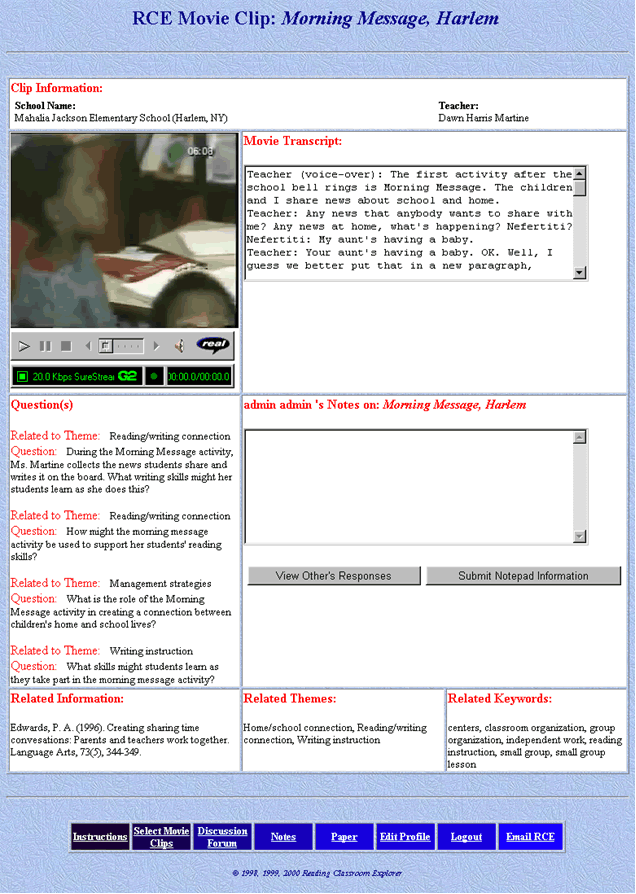 Figure 3. Screen capture from movie clips page of the RCE.
RCE contains two discussion forums—one for the class of teacher candidates and their instructor and a second for all RCE users to allow either within class or between class communication. There is also a paper submission tool, which allows teacher candidates to use video evidence to document their claims and arguments. They can then submit that paper to their instructor, their peers, or to all RCE participants.
RCE allows preservice teachers to get behind the scenes of a classroom, to understand context, teacher’s goals, and student reactions, and to more deeply understand the teaching of reading and writing. It brings the real classroom into the university while scaffolding the novice by providing teacher candidates with classroom teachers’ comments on their teaching, as well as other students’ reactions to video environment. In other words, the development of RCE is an attempt to provide exposure to diverse teaching environments for teacher candidates while helping them develop tools to analyze and understand what they are observing. The environment broadens teacher candidates’ knowledge of teaching reading and expands the repertoire of experiences from which they form a teaching philosophy.
Reading Classroom Explorer and Geertz
A large body of research has already been published on the success of using RCE in preservice teacher classrooms (Ferdig & Roehler, 2003; Ferdig et al., 2004; Ferdig, Roehler, & Pearson, 2002). Readers who are interested in the outcomes should refer to earlier publications.
RCE is presented here in an attempt to define how technology can be used to promote intercultural understanding in teacher education, particularly based on the challenges and questions from Geertz’ writings. Perhaps one of the most beneficial aspects of RCE is the ability to look within and across cultures. Providing multiple videos of one classroom sheds light and provides insight—dare we say thick description—into the practices of that complex community. Conversely, a teacher candidate can take one activity (e.g., small reading groups) and look at it across pedagogically and student-diverse teaching communities by comparing videos across multiple schools.
Culture—or diversity of thought and opinion—is not simplified for teacher candidates who use RCE; rather, it is “complexified” in a simple way. In other words, students begin to explore the community of practice known as teaching literacy. As they begin their exploration, they are introduced to various practices within one classroom. They are then introduced to these concepts across multiple classrooms. As they digest these issues, they are provided with multiple questions to promote new insight into potentially familiar topics. They are also given access to articles supporting or refuting the uses of various literacy practices. Finally, they have the opportunity through the discussion forum, paper sharing, and note sharing to find out what others thought about the same videos they saw. They begin to see complexity of thought even with classmates with whom they have shared classes and ideas. These activities allow them to begin to see the stories of teachers, the stories of others, and their own story or interpretation of what it means to be a teacher.
For much of the use of RCE, students are evaluating existing classrooms and cultures. They are using the thick description RCE provides to determine their interpretation of the classroom event. However, as they begin to share these ideas with colleagues (defined as classmates, members of the same cohort, or RCE members writ large), they begin to develop their own sense of community online. Because it is written, it affords the benefits of conversation and interaction while allowing them to become meta-analytic and metacognitive about their interpretations (Ferdig & Roehler, 2003). Results of RCE use indicate that experimental groups have a significantly higher appreciation for the depth of knowledge related to teaching and learning, a heightened awareness for the intertextuality of teacher education practice, and an increased appreciation for both pedagogical and student diversity (Ferdig & Roehler, 2003; Ferdig et al., 2002; Ferdig et al., 2004).
Professional Development Communities
Over three decades ago John Goodlad (1970) argued that K-12 schools and teacher education programs must simultaneously improve their practices through mutually beneficial partnerships. Years later he used the term “simultaneous renewal” to refer this concept (Goodlad, 1994). In their simplest forms, K-12/university partnerships bring the two entities together to support development of both in-service and preservice teachers (Osguthorpe, Harris, Harris, & Black, 1995). The field of Information Technology and Teacher Education (ITTE; Willis, Thompson, & Sadera, 1999) advocates the use of such partnerships to support development of technology-using teachers.
K-12/university partnerships designed to facilitate technology use take many forms, including restructuring traditional student teaching experiences (Strudler & Grove, 2002), modifying methods courses to include field work (Glazewski, Berg, & Brush, 2002), and developing separate technology-based field experiences (Dawson & Nonis, 2000; Schmidt, 2001, Nonis, & O’Bannon, 2002). Each of these strategies provides important partnership examples aligned to national standards (Thomas, Porter, Taylor, & Kelly, 2002) and accreditation requirements (National Council for Accreditation of Teacher Education, 2005).
However, such authentic experiences may not be adequate for the K-12 schools, K-12 teachers, preservice teachers and university faculty members involved (Dawson, 2005). Are schools able to consider technology’s place in their vision or mission? Are K-12 teachers provided with an opportunity to reflect on the potential technology brings to their curriculum? Do preservice teachers have an opportunity to explore how technology is intricately woven into the culture of a school? Are faculty members able to make sense of the multitude of data to which they are exposed? While we do not claim an affirmative answer to each question and the myriad of others we must ask ourselves as conscientious change agents, we believe that Professional Development Communities (PDCs) provide structures in which these questions are explicitly addressed and confirmatory answers more likely.
The University of Florida and the School Board of Alachua County currently support eight PDCs built on national standards (Holmes Group, 1995; Thomas, 1999), state standards (Florida Department of Education, 1996; Florida Education Standards Commission,1999), teacher education research (Wilson, Floden & Ferrini-Mundy, 2001) and literature in higher education (Boyer, 1997). The PDCs are essentially K-12/university partnerships designed around the universal themes of student achievement and accommodating diverse learners and school-identified improvement themes (i.e., assessment, technology integration, data-driven instruction, etc.). Members of each PDC also undertake systemic inquiry (Dana & Silva, 2003) that intersects universal and school-specific themes. Inquiry results are networked throughout each community so that prospective teachers, practicing teachers, administrators, and teacher educators learn from each other to improve the education of all students. Technology integration is a component of the PDCs, and interdisciplinary integration of educational technology is an area of specialization in one PDC.
Professional Development Communities and Geertz
It has long been recognized that the worlds of university-based teacher education programs and K-12 schools are vastly different cultures, often at odds with each other but similar in their mission to support student achievement in K-12 classrooms. PDCs provide each culture a lens, and frequently a walkway, into the other. K-12 teachers become teacher educators while university faculty members become immersed in the work of a classroom teacher. Likewise, preservice teachers have an opportunity to become part of a school-based community, a community beyond their university-based cohorts and a community that begins an enculturation process that will continue throughout their careers. Such cultural exchanges expand webs of significance – to use Geertzian terminology – and opens access so that cultural interpretations and understandings are possible. The inquiry-stance taken by members of these communities only serves to further support interpretation and understanding.
Yet, unlike Geertz’ experience with the Balinese cockfights, members of these cultures often begin to flow freely to and from each other’s worlds. In fact, preservice teachers eventually situate themselves within the culture of schools and many school-based teachers and administrators become adjunct instructors and doctoral students in teacher education programs. More importantly, a transformation happens at the intersection of these cultures. A new culture is formed; a culture that is a mix of the original university and K-12 mores, a culture that serves to promote the simultaneous renewal espoused by Goodlad so many years ago.
As educational technologists working with the field of ITTE, this merger provides us with great opportunities. Technology can be and frequently is a common pillar of support for PDCs. It provides a framework for discussion between the university and K-12 cultures. It also becomes a tool we can use within the community to support intercultural exploration as exemplified by RCE, as well as a tool to allow individual exploration of cultures residing within and outside the PDC confines. Likewise, a hybrid culture provides us with the data to provide thick descriptions to our field and the context within which to integrate our missions of teaching, research, and service (Boyer, 1997).
Culture, Technology, and Teacher Education
These two examples of Reading Classroom Explorer and Professional Development Communities demonstrate the possibilities of using technology within teacher education to promote intercultural understanding. We have selected these two not as sole examples in a broad literature review, but rather as exemplars of different uses of technology. RCE is a tool used to promote intercultural appreciation of pedagogical and student diversity in literacy instruction. There are other examples of such tools (e.g., CTELL, see Kinzer, Labbo, Leu, Teale, 2002; CaseNEX, see Gartland, 2001) that promote similar objectives and goals. What makes these tools unique is the fact that the technology is being used as the lens from which preservice teachers can observe and explore intercultural perspectives.
PDCs, conversely, have been provided as an example of how technology can be used in a process that is designed to promote intercultural understanding and pedagogical and student diversity. Professional development communities do not necessarily have to use technology within the process, but its use can promote the aforementioned goals. The PDCs are one such example; other such communities are emerging as researchers and practitioners realize that separate technology-based field experiences are not enough to make technology a significant component of teaching (Dawson, 2005).
Both examples support the notion that technology can be used to promote intercultural perspectives in teacher education, referencing the ideas and challenges brought forth from a reading of Geertz. However, this is not an easy task for a number of reasons. First, there are multiple cultures that exist in attempting to integrate intercultural education. For instance, there is a strong teacher education culture, as well as a culture of ITTE, let alone the cultures of both of those situated within different countries, languages, and contexts. In addition, returning to the metaphor of the oasis, educational technology is situated within various disciplines in university settings. Therefore, even with the same goals, objectives, and proposed outcomes, we are attempting to merge multiple cultures that may be ill-defined in and of themselves.
Second, although these cultures do exist, one outcome of our work is the production of new cultures (or subcultures), particularly with the advent of online teaching and learning. We are trying to provide multiple perspectives on various issues. As we participate in this endeavor, we are creating a new culture of technology learners and teachers—a perspective that must also be accounted for in the process. Thick description is a way to get at existing cultures, but it is potentially an ideal way to build new cultures or at least to recognize cultures that have evolved or adapted as an outcome of our work.
Third, we have yet to mention the notion of the digital divide. If the digital divide is a distinction between the haves and the have-nots, one could argue these are distinct cultures. If technology becomes a way to learn about these cultures or a process in which we study or develop these cultures, we need to pay strict attention to disenfranchised cultures or those cultures that become underprivileged because of our work.
However, this is really a simplification of the digital divide. A reading of Geertz might encourage us to consider more than just simple technical access as the digital divide. We suggest reviewing the notion of the digital divide, keeping interpretation and the notion of webs of significance at the forefront of our analyses. This would encourage exploration of the digital divide from multiple perspectives, including but not limited to gender, race, ethnicity, age, special needs, and teacher preparation. Perhaps more importantly, a reading of Geertz would lead us to define deep play for the parties involved in the technology use. In other words, are there times when the relationship between the user and the technology stands to bring net pain? This relates to the notion of unintended consequences and the importance of different values that each culture places on various technologies and how that value is exchanged, transformed, abandoned, or strengthened with the diffusion of innovations (Rogers, 1995).
In addition, when this mature intercultural view of educational technology is realized, it may be easier to understand that the concept of a digital divide is often oversimplified. Reform activities to address digital divides, including those in teacher education and professional development communities, can be informed by understanding of processes of adoption and diffusion of innovations (Rogers, 1995) through multiple cultures and intercultures.
This leads us to our final consideration—the diffusion of innovations and the importance of cultural considerations. Rogers (1995) stated that the process of adoption and diffusion of innovations has proven consistent over time, throughout disciplines and across cultures. Therefore, we need to remember that any type of diffusion of technological tools or processes (e.g., RCE or a PDC) is a time-consuming endeavor that directly attempts to impact the culture’s existing webs of significance.
Acknowledgements
Funding for the exemplary current practice discussed in this paper were partly developed under a grant from the Fund for the Improvement of Post Secondary Education (FIPSE), U.S. Department of Education. However, these contents do not necessarily represent policy of the Department of Education, and you should not assume endorsement by the Federal Government.
References
Boyer, E.L. (1997). Scholarship reconsidered: Priorities of the professoriate. New York: Jossey-Bass.
Clifford Geertz. (n.d.). Retrieved February 9, 2005, from Institute for Advanced Study, School of Social Science Web site: http://www.sss.ias.edu/home/geertz.html
Dana, N.F., & Silva, D.Y. (2003). The reflective educator’s guide to classroom research: Learning to teach and teaching to learn through practitioner inquiry. Thousand Oaks, CA: Corwin Press, Inc.
Dawson, K. (2005). Preparing preservice teachers to use technology: Are authentic experiences enough? Manuscript in preparation.
Dawson, K., & Nonis, A. (2000). Preservice teachers’ experiences in a K-12/university technology-based field initiative: Benefits, facilitators, constraints and implications for teacher educators. Journal of Computing in Teacher Education, 17(1), 4-11.
Ferdig, R.E., & Roehler, L.R. (2003). Student engagement in electronic discussions: Examining online discourse in literacy pre-service classrooms. Journal of Research on Technology in Education, 36(2), 119-136.
Ferdig, R.E., Roehler, L.R., Boling, E.C., Knezek, S., Pearson, P.D., & Yadav, A. (2004). Teaching with video cases on the Web: Lessons learned from the Reading Classroom Explorer. In A. Brown & N.E. Davis (Eds.), World yearbook of education 2004. Digital technology, communities and education (pp. 164-175). Routledge Falmer: London and New York.
Ferdig, R.E., Roehler, L., & Pearson, P.D. (2002). Scaffolding preservice teacher learning through Web-based discussion forums: An examination of online conversations in the Reading Classroom Explorer. Journal of Computing in Teacher Education, 18(3), 87-94.
Ferdig, R.E., & Weiland, S. (2002). A deeper psychology of technology: A case study of a girl and her eMate. Journal of Technology and Teacher Education, 10(3), 423-430.
Florida Department of Education. (1996). Sunshine state standards. Retrieved November 25, 2003, from http://www.firn.edu/doe/curric/prek12/frame2.htm
Florida Education Standards Commission. (1999). Educators accomplished practices: Teachers of the twenty-first century. Retrieved November 24, 2003 from http://www.firn.edu/doe/dpe/publications/12practices.pdf
Gartland, M. (2001). CaseNEX: A Web-based approach to expanding cultural perspectives. Multicultural Perspectives, 3(2), 35-38.
Geertz, C. (1973a). Thick description: Toward an interpretive theory of culture, In C. Gertz, The interpretation of cultures: Selected essays (pp. 3-30). Basic Books: New York.
Geertz, C. (1973b). Deep play: Notes on the Balinese cockfight. In Gertz, The interpretation of cultures. Selected essays (pp. 412-453). Basic Books: New York.
Glazewski, K., Berg, K., & Brush, T. (2002, March). Integrating technology into preservice teacher education: Comparing a field-based model with a traditional approach. Paper presented at the Society for Information Technology and Teacher Education, Nashville, TN.
Goodlad, J. (1970). The reconstruction of teacher education. Teachers College Record, 72, 61-72.
Goodlad, J. (1994). Educational renewal. San Francisco: Jossey-Bass Publishers.
Holmes Group. (1995). Tomorrow’s schools of education. East Lansing, MI.
Jones, T.H., & Paolucci, R. (1998). The learning effectives of educational technology: A call for further research. Educational Technology Review, 9(2/3), 10-14.
Kinzer, C, Labbo, L. D., Leu, D. J., & Teale, W. H. (2002, April). Best practices – teacher preparation – technology: Connections that enhance children’s literacy acquisition and reading achievement. Paper presented at the annual meeting of the American Educational Research Association, New Orleans, LA..
Lave, J., & Wenger, E. (1991). Situated learning: Legitimate peripheral participation. New York: Cambridge University Press.
Merryfield, M. (2003). Like a veil: Cross-cultural experiential learning online. Contemporary Issues in Technology and Teacher Education [Online serial], 3(2). Retrieved January 27, 2005, from https://citejournal.org/vol3/iss2/socialstudies/article1.cfm
National Council for the Accreditation of Teacher Education. (2005). Accreditation. Retrieved January 27, 2005, from http://www.ncate.org/institutions/accreditation.asp?ch=9
Nonis, A. S., & O’Bannon, B. (2002, March). A field-based initiative for integrating technology in the content areas: Using a team approach to preparing preservice teachers to use technology. Paper presented at the annual meeting of the Society for Information Technology and Teacher Education, Nashville, TN.
Osguthorpe, R. T., Harris, R. C., Harris, M. F., & Black, S. (Eds.). (1995). Partner schools. San Francisco, CA: Jossey-Bass.
Rogers, E.M. (1995). Diffusion of innovations (4th ed.) New York: The Free Press.
Schramm, W. (1982). The unique perspective of communication: A retrospective view. Journal of Communication, 33(3), 6-17.
Schmidt, D. A. (2001, March). Simultaneous renewal in teacher education: Strategies for success. Paper presented at the annual meeting of the Society for Information Technology and Teacher Education, Orlando, FL.
Spiro, R. J., Coulson, R. L., Feltovich, P. J., & Anderson, D. K. (1988). Cognitive flexibility theory: Advanced knowledge acquisition in ill-structured domains. Proceedings of the 10th Annual Conference of the Cognitive Science Society (pp. 375-383). Hillsdale, NJ: Erlbaum.
Spiro, R., Feltovich, P.j., Jacobson, M.J., & Coulson, R.L. (1992). Cognitive flexibility, constructivism and hypertext: Random access instruction for advanced knowledge acquisition in ill-structured domains. In T.M. Duffy & D.H. Jonassen (Eds.), Constructivism and the technology of instruction: A conversation. Hillsdale, NJ: Erlbaum.
Strudler, N., & Grove, K. (2002, March). Restructuring the field experience component of teacher preparation. Paper presented at the annual meeting of the Society for Information Technology and Teacher Education, Nashville, TN.
Thomas, L. (1999). National educational technology standards project. Eugene, OR: International Society for Technology in Education.
Thomas, L., Porter, D., Taylor, H., & Kelly, P. (2002, March). Revised standards for ISTE/NCATE accreditation and national recognition. Paper presented at the annual meeting of the Society for Information Technology and Teacher Education, Nashville, TN.
Willis, J.W., Thompson, A., & Sadera, W. (1999). Research on technology and teacher education: Current status and future directions. Educational Technology Research and Development, 47(4), 29-45.
Wilson, S., Floden, R., & Ferrini-Mundy, J. (2001). Teacher preparation research: Current knowledge, gaps, and recommendations. Washington, DC: Center for the Study of Teaching and Policy.
Author Note:
Dr. Richard E. Ferdig
University of Florida
Email: [email protected]
Dr. Kara Dawson
University of Florida
Email: [email protected]
