Educators need to take notice of new learning and communications paradigms being adopted by today’s learners, how they are modifying traditional notions about literacy, and whether they are directly affecting how basic reading and writing skills are acquired (Leu, 2000). We can learn a great deal about these new communications paradigms by the various definitions of the term digital media found in the syllabi of digital media courses and programs emerging in high schools, colleges, and universities across this country and abroad.
Most are characterized as a convergence of story and the arts, (i.e., music, graphic design, art, theater, etc.), technology (i.e., computer science, management information systems, engineering, etc.), and/or entertainment (i.e., cinema, theme parks, and video games, etc.) for the purpose of aiding human communication and expression. Since narrative is the common element in both traditional literacy and these new forms of digital media, using mediated, narrative-based interventions as a strategy to increase traditional literacy skills could be very appealing to media-centric students.
The intent of this article is to provide information and guidance for preservice and in-service reading and literacy teachers about an alternative mediated instructional strategy believed to have the potential to reach reluctant and struggling readers who are what Prensky (2001) referred to as digital natives. A pilot study was conducted to evaluate the motivational impact of a Web portal utilizing video book trailers and associated activities linking the interests of media-centric students with their natural fondness for story, matches them with age and lexile appropriate books, and teaching them the fundamentals of narrative structure to assist them in understanding and enjoying the books they select.
The intent of the pilot study was to validate and make more reliable an assessment instrument used to determine whether the VBTs and associated activities were successful in motivating a text-averse student population to select, read, and complete books. Initial data analysis has preliminarily supported our assumptions and has revealed that participating students show a positive and statistically significant increase in their general attitude toward reading and writing and a better understanding of the role both should play in their lives.
A Changing Narrative Paradigm
The digital age has thrust on our nation’s youth the need to be able to cope in a highly advanced, technological, global world that has further increased demands on them as to what and how they are expected to learn (Leu, 2000; Taylor & Gunter, 2006). In addition to reading and writing, students are expected to attain proficiency in scientific, economic, technological, visual, informational, and multicultural literacy (North Central Regional Educational Laboratory [NCREL] & Metri Group, 2003).
Regardless of the definition of literacy in existence at the time, there has always been a negative stigma associated with being illiterate (Withrow, 2004), the sole judgment of which being based on a child’s ability to read or write (NCREL & Metri Group, 2003). Further, some have erroneously assumed that literacy is tied to intelligence. Although the narrower definitions of literacy might corroborate this assumption, a holistic view should reveal that tying literacy to intelligence can result in a mischaracterization of a person’s actual abilities. It may be more correct to recognize the fact that everyone has their strengths and weaknesses. Intelligence may be more accurately defined as having a skill in a particular medium – suggesting that if the symbolic codes used in a communication medium are internalized by those knowledgeable in that medium, they will become authentic tools of thought (Corcoran, 1981; Hicks, 2006; Leu, 2000). In other words, if one can communicate well in one medium but not another, he or she should not be generally classified as unintelligent but, rather, just weak in that medium.
This means that, perhaps, teachers are selling today’s youth short with broad-brush labels like “unintelligent” or “unteachable” simply because they do not interact well with text-based media and materials. The rising demands to expand the scope of literacy may have contributed to diluting an already unacceptable situation. Although the number of those incapable of reading or writing on grade level has reduced, it remains unacceptably large (Mott, Callaway, Zettlemoyer, Seung-Lee, & Lester, 1999; Mott, McQuiggan, Lee, Lee, & Lester, 2006). For example, the National Assessment of Education Progress’ (NAEP)reading report card shows very little change in the reading performance of fourth graders since 1992, and a decrease in performance by eighth graders (National Center for Educational Statistics, 2006).
Growing Up Digital
The realization that student cognitive processing skills and preferences may be changing raises questions as to whether correct instructional strategies are being utilized to motivate digitally oriented students toward reading and writing. Using Robert Doman’s (1984) concept of teaching to their strengths and then remediating their weaknesses, the effective use of digital media as a part of an integrated instructional strategy could be a way initially to teach reading and writing to otherwise reluctant readers. Most interventions incorrectly focus on the student’s weaknesses. If words and sentence structure are a student’s stumbling blocks, then making them the entry point of instruction could be a cause for further failures. In order to teach to learners’ strengths, educators need to identify those strengths and devise a plan for teaching to them.
External pressures to quickly increase the number of individuals who can read at grade level have forced many educators to continue simply focusing their efforts, as a path of least resistance, on how to code and decode words (Chera & Wood, 2003; Reinking, 2005).
The results of the NAEP Report Card are disappointing as they relate to students’ abilities to read and write, and many might be overreacting and making incorrect inferences as to what these results mean with regards to intelligence of these students and how the weaknesses should be addressed. Perhaps if educators focused on and taught to their strengths, rather than their weaknesses, some new ideas would evolve on how to motivate today’s digital students. A consequence of the digital media revolution is that it has significantly depreciated in the eyes of media-centric students the relevance of using text over other forms of digitally mediated communication (Kenny, 2005; Kenny & Gunter, 2005; Niederman, Kenny, Sanchez, & Croft, 2004; Prensky, 2001; Rushkoff, 1999).
Digital Media for Reluctant Literates
Changes in perceptual, cognitive, and communicative styles brought on by the pervasiveness of digital media bring up several interesting questions with regards to the kinds of mediated instructional strategies that might effectively address the strengths of digital natives who are reluctant readers. According to Diana Kimpton (2004), there are two different types of reluctant readers: those who can read but do not enjoy it and those who find reading so difficult that they avoid it whenever they can.
Reading is anathema to both as members of a media-centric culture who often feel like immigrants in a text-based society (Prensky, 2001). There is considerable research linking motivation to past learning experiences and one’s assessment of self-efficacy, attitudes, and perceptions (Keller, 1983; Mott et al, 2006; Taylor & Gunter, 2006). If this is true, then it follows that the difficulties encountered teaching text-based communications skills can be compared to motivating students to learn a second language when its relevance is called into question. Knowledge of the fact that digital is the preferred first language of the media culture may be of some help leading the way to possible solutions to overcoming literacy deficiencies.
The results of several studies have indicated that certain mediated tools can improve word recognition, reading comprehension, and spelling skills and boost self-esteem, as well (Taylor, Hasselbring, & Williams, 2001; The Access Center, 2004). Several incentive programs have also been introduced, such as Accelerated Reader. These programs have demonstrated successes in motivating students to read by using a system in which students are awarded points toward prizes by completing books and successfully passing quizzes about them (Engwall, 1999).
Some opponents have argued that the external motivation to read created by a reward system often fades once rewards are withdrawn (Biggers, 2001; Krashen, 2002). Others suggest that many mediated interventions are little more than drill and practice and vocabulary programs (Coiro, Karchmer & Walpole, 2006; Leu, Kinzer, Coiro, & Cammack, 2004) whose effectiveness is compromised by their failure to take into consideration new, expanded views on literacy that cannot be taught by using these rote strategies alone (Swenson, Rozema, Young, McGrail, & Whitin, 2005).
Some also proposed that successful results reported in the use of these programs are confounded by the fact that positive outcomes may be more of a consequence of the Hawthorne Effect or a change in teaching strategy than a validation of one particular form of media over another (Finkelman & McMann, 1995; Tierney et al., 1997). Further, research into effects of multimedia relating to comprehension of and motivation toward reading have suffered due to a lack of rigor, affected by the classroom teacher’s ambivalence toward the relative effectiveness of technology and by the fact that the teacher is often too heavily invested in text-based forms of communications (Reinking, 2005).
Regardless of whether one feels that a general lack of positive outcomes tends to discredit these programs, one cannot overlook the fact that the reports about their effectiveness consistently identify three specific opportunities to increase reading achievement: an increased availability of high interest books, sustained wide area reading, and opportunities for students to share their reading experiences with others (Eriksson, 2002; Krashen, 2002). It would appear that any mediated intervention that focuses on these dynamics would have positive results.
Playing Digital Matchmaker: A Mediated Teaching Strategy
Those experienced in teaching reading should be aware of a line of thinking that needs to be included in all instructional strategies – if students are properly matched with authors or genres they like and a forum is provided for them to share their experiences, even reluctant readers will likely complete the books they start and will read others from the same (or similar) author or genre. Matching books with potential readers is not easy, however. Other than the design and limited contents found on book jackets, there is currently little data potential readers can use to identify books on reading lists that they might like to read.
Media specialists and teachers often find themselves being asked by their students to select books for them. The more resourceful ones have resorted to creating a series of questions about students’ interests outside of reading in order to identify the kinds of books they might be inclined to read. These questions include such things as favorite movies, hobbies and things they like to do outside of class, other books they might have read, and reading/lexile level (which, surprisingly many students know).
Even the most probing list of questions is fallible. There is also the risk that incorrect recommendations will result in students not liking the suggested books and, therefore, not completing them. Several wrong selections can result in readers becoming even more reluctant and being more turned off to reading. On the other hand, a well-constructed series of questions supported with a means to introduce them to the suggested books can encourage readers to start and complete a book and potentially inspire them to read others of similar content.
One strategy that has been successful both in helping match potential readers with books and sharing their reading experience is the booktalk. Aidan Chambers (1985), an author of children’s books and a literature teacher, coined the term to identify an activity in which teachers and students talk about the context of books they have just read. Chambers found that the process of sharing also helps others analyze a book’s context and situate it for others who have not yet read it.
Talking about books is an essential part of an overall reading selection strategy and is similarly successful as the Total Physical Response (TPR) approach used in foreign language learning, in which students act out the episodic concepts they are attempting to learn.
More recently, supporters of booktalks like Nancy Keane (2004) have modernized the concept by adding mediated communication channels into the mix. She has developed an extensive booktalk Web site (http://www.nancykeane.com), on which she explains that the purpose of a booktalk is to sell the book to potential readers by grabbing their attention in a shared environment using various means that include movie trailers from movies made from the books or actual scenes from the movies themselves. Others suggest videotaping the booktalks so students can share the experience on the Web (Keane, 2004).
Which Comes First, the Movie or the Book?
Some would argue that first watching the movie made about a book before reading it ruins the intellectual experience. Others (Gropper 1966; Neuman, 1991; Nugent 1982; Wetzel, Radtke, & Stern, 1994) have long supported the notion that seeing the movie first might actually be good, because it helps to situate the book and help the reader visualize what he or she is about to read –something that many high school and middle school students find difficult (Kenny & Gunter, 2005). Visualization is a pretraining activity that has been shown to increase reading proficiency by providing an organizing structure said to have important positive consequences for learning and metacognition (Mayer, 2006; Schnotz, 2002).
One way to help visualize a book’s content without compromising the intellectual experience of reading it is to show video book trailers (VBTs). Just as movie trailers are influential in increasing a potential viewer’s interest in a movie, trailers made specifically for a book should increase a potential reader’s motivation to read it.
The difference between a movie trailer and a book trailer created for an academic setting is that the purpose of the latter is not necessarily to sell the product to the reader. Rather, a VBT has a dual obligation to remain true to the book’s essence so that an informed decision to read the book can be made and to provide an appealing advanced organizer to ready the student for the upcoming reading experience. The power of the VBT is that it introduces the content of the book in a nonverbal way, relieving a stumbling block (text) by addressing students’ strengths in a digitally mediated, visual experience. Whether the trailer dissuades a student from reading a particular book is unimportant, as long as he or she eventually picks one that is appealing.
Digital Booktalk
The concept of using book trailers in this dual role is a founding principle behind the development of the Digital BooktalkTM Web site (Figure 1). Digital Booktalk is an online portal that contains video book trailers (see, e.g., http://sulley.dm.ucf.edu/~dbooktalk/wordpress/?p=15) and various supplemental activities to help potential readers select books to read and visually introduce the book’s premise, main characters, and context. During the development of the user interface and book selection for Digital Booktalk, media specialists, reading coaches, K-12 classroom teachers, and professors from higher education institutions were surveyed during site visits, conference presentations, and workshops. A Suggest-a-Book feature replicates the personal interest questionnaires that librarians, media specialists, and teachers have used to help students select books from reading lists. A user profile keeps track of the results of the questionnaire so that in future sessions the site can remind repeat visitors of their previous choices. The number of titles of books is growing and follows recommended school reading lists, titles from rewards programs like Accelerated Reader and Reading Counts and various state departments of education, and those suggested by teachers and media specialists.
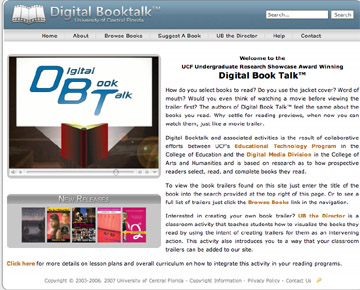 Figure 1. Screen shot from Digital Booktalk Web site (http://sulley.dm.ucf.edu/~dbooktalk/wordpress/).
The intent of the trailers and associated activities is similar in purpose to commercial marketing tie-ins between movie studios and retailers and consumer products companies, in which characters from the films are introduced to the public before the movies are released. Studies have shown that this introduction increases the enjoyment of the moviegoing experience by developing in the viewer a sense of identity with the characters and storyline prior to attending the movie (Howard, 2004). The book trailers and associated activities provide a similar degree of familiarity and readiness for reading by making backstory information available. Information about the characters is revealed with only enough detail to introduce them to potential readers but not so much that it spoils the discovery process taking place while reading. The characters and story are introduced only to help set the scene and provide a preview of the background or point of view of the story, similar to what is done in story circles and live booktalks.
UB the Director
Given the nature of today’s students, it is not surprising that they prefer watching a movie over reading a book. In the student surveys we conducted during the development of the trailers, an overwhelming majority (approximately 80% of the respondents) selected video from a list of various ways that a story can be communicated (the others being writing, dance, drawing, music, and sound). Teachers are often faced with the inevitable question from students as to why they need to read the book rather than watching the movie made from that book. In spite of their strong opinions as to whether watching the movie ruins the reading experience, teachers struggle with how to answer that question in a believable and appropriate way. One effective strategy is to remind students that a movie is the result of someone else deciding what goes in it and that not all movies remain true to the book. Teachers might also suggest that it might be more fun if students could be the directors of their own movie about the book.
Planting the idea that students should read the book as if they are going to make a movie out of it is a positive way to implement the composing concept fostered by the Conference on English Education Belief Statements About Technology (Swenson et al., 2005). Using this concept, students reinforce a personal concept of literacy by creating their own original content. The problem is that there is not enough time in the classroom environment for each student to make a full-length motion picture from the books they read.
On the other hand, a 2-minute trailer fits better into time constraints imposed on the class and requires students to focus on the main points of the book – a standard practice when teaching comprehension. Having to create their own video provides an attractive external reason purpose for reading and is an activity in which student producers must know enough about the main characters, the setting, and the context in order to make decisions about which scenes to include in the 90- to 120-second trailer.
The Digital Booktalk portal includes a UB the DirectorTM section containing lesson plans on how to create trailers, as well as a form for schools to submit their final productions for possible inclusion on the Web site (Figure 2). The submitted trailers are peer reviewed by teachers, media specialists, and student groups for content, creativity, and compatibility with the other trailers already populating the site. Once accepted, the student-produced trailers are uniquely identified and comingled with the professionally produced trailers, including in the Suggest-a-Book listings.
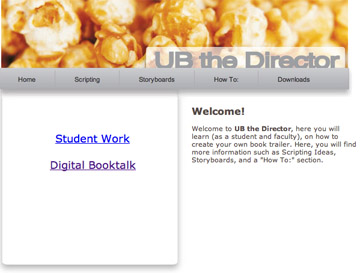 Figure 2. Screen shot of UB the Director page
(http://sulley.dm.ucf.edu/~dbooktalk/wordpress/ubdirector/) .
Method
Purpose
Presently, formal research protocols are being developed to evaluate empirically the academic effectiveness of the Digital Booktalk portal and the corresponding UB the Director activities. To gather preliminary data to help refine the curriculum and to develop valid and relevant hypotheses for the formal empirical study, a pilot test was administered in several middle and high schools for which the following questions were developed:
- What are student attributions concerning the value of reading and writing in their daily lives?
- What is the extent to which students prefer watching movies over reading books?
- What is the extent to which students consider themselves to be visual thinkers?
- What is the perceived self-efficacy with regards to their ability to read, write, and tell stories?
- What do the participants consider to be the best way(s) to communicate a story?
Procedure
The constraints imposed upon the ability to select participants randomly within the same classrooms and the fact that in this pilot study there were no control and treatment groups resulted in a non-experimental design.
A pretest and posttest was administrated using the same questionnaire. The pretest was administered prior to beginning the UB the Director activities and once again after they were completed. The same questionnaire was administered twice, once before participation in the activities and once immediately afterward. The intent of the pilot study was to validate the questionnaires and to develop a formal research protocol for a formal follow-up study to answer the following additional questions:
- Will there be a significant change in student’s motivation, perceptions, and attitudes toward the value of reading, as measured by the pre- and posttest Reading Inventory Questionnaires?
- Will there be significant improvements in students’ reading proficiency (i.e., proficiency, vocabulary skills, and/or comprehension of content) as measured against measurement tools such as statewide reading assessments and Scholastic Reading Inventory?
- To what extent do students increase the number of books they read and complete on their independent reading level after participating in the intervention as compared to those in a control group who receive an alternate instructional activity?
- Will the students who use the book trailers select a higher number of books related by genre or author than those who do not?
Pre and post Reading Questionnaires (appendix; 3.2 MB PDF) consisting of 10 questions containing a 5-point Likert scale and five open-ended questions were administered to 138 participants. Numeric values associated with each rated question were compared for statistical significance between pre- and posttests to determine changes in beliefs and attitudes toward learning styles, communications preferences, reading, and writing, in general. Responses were calculated, imported into the SPSS statistical software program, and analyzed using a one-way ANOVA.
To qualify the responses to the quantitative questions and to better define the significance of individual responses, a mixed method of data collection was designed in which qualitative, open-ended questions were also included on the questionnaires and combined with observations and verbal accounts from participants to obtain rich definitional content and context of the responses and allow for ways to verify and interpret collected quantitative data (Creswell, 2003; McKnight, Magid, Murphy, & McKnight, 2000; Tobin & Fraser, 1998).
Responses to the five open-ended questions were searched for key words to further clarify the rated responses, and participants’ comments were reviewed to elicit general impressions and trends about how well they performed in and the significance of the activities (self-efficacy), and about what they felt the future held for them (attributions). Through interviews with teachers, statements were recorded about the activities, and general assessments about the student videos were recorded. During final presentations of student-produced trailers, comment/assessment sheets were also distributed to each participant, who used them to evaluate and to make general comments about their peers’ trailers.
Participants
The study was conducted with intact classrooms consisting of students who were enrolled in high school and middle schools from local school districts in the Central Florida area. As students were generally heterogeneously assigned to classrooms by the administration of the participating schools, it was determined that participants in the activities represented a general cross-section of those students. The schools were randomly selected and did not represent any particular socio-economic groupings within the large metropolitan school district in which they resided. The activities and associated pilot test were administered in various classroom settings, such as English, drama, and technology education and reading remediation classes.
Treatment
The purpose of this initial implementation was to refine the curriculum, to validate the questions being asked on the questionnaires, and to test assumptions about students’ perceptions of the value of reading and writing. All participants received identical instruction and completed the pre and post Reading Inventory Questionnaires. The results were to become the foundation for a formal research protocol to conduct a quasi-experimental study utilizing control and treatment groups.
Results
Between the pre- and post-activity surveys, statistically significant differences were found at the .05 level for several of the responses – in particular, questions 1, 2, 7, and 10. A review of these questions indicated that student attitudes toward the value of reading and writing were significantly more positive after participating in the activities, as were students’ understanding of the value of storytelling as a way of knowing. Responses also disclosed an increase in students’ interest in telling their own story and watching others do the same. Lastly, there was a corresponding statistically significant decrease in participants’ nervousness when trying to write and present a story in front of their peers. Questions 3, 4, 5, 6, 8, and 9 asked participants to provide background information on their visual learning preferences, and we suspected after analyzing the data that these responses would not change significantly as the result of students’ partaking in these activities. For some participants the importance of reading and writing had been evident from the beginning.
Responses to the open-ended questions revealed that some participants were not reading or writing on grade level, because they did not understand the relevance of text-based communications, rather than because they were incapable of doing so. The qualitative questions at the end of the surveys confirmed these notions and revealed some possible rationale behind the changes in attitudes toward reading and writing. For example, some responded that as a result of participating in these activities they felt “reading and writing were not as difficult” as they had originally perceived. Others indicated that their prior failures may have been due to a lack of a positive self-efficacy or misapplied attributions.
Responses to other open-ended question were just as revealing. Some mentioned without prompting that “learning how to use the technology was not enough” and that “understanding a story’s content is important.” Almost every participant responded that they “loved the activity” and that it had a positive effect on their perceived ability to “express themselves creatively.” One student responded that she “not only learned how to develop stories” but she now also understood “some of the whys.” Another stated that she “was not impressed at first because she didn’t know where the activity was going but now that it was finished, she was pleasantly surprised.” Perhaps the most revealing and prophetic comment was from one student who explained that his video “would never be finished.” Most stated that they wanted to continue reading stories in this way and that they had the feeling that their participation actually “changed their views on the importance of story as a way to communicate ideas.”
Other informal findings indicated that the project was a pragmatic success. For example, usage statistics for the Digital Booktalk Web site continued to grow long after we completed the activities. Students and teachers from the pilot schools and a growing number of others across the United States and Europe continued to visit the Web site each day. Statements collected from teachers and media specialists also revealed positive perceptions toward the portal and associated activities.
One media specialist reported her experience was that students who viewed the trailers became familiar enough with the books before they read them that they were able to make more informed decisions as to which books to read. She stated that students are more likely to “complete the books they start” because they have more relevant information about the books before they begin to read them. Another media specialist stated that she can “always tell when the trailers are shown in the classrooms, because in the days that follow they run out of their limited supplies of those books in the Media Center.” Data collection instruments are being designed to track whether the increased circulation translates into improved comprehension.
Discussion
The positive findings of the pilot study indicate that Digital Booktalk and UB the Director have the potential to be successful and effective in changing participants’ attitudes and attributions toward the value of reading and writing in their daily lives. The opportunity to produce and then view their peers’ video book trailers were stated by many participants as important factors in helping them to better understand the differences between reading a book and watching a movie about that book. Further, both the participants and their teachers indicated that they enjoyed telling stories and that learning narrative patterns played a small but important role in helping them parse content for comprehension. Teaching narrative structure for this purpose has support in the literature and is part of a process known as Cognitive Reading Theory, which has been shown to be particularly effective in increasing reading proficiency (Reinking, 2005).
There are some recognized limitations in this study. First, the activities were conducted in local and regional schools using an instrument that compared only participants’ initial attitudes toward reading and writing and immediately after participating in the project. Second, it will be necessary to determine whether the positive behaviors and attributions are temporary and simply the result of increased attention (Hawthorne Effect). Methods to measure longitudinally student opinions and attitudes will be included in the formal protocols to determine whether these positive attributions endure over time. Although proper attribution is an important precondition to learning, further development needs to take place to design instruments that measure actual reading gains, as measured on statewide assessment tests and other vehicles.
The statistical power of the follow-up studies will be limited by a number of factors, which will be addressed when the final protocols are developed. First, there is the need to continually add to the number and range of books residing on the Digital Booktalk portal. The number of trailers totals approximately 40 at the time of publication but is growing. The initial titles were selected from lists provided by programs such as Reading Counts!, Accelerated Reader, and school-suggested and various state Departments of Education reading lists. Second, while some trailers were produced for books that are generally recognized to be classics(such as Mutiny on the Bounty and To Kill a Mockingbird, for example), many of the initial titles tend to cater to regional interests. The ability to better measure the statistical strength of the VBTs will increase as the list of books grows and represents a broader range of topical and cultural interests. With the addition of titles this issue will be resolved over time.
A concerted effort is being made to build the video library listing through grant requests and with the help of a nationwide contest, in which student-contributed works will be solicited as a part of the general introduction on the Web site of the UB the Director program.
Even with these limitations, there is enough evidence from analyzing the data collected over the past 3 years to suggest that the activities did improve students’ familiarity with the books so that they could make informed choices as to which books they selected, which increased the chances they would also read other books with similar content. An analysis of the questionnaires administered during the pilot study indicates that significant changes occurred in the attitudes of participating students toward the importance of reading and writing in their daily lives. Qualitative analyses revealed that these students had a strong interest in viewing the book trailers, in reading those books for which the trailers were produced, and in creating their own trailers.
The results from this informal pilot study are supported by a significant body of evidence that indicate that animations, talking books, and other simulated experiences improve comprehension and reduce difficulties in the decoding of words in younger children (Leu, 2000). A review of the literature indicates that little has been done, however, to evaluate the effectiveness of these types of interventions with young adolescents. This project attempts to fill that gap.
In the next phases of implementing the project, the data collection tools will be further developed to extrapolate the results to a larger population and to determine whether the results can be sustained over longer periods of time. In addition, external evaluation criteria will be established, against which the results can be compared. For example, the motivational changes will be compared to statewide and standards-based reading and assessment tools, such as the Florida Comprehensive Assessment Test and the Scholastic Reading Inventory.
Implications for Teachers
The goal of the program is not about the technology, but about providing a tool for experienced and preservice teachers to use in the classroom to help students become more literate in terms of 21st-century learning skills. As Hicks (2006) stated, “It is not so much about the point that we can make a digital story; it is more to the point that we can make a story digitally” (p. 4). In other words, learning about story and narrative structure is paramount.
The technology adds the hook to gain the students’ attention and paves the way for everyone to participate in the curriculum-specific learning cycle, regardless of their initial vocabulary and grammatical skills. The latter are introduced once the global concepts are grasped – a reversal of what has been the general bottom-up practice of requiring students to memorize word lists and sentence structure before they get to participate in reading activities. As much fun as these activities are, appropriate content has to be inculcated to create a curriculum framework.
The book trailers and associated activities found on the Web portal are central to a curriculum-specific framework that introduces narrative and story to students who appear to be text-averse but who seem to be attracted to media and story. Creating a video is the authentic activity by which the teacher is reinforcing Doman’s (1984) principle of teaching to a student’s strength to remediate the weaknesses. Story and narrative structure is taught using a medium with which students are familiar first, followed by reading and writing activities. When integrated with other best practices in literacy education (Leu & Kinzer, 2003), these goals appear to be in line with those outlined by the CEE Summit (Hicks, 2006; Swenson et al, 2005) to look at literacy in a more holistic way.
When looking for ways to increase reading and writing skills, one needs to evaluate current best practices. Although the literature nowhere refers to a single best practice, there are certain universal threads that are consistently weave themselves into the instructional tapestry, including motivating students by identifying their strengths and then teaching to them. The digital age requires revolutionary thinking as to how text-averse children will be motivated to acquire the traditional literacy skills that remain important in the world they will enter as they grow older.
Using a mixed research method provides a unique opportunity to identify and qualify holistic out-of-the box interventions to determine which ones are the most effective. An initial assessment of the quality and insightfulness of the student-produced trailers during the pilot tests has revealed that the participants have otherwise undisclosed talents and have demonstrated a remarkable aptitude for visual and mediated communications as a way to express original thought. It is expected that the results of our formal empirical data collection efforts will assist in the further development of the curriculum that will appeal to a larger audience and confirm that Digital Booktalk and UB the Director are effective in motivating reluctant and struggling readers.
References
Biggers, D. (2001). The argument against Accelerated Reader. Journal of Adolescent & Adult Literacy, 45(1), 72.
Chambers, A. (1985) Booktalk: Occasional writing on children and literature. London: Bodley Head.
Chera P., & Wood, C. (2003). Animated multimedia “talking books” can promote phonological awareness in children beginning to read. Learning and Instruction, 13(1), 33-52.
Coiro, J., Karchmer, R.A., & Walpole, S. (2006). Critically evaluating educational technologies for literacy learning: Current trends and new paradigms. In M.C. McKenna, L.D. Labbo, R.D. Kieffer, & D. Reinking (Eds.), International handbook of literacy and technology II (pp.145-162). Mahwah, NJ: Erlbaum.
Corcoran, F. (1981, Summer). Processing information from screen media: A psycholinguistic approach. Educational Communications and Technology Journal, 29, 117-128.
Creswell, J. W. (2003). Research design: Qualitative, quantitative, and mixed method approaches. Thousand Oaks, CA: Sage Publications.
Doman, J., R. (1984). Learning problems and attention deficits. Journal of the National Academy for Child Development, 4(6). Retrieved from http://nacd.org/more_information/journal/article17.html
Engwall, B. (1999). The carrot to read: Computerized reading incentive programs. Library Talk, 12(5), 28.
Eriksson, K. (2002). Booktalk dilemmas: Teachers’ organisation of pupils’ reading. Scandinavian Journal of Educational Research, 46(4), 391-408.
Finkelman, K., & McMann, C. (1995). Microworlds as a publishing tool for cooperative groups: An affective study (Report No. 143). ERIC Document Reproduction Service No. ED 384 344.
Gropper, G.L. (1966) Learning from visuals: Some behavioral considerations. AV Communications Review, 14, 37-70.
Hicks, T. (2006). Expanding the conversation: A commentary towards revision of Swenson, Rozema, Young, McGrail, and Whitlin. Contemporary Issues in Technology and Teacher Education [Online serial], 6(1). Retrieved from https://citejournal.org/vol6/iss1/languagearts/article3.cfm
Howard, T. (2004, October 4). An ‘Incredibles’ effort: Tie-in with film gets a pricey push. USAToday, Retrieved from http://www.usatoday.com/tech/techinvestor/corporatenews/2004-10-03-sbc_x.htm
Keane, N. (2004). Booktalks quick and simple. Retrieved January 16, 2008, from http://nancykeane.com/booktalks/tips.htm
Keller, J. M. (1983). Motivational design of instruction. In C. M. Reigeluth (Ed.), Instructional theories and models: An overview of their current status (pp. 383-429). New York: Lawrence Erlbaum Associates.
Kenny, R. (2005). Growing up digital: Implications for teaching and learning. The iDMAa Journal, 2(2).
Kenny, R., & Gunter, G. A. (2005). Literacy through the arts. Paper presented at the 28th annual conference of Association for Educational Communications and Technology in Orlando, Florida.
Krashen, S. (2002). Accelerated Reader: Does it work? If so, why? School Libraries in Canada, 22(2), 24-26.
Leu, D. J. (2000). Literacy and technology: Deictic consequences for literary education in the information age. In M.L. Kamil, P. Mosenthal, P.D. Pearson, & R. Barr (Eds.), Handbook of reading research III (pp. 743-770). Mahwah, NJ: Erlbaum.
Leu, D. J., & Kinzer, C. K. (2003). Effective literacy instruction K-12: Implementing best practice (5th ed). Upper Saddle River, NJ: Merrill/Prentice Hall.
Leu, D.J., Jr., Kinzer, C.K., Coiro, J., & Cammack, D. (2004). Toward a theory of new literacies emerging from the Internet and other ICT. In R. Ruddell & Norman Unrau (Eds.), Theoretical models and processes of reading (5th ed.; pp. 1570-1613) Newark, DE: International Reading Association.
Mayer, R.E. (2006). Principles for managing essential processing in multimedia learning: Segmenting, pretraining, and modality principles. In R.E. Mayer (Ed.), The Cambridge handbook of multimedia learning (pp. 169-182). New York: Cambridge University Press.
McKnight, C., Magid, A., Murphy, T. J., & McKnight, M. (2000). Mathematics education research: A guide for the research mathematician. Providence, RI: American Mathematical Society.
Mott, B., Callaway, C., Zettlemoyer, L., Seung Lee, S., & Lester, J. (1999, November). Towards narrative-centered learning environments. In the Proceedings of the AAAI Fall Symposium on Narrative Intelligence (pp. 78-82), Cape Cod, MA.
Mott, B., McQuiggan, S.W., Lee, S., Lee, S.Y., & Lester, J.C. (2006). Narrative centered environments for guided exploratory learning. In the Proceedings of the Agent Based Systems for Human Learning Workshop at the 5th International Joint Conference on Autonomous Agents and Multiagent Systems (ABSHL-2006), Hakodate, Japan.
National Center for Education Statistics. (2006). Fifth grade: Findings from the fifth grade follow-up of the early childhood longitudinal study, kindergarten class of 1998-1999. Retrieved from http://nces.ed.gov/pubs2006/2006038.pdf
Niederman, M., Kenny, R., Sanchez, A., & Croft, M. (2005, April). A changing narrative paradigm. Presentation made at Broadcast Education Association Annual Conference, Las Vegas, NV.
Neuman, S. (1991). Literacy in the television age. Norwood, NJ: Ablex.
North Central Regional Educational Laboratory & Metri Group. (2003). enGauge 21st century skills: Literacy in the digital age. Retrieved January, 2008, from http://www.ncrel.org/engauge/skills/skillsbrochure.pdf.
Nugent, G. C. (1982). Pictures, audio, and print: Symbolic representation and effect on learning. Education Communications and Technology Journal, 30, 163-174.
Partnership for 21st Century Skills. (2003). Learning for the 21st century. Retrieved January 17, 2008, from http://www.21stcenturyskills.org/index.php?option=com_content&task=view&id=29&Itemid=42
Prensky, M. (2001) Digital games-based learning. New York: McGraw-Hill.
Reinking, D. (2005). Multimedia learning of reading. In R.E. Mayer (Ed.), The Cambridge handbook of multimedia learning (pp. 355-374). New York: Cambridge University Press.
Rushkoff, D. (1999). Playing the future: What we can learn from digital kids. New York: Riverhead Trade.
Schnotz, W. (2002). Towards an integrated view of learning from text and visual displays. Educational Psychology Review, 14, 101-120.
Swenson, J., Rozema, R., Young, C. A., McGrail, E., & Whitin, P. (2005). Beliefs about technology and the preparation of English teachers: Beginning the conversation. Contemporary Issues in Technology and Teacher Education [Online serial], 5(3/4). Retrieved from https://citejournal.org/vol5/iss3/languagearts/article1.cfm
Taylor, R. T., & Gunter, G. A (2005). The K-12 literacy leadership fieldbook. Thousand Oaks, CA: Corwin Press.
Taylor, R., Hasselbring, T., & Williams, R. (2001). Reading, writing, and misbehavior. Principal Leadership, 2(2), 33-38.
Tierney, R.J., Kieffer, R., Whalin, K., Desai, L., Moss, A.G., Harris, J.E., & Hopper, J. (1997). Assessing the impact of hypertext on learners’ architecture of literacy learning spaces in different disciplines: Follow-up studies. Retrieved from the Reading Online Web site: http://www.readingonline.org/research/impact/index.html
The Access Center. (2004). Early reading proficiency and its relationship to accessing the curriculum. Retrieved from http://www.k8accesscenter.org/training_resources/earlyreadingresource.asp
Tobin, K., & Fraser, B. J. (1998). Qualitative and quantitative landscapes of classroom learning environments. In B.J. Fraser & K.G. Tobin (Eds.), International handbook of science education (pp. 623-640). Dordrecht, The Netherlands : Kluwer.
Wetzel, C. D., Radtke, P. H. & Stern, H.W. (1994). Instructional effectiveness of video media. Hillsdale, NJ: Lawrence Erlbaum Associates.
Withrow, F. (2004). Literacy in the digital age: Reading, writing, viewing, and computing. Lanham, MA: Scarecrow Education.
Authors’ Note:
Glenda Gunter
College of Education
Department of Educational Research, Technology, and Leadership
University of Central Florida
[email protected]
Robert Kenny
College of Arts and Humanities
Department of Digital Media
University of Central Florida
[email protected]
