The limits inherent in field experiences are significant challenges to teacher educators in preservice teachers’ preparation. One key challenge is having preservice teachers understand the complexities of what happens in the classroom. This article describes lessons we have learned through the creation of a multimedia case study that have given us insight into ways to help preservice teachers understand classroom events. What we have learned about the necessity of situating lessons in their larger contexts is discussed, as well as the tensions inherent in teacher decision making and how the decision making process may highlight discrepancies between teachers’ espoused beliefs about teaching and what they do in practice. In addition, ways multimedia case studies can engage preservice teachers in examining and understanding these issues are described.
Teacher educators face several sets of difficult issues in their work with preservice teachers. One set involves the complexities and difficulties of field placement experiences for preservice teachers: (a) having good field placements, (b) understanding what is happening in the classroom, and (c) having a common experience to share with their peers. First, there are often insufficient numbers of high quality, reform-based classrooms available for preservice teacher placements. Preservice teachers often struggle with making sense of what they have learned in their methods courses about “research-based practice” and the reality that they find in the classrooms in which they are placed for observations and teaching experiences.
Second, preservice teachers lack the experience necessary to observe meaningfully the complex and rapid interactions that can occur in a classroom. Experienced teachers are continuously making decisions regarding instruction and classroom interaction and appear to make these decisions with ease. Inexperienced preservice teachers often have difficulty recognizing what decisions were made and why, in order to ask questions about these decisions.
Third, preservice teachers are generally placed in different field placements than their peers, and thus, they lack a common experience upon which they can reflect with their peers as they strive to make sense of what happens in classrooms. This situation limits their ability to reflect on their own practice and their opportunities to analyze the processes of teaching and learning more generally. These problems have slowed the pace of change envisioned in reform documents (Darling-Hammond, 1996a, 1996b, 1997).
This set of issues and the set of issues involving the gap between educational research on student learning and changes in teachers’ practice have led us to develop, use, and investigate the use of multimedia case studies to support the professional development of preservice teachers. We have found that preservice teachers’ efforts to create new models and new images of practice can be supported through the use of carefully designed multimedia case studies that capture the complexities and richness of exemplary, reformed-based classrooms. These multimedia case studies can become sites for investigation, reflection, and study by preservice teachers in ways that are not easily accomplished with actual classroom experience (Bowers & Doerr, 2001; Doerr & Masingila, 2001; Masingila & Doerr, 2002). Through a National Science Foundation-sponsored project, we developed two multimedia case studies for use with grades 7-12, preservice mathematics teachers (Bowers, Doerr, Masingila, & McClain, 1999, 2000). Extending from that work, we have developed other multimedia case studies for use with preservice and in-service teachers.1 This paper is focused on the development of one case involving issues of team teaching and integrating mathematics and science through a design project, including the following: (a) the development of the case, (b) lessons learned by the teachers and teacher educators through the development and use of the case, and (c) ways this case fits into the larger picture of what we have learned about the use of multimedia case studies.
The Development of the Multimedia Case Study
Through a project called Algebra by Design, funded by Lucent Technologies, we are working with teachers in grades 5-12 in the Syracuse City School District to (a) increase significantly the number of students who are successful in learning the core ideas of algebra, (b) increase the depth of algebraic understanding of all students and enhance their problem-solving skills in mathematically challenging design projects and activities, (c) provide teachers with experience and collaborative support in the use of Standards-based curricula, design projects, and current and emerging technologies, and (d) prepare new teachers in partnership with practicing teachers through observations, field placements, and semester-long internships.
We developed the particular case discussed in this article, entitled “Building Bridges: An Investigation of Truss Design” (Masingila & Pfister, 2002), to engage teachers in thinking deeply about (a) actively involving students with a range of learning styles and abilities in learning and doing mathematics, (b) managing cooperative work, and (c) integrating mathematics and science ideas. The case study also provides an opportunity to investigate issues involved in team teaching, because the classroom teacher and a graduate student co-taught the 4-day lesson sequence.
The materials we developed for this multimedia case study consist of (a) a video overview of the case and the project, (b) the teachers’ lesson plans, overhead pages, and student worksheets for the lesson sequence, (c) video of the four class lessons, (d) a video journal of the teacher’s anticipations and reflections for the lesson sequence, (e) supporting text with rationale for using cases, tips for implementing the design project, information about the school, students and teachers, and selected Internet links, and (f) transcripts of all video. In addition, to facilitate the use of these materials, the case includes an issues matrix with links to video clips and text organized around three sets of issues—mathematics concepts and connections, teacher decision making, and classroom management. A search tool allows the user to search the transcripts, and a bookmarking feature supports the tagging of video clips. Bibliographic resources and a facilitator guide are also included on the CD-ROM.
Navigating the Multimedia Case Study
We used Case Creator software, a video-based case creation tool for teacher education, to construct this multimedia case study. Case Creator is shareware and can be downloaded at http://www.sci.sdsu.edu/mathvideo/cc/download.html. To give the reader a glimpse of what the case is like, we include some screen shots from the case.
- The Overview tab takes the viewer to the introduction screen (see Figure 1). We inserted text introducing the case and the project through which the case was developed.
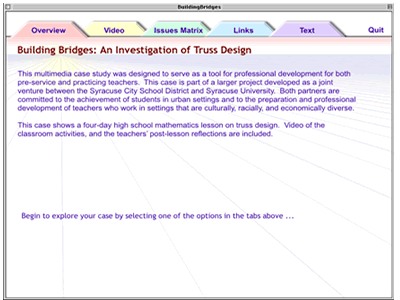 Figure 1. Screenshot of the Overview tab in Case Creator.
- The Video tab takes the viewer to a screen where up to five video segments can be accessed, along with the video transcript (see Figure 2). Additional features include a search engine to find key terms within the video transcripts and videos, a bookmarking tool to save selected video segments, and a video timeline to track each segment.
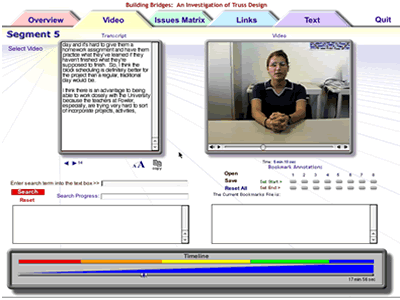 Figure 2. Screenshot of the Video tab in Case Creator.
- The Issues Matrix tab takes the viewer to a screen containing a table of video clips and text linked to issues identified by the case creators (see Figure 3). We grouped issues under one of three categories: (a) Mathematics Concepts, (b) Teacher Decision Making, and (c) Classroom Management.
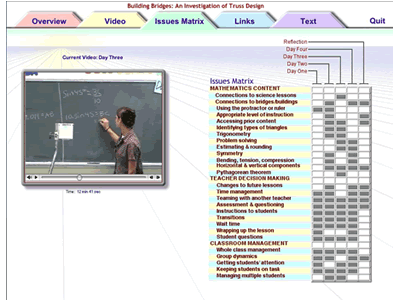 Figure 3. Screenshot of the Issues Matrix tab in Case Creator.
- The Links tab takes the viewer to a screen where links can be found to online resources that support the case study (see Figure 4). We inserted links to provide more information about the larger project through which this case was created.
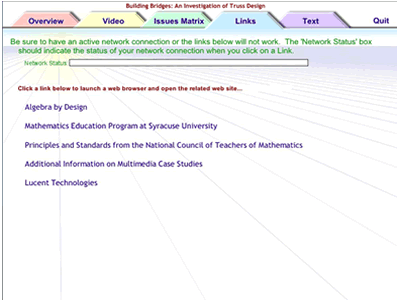 Figure 4. Screenshot of the Links tab in Case Creator.
- The Text tab takes the viewer to a screen where up to 10 different pages of text can be accessed (see Figure 5). We included text that provided the viewer with more information about the school and students, the teachers, and ideas about implementing the bridge design project.
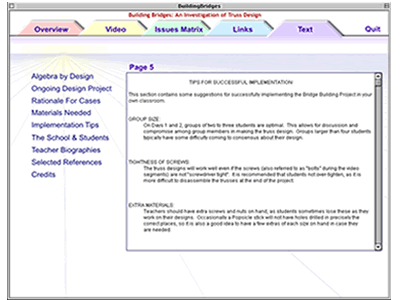 Figure 5. Screenshot of the Text tab in Case Creator.
Description of the Design Project
The design project in this case study involved high school students designing structures and then using algebraic and physics ideas to analyze the amount of load that the structure can support. During the first lesson, students worked in small groups to design and construct a structure, using jumbo craft sticks, nuts and bolts, and metal angle pieces, to meet the following criteria: (a) the length should be 8-12 inches, (b) the width should be 3-4 inches, (c) the thickness of any one part should not be more than three sticks, (d) sticks should be joined using the nuts and bolts provided, and (e) the structure should have a part in the middle on which to fasten a weight that can hang down as the structure spans the distance between two desks. Near the end of the lesson, groups tested their structures with a 15-pound weight and made observations about the characteristics that may have been helpful for those structures that were able to support the weight without breaking.
In the second lesson, teachers introduced the idea of a truss and discussed tension and compression of the members of the truss (straight, slender parts of parts). Photos of different trusses were shown on the overhead projector. Groups were then given a kit of materials to construct a truss that consisted of either 30°-60°-90° triangles, 45°-45°-90° triangles, or 60°-60°-60° triangles. During the third lesson, students learned about forces and balances and analyzed algebraically the force at each truss joint. Students shared their analyses with the class during the fourth lesson, and each group tested their truss with a weight of 15 pounds.
The videotaping for the multimedia case study took place in an urban high school classroom comprised of 19 ninth-grade and seven 10th-grade students enrolled in a first-year mathematics course. The teacher, Sally, was in her first year of teaching. The doctoral student who cotaught the lessons, Moses (one of the authors), was in his third year of studies in science education at Syracuse University. He had previous experience teaching mathematics and physics at the high school level and had taught several other classes in the same school using this design project.
Lessons Learned
Through the teaching of the 4-day lesson sequence in this class, and in particular through the making of this case study, we learned several lessons about teaching and the use of case studies. Specifically, we learned (a) that lessons need to be situated in their larger contexts, (b) that tensions are inherent in teacher decision making, and (c) that the decision-making process often highlights discrepancies between teachers’ espoused beliefs about teaching and their actual practice. These three lessons connect to the second difficulty related to field placements discussed at the beginning of this paper—the difficulty of preservice teachers’ being able to understand what happens in classrooms. Through the making of this multimedia case study, we learned lessons that have enabled us to help preservice teachers understand the complexities of classroom teaching.
Situating Lessons in Their Larger Contexts
This case study shows a 4-day lesson sequence that was taught in 10 first-year mathematics classes in this school over a 4-week period. Sally’s class was among the last of these classes to experience the lesson sequence. On its own, the classroom video included in the case study does not make explicit the fact that what happened in this class was affected by experiences from the previous classes. The decisions the teachers made in this class were not unique to this class but were based on an accumulation of experiences gained from the previous classes’ experiences, causing them to alter the way they approached the lesson sequence.
For example, the original lesson plan did not expect the teachers to make and use their own bridges as models for the students to follow. The teachers, however, decided that this was important based on their prior experience with the lesson; students seemed to have difficulty visualizing what the finished bridges would look like and the teachers made the decision to deviate from the lesson plan in hopes of helping the students.
Another change from the original lesson plan was the increased questioning of students as they constructed their bridges. The teachers asked students how they would use each of the pieces they were constructing. This questioning was added to help the students plan ahead and think about what they were making. Before videotaping this class working on the truss project, the lesson plan had not required the use of worksheets aimed at helping students organize their thinking. Due to prior experience, the teachers realized a need to help students organize their ideas and review their knowledge of right triangle trigonometry. Hence, the teachers created additional review sheets and worksheets for the students to use. In each of these instances, the teachers were no longer simply following the lesson plan; they had personal experiences that caused them to make changes in their approach. Thus, we learned that to understand more fully what was happening in the lesson sequence, and in particular in the third lesson, this lesson needed to be situated within its larger context.
This lesson is important because many times preservice teachers, or those new to the teaching profession, fail to understand the complexities of the changes that teachers make each time they teach a lesson. If preservice teachers were to view only the classroom videos that are part of this case study, they would not be privy to the changes and decisions the teachers made as a result of prior experiences gained from teaching the lesson in similar situations. This limitation is inherent in any observation of a lesson, whether one is observing a video or actually observing the lesson in the classroom.
The teachers in this case study also decided to change the initial approach called for in the lesson plan. It was apparent from the prior weeks’ experiences that students were not at a level of mathematical knowledge to understand the derivation of the formulas used in the lesson. During the third lesson, the teachers decided to deviate from the lesson plan and to tell students the necessary formulas. In the teachers’ postinstruction reflections, they noted the decision they made and why.
Initially, I thought that I would just try to go through the process slowly so the students could understand, but as we worked through I thought it was good to change so that we worked into giving the equations as they are. Then we just tried to show the mathematics that goes into using the equations. But—for the process of deriving the equations—we avoided that part a little bit by just giving the equations. But we were explaining how the mathematics that they were doing, the trigonometric ratios, fit into those equations. (Moses)
A preservice teacher might reasonably assume a variety of reasons for this departure from the lesson plan. Perhaps the teachers do not understand the formulas themselves. Perhaps the teachers think that “telling” is the most effective way to teach. Without insight into the reflection and the decision making on the part of the teacher, either of these interpretations could seem valid. Teachers’ thinking about certain lessons and their reasons for making particular choices are rarely made available to the preservice teacher who enters the classroom to observe or teach. School days and class periods are not designed to accommodate the preservice teacher and mentor teacher taking time to sit down and discuss the reasons behind the choices and decisions the teacher made during the lesson.
Hence, multimedia case studies offer a unique opportunity to allow preservice teachers to view classroom activities and gain an understanding into the teacher’s thinking through a reflection segment guided by their teacher educator. In this case study, we have reflections from the teachers that give insight into the reasons for their choices. The teachers indicated that they considered the larger goal of getting students through the 4-day lesson sequence and making sure they had success in solving the lesson problems. Whether students were actually able to derive the necessary equations became a secondary goal, which the teachers decided was not as important as other goals. Sally, the classroom teacher, made the decision that it was better for her to wait and guide students through the derivation process at a later date when their mathematical skills were better developed.
It is important for anyone using case studies to recognize that lessons do not exist by themselves but are situated in larger contexts. When using a case study with preservice teachers, teacher educators must be aware of these larger contexts and make use of these contexts to help preservice teachers understand the lessons included in the case study. That is, lessons may not be useful as stand-alone resources, but often need supporting materials to make them meaningful. The inclusion of materials, such as a facilitator’s guide and an issues matrix, are vital to guide a teacher educator in using a case study with preservice teachers.
The facilitator’s guide assists the teacher educator in understanding the issues the authors of the case study are attempting to highlight. For this case study, the facilitator’s guide contains an introduction to the importance of using cases, possible discussion-starting questions, and an overall framework for the case study. Teacher educators need resources such as the facilitator’s guide to understand what the authors of the case intended.
Additional supporting material, such as an issues matrix, allows teacher educators to see what general issues and situations they might discuss with students. Different issues, identified as salient by the case authors, are matched to video clips of events in the classroom. For example, a teacher educator wishing to show preservice teachers how students think through problem-solving situations would be able to view short video clips of the students working through problems. It is not necessary for the teacher educator to view the entire video segment watching for student thinking because the authors of the case study have already done this. Teacher educators, therefore, are free to concentrate on leading the discussion with their students.
Tensions Inherent in Teacher Decision Making
Cases can make visible the tensions involved in teacher decision making. Teachers make many decisions each day, and their reasons for making particular choices are not always immediately clear to preservice teachers. For example, the tensions faced in team teaching an interdisciplinary lesson and project-based lesson are numerous. How teachers choose to negotiate these matters and the degree of their success is valuable for preservice teachers to understand because they will likely face similar issues in their own teaching. Multimedia case studies allow preservice teachers the opportunity to observe, note, and discuss tensions that are inherent in teacher decision making.
In this case study, the teachers are engaged in team teaching and interdisciplinary teaching, as well as in project-based, problem-based learning. The decisions made at various points of the lessons are, in part, a result of the interplay among these aspects. The case illustrates this interaction in a way that provides an opportunity for discussion among preservice teachers and teacher educators.
This case study shows an example of interdisciplinary teaching where mathematics and science are brought together and taught simultaneously under the auspices of one problem-based project. The two disciplines rely on each other to fulfill their goals. For the mathematics part, the goal is to derive algebraically and then apply trigonometric equations to real-life situations. For the science lesson, the goal is to understand the concept of forces and how these forces resolve into directional forces of support. During the lessons, the teachers were faced with time constraints and the need to choose between shortening some aspects of the content or focusing on the larger project ideas. As a result, changes were made that involved skipping aspects of the original lesson plan.
For instance, the teachers decided to cut out the mathematics involved in the derivation of the equations and simply focus on using the equations. This decision was made for several reasons. Students in previous classes had difficulty deriving these equations. Also, there was not enough time to get through these derivations and still finish the project in the four days that had been allotted for it. Hence, the mathematics part of the project was not explored fully because of time constraints and attention to the science content.
Another example of tensions in teacher decision making is reflected in what the teacher chooses to do or leave out when faced with time constraints beyond those anticipated. Although, the set of lesson plans provided for homework assignments that would help the students develop a deep understanding of the mathematics, lesson overflows made it difficult to assign all the necessary homework. The teacher noted in her reflections that she would consider revising the lessons further to allow for all the homework to be assigned. She commented on the tension involved in making decisions regarding homework assignment.
Unfortunately, since we ran out of time, there were a few things that we didn’t have time to even go over. We had two homework assignments, but they only had time for one, so I sort of had to determine what were the important parts of the lesson, what were the parts we needed to make sure we presented to them. (Sally)
Thus, the tensions in decision making manifested themselves in a variety of situations, whether teaching individually or as a team, or whether teaching one subject or in a multidisciplinary situation.
Although these decisions are not obvious from simply viewing the case, they do exist and become a fertile source of discussion for learning about the complex situations that influence a lesson. The complexity of the decisions lies not only in the interdisciplinary part of the lesson but also in the whole dynamics of the lesson. Other aspects of the lesson, such as team teaching and the collaboration between the class teacher and another teacher, illustrate similar demands for decision making. A multimedia case study can allow preservice teachers to observe and understand these tensions by hearing the teacher’s reflections on the lessons, as well as seeing teacher decisions in action during the classroom video segments. We have chosen to frame discussion questions in the facilitator’s guide that help a teacher educator raise these issues with preservice teachers for reflection and discussion.
Discrepancies Between Teacher Beliefs and Practice
Another lesson we learned from developing this case is that multimedia case studies highlight discrepancies between a teacher’s stated learning theory perspective and his or her actual practice. In this situation, the planned lesson models a constructivist learning approach in which the students’ understanding is constructed by the activities they complete through the project. Both teachers are self-identified constructivists. In practice, however, both teachers moved away from the initial lesson plans and away from inquiry. The teachers noted this in their postinstructional reflections.
I think the ninth graders were capable, but since they weren’t as comfortable with maybe solving equations and trig, since those were things that they just learned this year, and we’re sort of trying to polish off that maybe tenth graders would have a better background and would be able to maybe move along more quickly which would save time in the long run and maybe part of your four days you could take a little bit more time developing the equations, rather than just sort of having the kids memorize how to use them. They could actually develop them on their own and take some time to do that. (Sally)
In the long run it turned out, as we worked through the project, that deriving the equations was a little bit too hard for them. So we just gave them the equations to use. (Moses)
Giving the students the equations instead of deriving them removed the learning construction process that the lessons had been designed to achieve. The teachers’ theoretical plan broke down at the implementation level. Both teachers claim to hold a constructivist learning theory perspective. However, when confronted by a situation where their planned lesson did not seem to be working, both reverted to a “telling” approach to teaching. Rather than taking extra time to work through the equation derivation with the students, the teachers felt that the students were ill prepared for this task, and they changed to giving the equations and then asking students to use them.
Another example of a discrepancy between belief and practice is reflected in the aspects of the problem-solving project with which the teachers chose to help students. The problem-solving situation required students to design a bridge, identify the parts necessary for each part of the bridge, and correctly join these parts to complete the bridge. Students encountered difficulty coming up with a design, identifying the parts for the design, and joining these parts together. The teachers had to decide where and when it was necessary to intervene and help the students. When and how to intervene is a decision that can compromise the creativity and originality of student work. The case study shows sections of video where the teachers chose to help students who had difficulty in putting the parts together after successfully designing and identifying some parts of the bridge (in the second lesson). The teachers had to decide between aspects of student learning and the time constraints of the lesson. Although the plan was to have the students carry out all the work, the teachers intervened at various points.
This situation illustrates what happens every day in classrooms—the teaching in a particular class does not happen in a vacuum, it occurs in a context. The context is filled with tensions that are inherent because of the decisions teachers must make when faced with constraints. Some of these decisions may cause teachers to do things they believe are not the best way to help students learn; however, teachers make these decisions because there are trade-offs involved in dealing with the constraints. Preservice teachers rarely have the opportunity to observe and understand that the actions of teachers may sometimes be contradictory to the beliefs of the teachers. All teachers face this situation; some teachers may even leave the profession if they feel they are being continually forced to act in ways that contradict their beliefs about teaching and learning. We believe that if preservice teachers are provided opportunities to reflect upon situations like these, they will be prepared to find ways to avoid compromising their beliefs. A multimedia case study may provide this opportunity, if the case is rich enough and offers insight into teacher decision making and teacher beliefs.
The Use of Multimedia Case Studies
Recent research efforts to address the difficulty inherent in teacher change have described a shift toward strategies in which teachers are encouraged to become reflective about their practice (Cooney & Krainer, 1996; Simon, 1995). In examining the frameworks that preservice teachers use to understand the practice of teaching, Cooney (1999) has highlighted the importance of examining the contexts through which teachers develop and use their knowledge. He stated that “whatever lens we use to describe teachers’ knowledge, that lens must account for the way in which knowledge is held and the ability of the teacher to use that knowledge in a reflective, adaptive way” (p. 171). This view of teachers’ knowledge is consistent with current developments in cognitive science and situated learning that suggest that knowledge is situated and grounded in the contexts and constraints of practice (e.g., Borko, Mayfield, Marion, Flexner & Cumbo, 1997; Lave & Wenger, 1991; Leinhardt, 1990). An important characteristic of multimedia case studies is that they are embedded in the contexts of practice and, at the same time, provide an opportunity for preservice teachers to engage in the analysis of elements of the case.
Ideally, we would like to be able to discuss our use of the Building Bridges case study with preservice teachers and issues that arose. However, at this time we have not used this case study with preservice teachers. Instead, we will discuss preservice teachers’ use of a different multimedia case study—the Making Weighty Decisions case. There are some differences in the two case studies:
- Grade level (the Building Bridges case was filmed in a high school ninth-grade class, while the Making Weighty Decisions case was filmed in a middle school eighth-grade class).
- Teaching experience of the teacher and number of teachers in the class (the Building Bridges case involved a first-year teacher and a doctoral student who had taught for several years, while the Making Weighty Decisions case involved one veteran teacher).
- Content of the lessons (the Building Bridges case involved science content along with mathematics, while the Making Weighty Decisions case involved primarily mathematics content).
Although there are differences between the two cases, they share a number of features in common. Among these similarities are that both case studies (a) span a four-day lesson sequence, (b) were filmed in urban classrooms, (c) involve lessons that actively engage students in doing mathematics and explaining their thinking, (d) allow the viewer to hear the reflections of the teacher voiced before and after the lessons, and (e) were created by some of the same developers. We believe that the similarities between the two cases allow for a discussion of the use of one of the cases with preservice teachers to inform the future use of the other.
In a recent research study, Masingila and Doerr (2002) examined the issues that arose for nine preservice secondary (grades 7-12) mathematics teachers who were using a multimedia case study in a seminar class accompanying an 11-week, full-day student teaching experience. The preservice teachers were viewing and discussing the case study entitled Making Weighty Decisions (Bowers et al., 2000), a 4-day lesson sequence in an eighth-grade mathematics class in an urban public middle school. The mathematical focus of the lesson sequence was on making decisions by ranking and weighting data.
In the ninth week of the 15-week course, the preservice teachers were asked to identify a specific issue in their own teaching practice that they saw addressed in the case study teacher’s practice. They traced this issue throughout the case study and through their own teaching practice. The preservice teachers viewed the video from the lesson sequence and the teacher’s journal out of class, with an assigned journal question. The viewing of the video, and their reflection through the journal question, became the basis for their discussion in the seminar class, culminating in a paper discussing the issue and giving evidence from the case study and from their own teaching practice.
Masingila and Doerr (2002) found that the nine preservice teachers used the case study teacher’s practice to support their analysis and reflection on their own emerging practices. The use of a multimedia case study enabled the preservice teachers to delve into issues revealing the complexities of teaching through guidance by the seminar instructor. Masingila and Doerr found that an important pedagogical insight that all of the preservice teachers expressed was understanding the tension between moving forward with the teacher’s agenda and using student ideas and responses as the basis for the lesson.
This tension was especially evident in the case study, wherein the preservice teachers attempted to make sense of how and why the case study teacher chose to follow her “mathematical agenda” while attending to and using students’ thinking. In analyzing one preservice teacher’s issue paper, Masingila and Doerr (2002) found that she framed her own teaching through the case study teacher’s practice and made sense of the case study teacher’s practice by reflecting on her own. Jenny, the preservice teacher, identified and analyzed issues related to student responses in both arenas, including difficulties she observed in the case study teacher’s practice. For example, she wrote in her issue paper,
It is clear to me that Jeff is having trouble understanding the concept of rate. In her explanation, the teacher never mentions the word rate to make this connection for Jeff. This is a key area of the lesson; she should be sure he and others fully understand the purpose of these rates before moving to the next question.
Masingila and Doerr (2002) found that the tension between balancing the teacher’s agenda with the desire to build on students’ responses was a major point throughout the seminar discussions related to the case study. The preservice teachers discussed this issue with some connections to their own teaching, but primarily they discussed the tension as they saw it evidenced in the case study. Masingila and Doerr claimed that recognizing this tension and seeing it in many situations within the case study helped the preservice teachers comprehend the complexities of teaching mathematics.
In their analysis of the preservice teachers’ use of the multimedia case study, Masingila and Doerr (2002) found that the case study promoted the preservice teachers’ reflection and helped make explicit the action strategies, the assumptions, and decision making that were implicit in the teachers’ reflection-in-action. Masingila and Doerr argued that this provided impetus for the preservice teachers to reflect on their own practice in light of the reflections of an experienced teacher.
Our experience in creating the Building Bridges case study, and in reflecting on how it might be used with preservice teachers, resonates with Masingila and Doerr’s analysis and provides further insight into how preservice teachers may be able to understand what happens in classrooms. Though this multimedia case study can help teacher educators address other difficulties raised at the beginning of this paper—providing preservice teachers with quality field observations and providing them with a common experience to reflect upon together—our focus in this paper has been examining more closely lessons we have learned about how to provide preservice teachers access to the complexities of classroom teaching.
Through discussion questions in the facilitator guide and links in the issues matrix, we hope to focus preservice teachers’ attention on (a) the need to understand the larger context in which a lesson or lessons occur, (b) the tensions that are inherent in teacher decision making, and (c) the discrepancies that can occur between teacher beliefs and practice in the midst of making instructional decisions. Through the process of making this multimedia case study we, as teacher educators, have gained more insight into how to help preservice teachers observe various aspects of the complexity of classroom teaching, and how multimedia case studies may be a vehicle for the transformation of educational practice.
References
Borko, H., Mayfield, V., Marion, S., Flexner, R., & Cumbo, K. (1997). Teachers’ developing ideas and practices about mathematics performance assessment: Successes, stumbling blocks, and implications for professional development. Teaching and Teacher Education, 13, 259-278.
Bowers, J. S., & Doerr, H. M. (2001). Assessing the effectiveness of multimedia case studies: New questions and new answers. Paper presented at the annual meeting of the American Educational Research Association, Seattle, Washington.
Bowers, J., Doerr, H. M., Masingila, J. O., & McClain, K. (1999). Multimedia case studies for teacher development: Case I: Sneakers [CD-ROM].
Bowers, J., Doerr, H. M., Masingila, J. O., & McClain, K. (2000). Multimedia case studies for teacher development: Case II: Making weighty decisions [CD-ROM].
Cooney, T. J. (1999). Conceptualizing teachers’ ways of knowing. Educational Studies in Mathematics, 38, 163-187.
Cooney, T., & Krainer, K. (1996). Inservice mathematics teacher education: The importance of listening. In A. J. Bishop, K. Clements, C. Keitel, J. Kilpatrick, & C. Laborde (Eds.), International handbook of mathematics education (pp. 1155-1185). Dordrecht, Netherlands: Kluwer Academic.
Darling-Hammond, L. (1996a). The quiet revolution: Rethinking teacher development. Educational Leadership, 53, 4-10.
Darling-Hammond, L. (1996b). What matters most: Teaching for America’s future. New York: National Commission on Teaching and America’s Future.
Darling-Hammond, L. (1997). Doing what matters most: Investing in quality teaching. New York: National Commission on Teaching and America’s Future.
Doerr, H. M., & Masingila, J. O. (2001). Unpacking a case study: Understanding teacher educators as they understand their pre-service secondary teachers. In M. van den Heuvel-Panhuizen (Ed.), Proceedings of the 25th annual meeting of the International Group for the Psychology of Mathematics Education (Vol. 2, pp. 369-376). Utrecht, Netherlands: Freudenthal Institute, Utrecht University.
Lave, J., & Wenger, E. (1991). Situated learning: Legitimate peripheral participation. Cambridge, England: Cambridge University Press.
Leinhardt, G. (1990). Capturing craft knowledge in teaching. Educational Research, 19(2), 18-25.
Masingila, J. O., & Doerr, H. M. (2002). Understanding pre-service teachers’ emerging practices through their analyses of a multimedia case study of practice. Journal of Mathematics Teacher Education, 5, 235-263.
Masingila, J. O., & Pfister, C. C. (2002). Building bridges: An investigation of truss design [CD-ROM].
Simon, M. (1995). Reconstructing mathematics pedagogy from a constructivist perspective. Journal for Research in Mathematics Education, 26(2), 114-145.
Author Note:
The project was funded by a National Science Foundation grant (REC-9725512) awarded to Janet S. Bowers (San Diego State University), Helen M. Doerr and Joanna O. Masingila (Syracuse University), and Kay McClain (Vanderbilt University).
Joanna Masingila
Syracuse University
Email: [email protected]
Moses Ochanji
California State University at San Marcos
Email: [email protected]
Christina Pfister
Syracuse University
Email: [email protected]
Notes
- Six multimedia case studies have been developed for use with in-service mathematics teachers through a project entitled Algebra by Design. This project is funded by a grant from Lucent Technologies awarded to Helen M. Doerr, Joanna O. Masingila and Patricia P. Tinto (Syracuse University). Additionally, Joanna O. Masingila taught a teacher education course in Spring 2002 in which teams of doctoral students created five multimedia case studies for a variety of uses with preservice and in-service teachers.
